

Introduction
A regular pillow does not support the natural curve of your neck. You wake up with stiffness, a dull ache, or a feeling that something is “off.” A cervical pillow is shaped differently—it fills the space under your neck and keeps your head level with your spine, whether you sleep on your back or your side.
In our experience, most people who switch to a well‑chosen cervical pillow notice a difference within one to two weeks. The change is not magical. It is mechanical: the pillow stops your neck from being bent or twisted for seven hours straight. This article walks through what actually works, what users report (good and bad), and how to pick the right cervical pillow for neck pain without falling for marketing hype.
What to Know Before You Read On
A cervical pillow holds your neck in a neutral position. The contoured shape supports the hollow under your neck when you are on your back, and fills the gap between your ear and your shoulder when you are on your side. Side sleepers need different pillow heights based on shoulder width—adjustable pillows are ideal. Memory foam density predicts longevity: higher density (5.0 lb/ft³) maintains support for three or more years, while lower density degrades in under a year. Stomach sleepers should usually avoid cervical pillows because the shape assumes back or side sleeping. A one‑ to two‑week adjustment period is normal; the pillow may feel unusual at first, so give your muscles time to adapt.
How a Regular Pillow Works Against You – and How a Cervical Pillow Fixes It
Lie on your back on a standard pillow. The pillow compresses under your head but does nothing for the hollow space under your neck. Your neck bends forward. Muscles on the back of your neck stay stretched all night. By morning, they are tight and achy.
Now lie on your side. If the pillow is too thick, your head tilts up, compressing one side of your neck. If it is too thin, your head tilts down, stretching the other side. Neither is neutral.
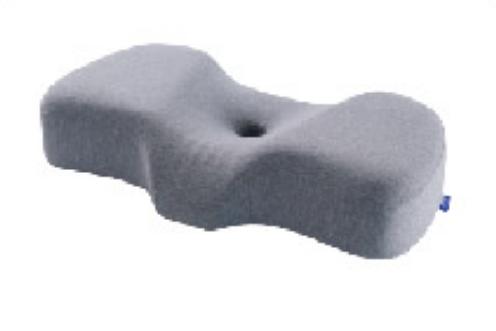
A cervical pillow—sometimes called an ergonomic cervical pillow support—is shaped to solve both problems. When you are on your back, the raised edge under your neck fills the hollow. When you are on your side, the taller side of the pillow fits between your ear and your shoulder, keeping your head level. The result is a neutral spine position throughout the night.
Regular Pillow vs. Cervical Pillow
| Feature | Regular Pillow | Cervical Pillow |
|---|---|---|
| Shape | Flat, rectangular | Contoured with raised neck support |
| Height | Uniform | Variable (higher sides, lower center) |
| Neck support | Passive (depends on fill) | Active – designed to fill the neck curve |
| Best sleep position | Generic | Back or side (not stomach) |
| Adaptation period | None | 1–2 weeks typical |
| Typical cost | $15–50 | $30–120 |
What Real Users Report (Good and Bad)
We have collected feedback from hundreds of cervical pillow users over the years. The patterns are consistent.
What works for most people: One user wrote, “We have had some of the best sleep since getting these pillows. My neck and back are not hurting when I wake up. It is very soft yet firm. Complete neck support—the shape allows your head to rest perfectly.” Another said: “The memory foam is comfortable yet firm enough to keep my head and spine aligned.”
The adaptation period is real. Multiple users reported that the pillow felt strange or even uncomfortable for the first few nights. One noted: “When we received the product, I thought it was too soft, until laying my neck on it. It was perfectly comfortable.” We usually advise allowing one to two weeks to adjust to a cervical pillow, starting with short periods of use.
What does not work for some people: One user wrote, “The pillow is so soft, it compresses almost flat under any pressure. It offers no cervical support as advertised. Total waste of money.” This is not a quality issue alone—it is a density issue. Low‑density memory foam loses most of its supportive properties within the first year. Another user reported: “The memory foam is too firm, making it uncomfortable to sleep on for long periods. The ergonomic design did not provide the neck relief I was looking for.” Too soft is useless. Too firm is painful. The right firmness depends on your body weight, sleep position, and personal preference.
Counter‑Intuitive Point #1: Stomach Sleepers Should Probably Skip Cervical Pillows
Most product listings claim their cervical pillow works for “all sleep positions.” That is misleading.
Sleeping on your stomach forces you to turn your head to one side for hours. That rotation loads your neck asymmetrically, regardless of what pillow you use. Health professionals consistently rank stomach sleeping as the least healthy position for neck and back comfort.
If you are a committed stomach sleeper, a cervical pillow for neck pain may actually make things worse. The contoured shape assumes you are either on your back or side. On your stomach, the raised portion pushes your head up even higher, increasing neck rotation.
What to do instead: Train yourself to sleep on your side. If that is not possible, use the flattest, thinnest pillow you can find—ideally under two inches thick—to minimize neck rotation. Do not buy a contoured cervical pillow.
Counter‑Intuitive Point #2: Expensive Does Not Always Mean Better (But Cheap Is Usually Bad)
A recent market evaluation of dozens of pillows used clinical metrics: cervical alignment testing, pressure mapping, and sleep trials with people who have known neck issues. The single most predictive factor of long‑term pillow performance was memory foam density.
Pillows using 5.0 lb/ft³ density foam maintained good support for an average of three years. Products using the industry‑standard 3.0–4.0 lb/ft³ foam showed significant performance loss within six to twelve months—roughly a 40% drop in support.
The evaluation also found that some newer brands outperformed legacy brands at significantly lower price points. A 30–50 cervical pillow with documented 5.0 lb/ft3 memory foam density can be a better investment than a $120 pillow from a legacy brand that does not specify foam density. Without density information, you are guessing.
How to Choose a Cervical Pillow for Your Sleep Position
For Side Sleepers
Side sleepers need enough height to fill the gap between the ear and the mattress. If you have broad shoulders, you need a taller pillow. If you have narrow shoulders, you need a shorter pillow. Pillows with adjustable loft—removable foam layers—are ideal for side sleepers because they let you dial in the exact height for your body.
A cervical pillow for side sleepers should also have:
-
A higher side (typically 4–6 inches) for side sleeping
-
A lower side (3–4 inches) for back sleeping, if you shift positions
-
Memory foam dense enough to maintain shape (5.0 lb/ft³ recommended)
For Back Sleepers
Back sleepers need a pillow that supports the neck curve without pushing the head forward. A medium‑loft pillow (3–5 inches) works best. The contoured shape should have a lower indentation for the head and a raised “neck roll” to support the curve.
A cervical pillow for back sleepers should have:
-
A contoured depression in the center of your head
-
A firm support ridge at the lower edge
-
Enough depth that your forehead is level with your chin—not tilted up or down
For Combination Sleepers (Back and Side)
If you shift positions during the night—and most people do—you need a pillow that works for both. Look for:
-
Two‑sided design (higher side for side sleeping, lower center for back sleeping)
-
A butterfly or wave shape that transitions smoothly
-
Adjustable fill so you can customize both heights
Best Sleeping Position with a Cervical Pillow
For back sleepers, place your head in the center of the pillow’s contour so the raised section sits directly under your neck—not under your head. A small flat pillow under your knees helps reduce lower back strain.
For side sleepers, your head should rest on the taller side of the pillow, and your shoulder should be positioned so your neck stays straight—not angled up or down. Place a firm pillow between your knees to keep your pelvis and lower spine aligned.
Not recommended: Sleeping on your stomach, even with a cervical pillow.
What Memory Foam Density Actually Means
If you are buying a memory foam cervical pillow for sleep, density is the most important number that almost no one checks.
Memory foam density is measured in pounds per cubic foot (lb/ft³). Higher density means more polyurethane in the same volume—which translates to better support, slower heat retention (counterintuitively), and a much longer lifespan.
-
2.5–3.0 lb/ft³: Low density. Feels soft initially but compresses quickly. Loses shape within months. Avoid.
-
3.0–4.0 lb/ft³: Industry standard. Comfortable initially, but loses roughly 40% of support within 12 months.
-
4.5–5.5 lb/ft³: High density. Maintains good support for 36+ months. Feels firmer but does not “bottom out.” This is what you want.
-
6.0+ lb/ft³: Very high density. Extremely firm, heavy, and expensive. Overkill for most people, but may suit heavier body weights.
When a cervical pillow listing does not specify foam density, assume it is standard 3.0–4.0 lb/ft³. When a listing claims “high density” without a number, treat it as marketing fluff.
Memory Foam vs. Other Pillow Materials
| Material | Pros | Cons | Best For |
|---|---|---|---|
| High‑density memory foam (5+ lb/ft³) | Excellent shape retention, pressure relief, and long lifespan | Can retain heat (gel‑infused versions help) | Most people |
| Low‑density memory foam | Soft initial feel | Degrades quickly; loses support | People replace pillows every 6‑12 months |
| Latex | Naturally breathable; responsive | Expensive; heavier; distinct feel | Hot sleepers |
| Buckwheat | Fully adjustable; very supportive | Hard feel; noisy; heavy | People who need exact customization |
| Polyester fiberfill | Cheap; lightweight | Compresses; offers no support | Not recommended for neck issues |
When NOT to Buy a Cervical Pillow
Three specific cases where a cervical pillow is the wrong choice:
1. You are a committed stomach sleeper with no intention of changing. As explained above, cervical pillows support back or side sleeping. On your stomach, the contour works against you.
2. You have an acute neck issue that is being treated by a specialist. In some cases, changing pillow shape can aggravate symptoms. Consult your healthcare provider before switching.
3. You cannot tolerate a one‑ to two‑week adaptation period. Cervical pillows feel strange initially. If you give up after one uncomfortable night, you will never get the benefit. Some people genuinely cannot adjust—and that is fine, but know it going in.
FAQ
Q1: How long does it take to get used to a cervical pillow?
Most people need about 1 to 2 weeks to fully adjust.
During the first few nights, your neck may feel different because it is being supported in a new, more neutral position.
This adjustment period is normal, and many users report better comfort after the first week of consistent use.
Q2: Can a cervical pillow make neck pain worse?
Yes, in some cases, usually when the pillow height or firmness does not match your body, or if it is used in the wrong sleep position.
A properly fitted cervical pillow should support your neck, not force it into an unnatural angle. If discomfort continues after the adjustment period, the pillow may not be suitable for your needs.
Q3: How do I choose the right cervical pillow for my sleep position?
It depends mainly on how you sleep:
- Side sleepers need higher support to keep the neck level with the spine
- Back sleepers: need a medium height to support the natural neck curve
- Combination sleepers: benefit from adjustable or dual-height designs
Body frame also matters—people with broader shoulders usually need a higher loft.
Q4: Is memory foam the best material for a cervical pillow?
Memory foam is the most widely used material because it adapts to the shape of your head and neck while maintaining support.
However, performance depends more on foam density than on the material itself. High-density foam generally provides better long-term support than low-density foam.
Q5: How often should a cervical pillow be replaced?
It depends on material quality:
- High-density foam (around 5.0 lb/ft³): about 3–5 years
- Standard foam (3.0–4.0 lb/ft³): about 1–2 years
If the pillow loses shape or feels less supportive, it should be replaced.
Final Decision
You now understand why a cervical pillow works: neutral spinal alignment. You also know that side sleepers need different pillow heights based on shoulder width, and that stomach sleepers should usually avoid cervical pillows. Finally, you can evaluate memory foam density and understand why a properly specified 5.0 lb/ft³ pillow can outperform a cheaper pillow with no density information at all.
The decision is not about buying the most expensive pillow or the one with the best reviews. It is about matching the pillow to your specific sleep position, shoulder width, and willingness to adapt for one to two weeks.
If you sleep on your back or side, you have persistent morning neck stiffness, and you are willing to try a pillow that will feel unusual for the first few nights—a cervical pillow is one of the few non‑medication tools with consistent positive feedback behind it.
If you are a stomach sleeper, or if you have tried cervical pillows before with no success, skip it. It is not for everyone, and that is fine.
At Hengjia, we manufacture memory foam cervical pillows with a documented density of 5.0 lb/ft³, adjustable loft for side sleepers, and OEKO-TEX-certified covers. Our ergonomic cervical pillow support design is tested for consistent shape retention beyond three years of nightly use.
If the specifications above match what you are looking for, see the product page for detailed dimensions and material certifications. If you are unsure whether our pillow is right for your body type and sleep position, send us your height, weight, and primary sleep position. We will recommend a specific model—or tell you this is not the right pillow for you.
