
Introduction
Standing for long periods on hard surfaces such as tile, hardwood, or concrete places continuous strain on the body and significantly reduces overall comfort. Foot pain, lower back tension, and joint fatigue are common issues for people who spend hours standing. The key is not just reducing standing time, but improving the surface beneath you. An anti fatigue floor mat is specifically designed to address this problem by providing ergonomic support and cushioning. Research shows that using an anti fatigue floor mat can reduce fatigue and discomfort by up to 50%, making it an essential solution for kitchens, workstations, and other standing environments.
Beyond immediate comfort, an anti fatigue floor mat also delivers long-term value in both professional and home settings. In demanding environments such as commercial kitchens or home offices, prolonged standing on hard flooring can lead to increased physical stress, reduced efficiency, and higher health-related costs. According to a study published in the Journal of Occupational and Environmental Medicine, ergonomic solutions like an anti fatigue floor mat are associated with a 25% reduction in lower limb discomfort within the first month of use. This makes an anti fatigue floor mat a practical and cost-effective investment for improving comfort, productivity, and overall well-being.
The Science Behind Anti Fatigue Mats: How They Actually Work
Understanding why an anti fatigue floor mat works requires a brief look at what happens inside your body when you stand still. On a hard, unyielding surface, your leg muscles remain largely static. This constricts blood vessels and reduces circulation, causing blood to pool in your lower extremities. At the same time, your body weight bears down continuously on the same pressure points in your feet, knees, and hips.
An ergonomic standing mat changes this equation through a simple but effective mechanism: micro-movements.
The cushioned surface of an anti fatigue floor mat creates slight, continuous adjustments in your feet and lower legs. These micro-movements activate the soleus muscle—often called the “second heart” of the body—which is essential for pumping venous blood back up from the legs toward the heart. Without this subtle muscular engagement, gravity wins, and fluid begins to pool in the ankles and feet. The mat’s material gives way just enough under your weight to redistribute pressure away from isolated spots, while maintaining sufficient firmness to keep your posture stable and supported.
Crucially, more cushioning isn’t always better. If a mat is too soft, your muscles must work harder to maintain balance — similar to walking on sand — which can actually increase fatigue and strain the ankles. The best anti fatigue floor mats strike a precise balance between softness for comfort and firmness for stability. This is often measured by a technical specification known as indentation force deflection (IFD), which ensures the mat compresses just enough to reduce pressure on the plantar fascia without creating a feeling of instability.
Key Benefits: Why an Anti Fatigue Floor Mat Belongs in Your Daily Routine
1. Reduced Foot and Leg Fatigue
The most immediate benefit is what you stop feeling: the dull ache in your arches, the stiffness in your calves, and the throbbing that creeps up after hours of standing. A quality anti fatigue floor mat absorbs shock and encourages natural weight shifting, keeping your feet and lower legs more comfortable throughout the day. Many users describe the sensation as similar to standing on a firm, supportive lawn rather than a concrete slab.
2. Lower Back Pain Relief
Standing for prolonged periods places cumulative stress on the lumbar spine. When your feet are uncomfortable, you tend to lock your knees or shift your pelvis forward unconsciously to relieve pressure, which in turn throws off spinal alignment. The cushioning effect of an anti fatigue floor mat relieves pressure on the knees and back while promoting subtle postural adjustments. Studies have confirmed that anti fatigue mats significantly decrease subjective pain levels in the lower back area among users, especially when combined with a supportive pair of shoes.
3. Improved Circulation
When leg muscles remain inactive, blood flow slows, and swelling can occur. This can lead to a condition known as dependent edema, where fluid collects in the lower legs. By encouraging continuous, imperceptible movement, anti fatigue matting activates the venous pump mechanism in your legs, helping blood circulate back toward the heart rather than pooling in the feet and ankles. For those who spend 4+ hours standing, this can make the difference between ending the day with swollen ankles and ending the day with normal, comfortable feet.
4. Enhanced Productivity and Focus
Fatigue isn’t just physical — it’s mental. Workers experiencing leg pain or back discomfort lose concentration more quickly, take longer breaks, and make more errors. The mental bandwidth required to ignore nagging foot pain is bandwidth that cannot be used for cooking a complex meal, processing a spreadsheet, or serving customers efficiently. Businesses that introduce anti fatigue matting often notice improved morale and sustained focus within weeks.
5. Joint Protection Over Time
Years of standing on hard surfaces can accelerate wear on knees, hips, and ankles. The repetitive impact of each step and each shift of weight on concrete or tile is a slow, cumulative form of trauma. An anti fatigue floor mat serves as a long-term investment in joint health, reducing the cumulative impact that hard flooring imposes with each passing hour. Orthopedic specialists frequently recommend these mats for patients with early onset arthritis or those recovering from knee or hip procedures to help extend the life of their natural joints.
Where to Use an Anti Fatigue Mat: Real-World Applications
Kitchen Counters and Islands
Whether you’re meal prepping, washing dishes, or hosting a dinner party, the kitchen ranks among the most demanding standing environments in any home. A kitchen standing mat placed in front of the sink, stove, or main prep area delivers targeted relief exactly where you need it. Modern anti fatigue kitchen mats are designed to resist spills, clean easily, and maintain grip even on smooth tile flooring. When selecting a mat for the kitchen, it is worth considering grease resistance. Many premium mats feature a top layer that repels cooking oils, preventing the surface from becoming slick or degrading over time due to exposure to fats and acids.
Standing Desks and Home Offices
As sit-stand desks have become mainstream, so has the need for proper underfoot support. An anti fatigue floor mat for standing desks encourages healthy posture, promotes circulation, and makes it easier to sustain standing intervals without discomfort. Many users find they can comfortably stand for 30-60% longer when using a supportive mat. A common mistake in home offices is using a yoga mat or a thin foam tile as a substitute; these lack the density and rebound required to support body weight for hours and can actually worsen posture by creating an unstable standing surface.
Laundry Rooms and Utility Areas
Folding clothes, ironing, or organizing household items often means standing in one spot for extended periods. A cushioned standing mat transforms these routine chores into less taxing experiences. Given that utility rooms often involve hard, cold basement concrete or rigid tile, the thermal insulation provided by an anti fatigue floor mat is an added bonus, keeping your feet warmer and more comfortable during winter months.
Commercial Work Environments
From retail counters and restaurant kitchens to warehouse packing stations and salon floors, commercial-grade anti fatigue matting supports workers who stand for entire shifts. In these settings, the return on investment appears quickly through reduced absenteeism and improved staff wellbeing. Commercial mats are often constructed with beveled safety edges and high-traction backing to meet strict occupational safety standards, preventing slip-and-fall accidents even in wet or greasy conditions.
Material Comparison: Choosing the Right Anti Fatigue Floor Mat
Not all standing mats are created equal. The material composition directly determines comfort, durability, and long-term value. Below is a straightforward comparison of the most common options.
| Material Type | Best For | Pros | Cons | Typical Lifespan |
|---|---|---|---|---|
| PVC Foam (Closed-Cell) | Light to medium home use; kitchens | Affordable, waterproof, lightweight, easy to clean | Less resilient; may compress or curl over time | 1–3 years |
| Gel Core | Stationary standing; moderate home/office use | Excellent targeted pressure relief, premium feel | Higher price; can be prone to punctures | 3–5 years |
| Polyurethane (Premium Foam) | Daily heavy use; commercial kitchens, offices | Superior resilience, stain-resistant, maintains shape | Higher upfront investment | 7–10+ years |
| Rubber | Industrial settings, wet areas | Extremely durable, slip-resistant, grease/oil resistant | Heavier; less plush comfort | 3–5+ years |
| Memory Foam | Budget-conscious home use | Soft initial cushioning, low cost | Compresses quickly; loses support; difficult to clean | 1–2 years |
Sources: Material longevity estimates based on manufacturer specifications and industry testing.
What about thickness? Experts recommend an anti fatigue floor mat be at least 3/4 inch (19mm) thick to provide meaningful support. Mats thinner than 1/2 inch offer minimal fatigue relief and tend to wear out faster. Additionally, sustainability is becoming an important factor for many consumers. Look for mats manufactured with phthalate-free materials or those certified by organizations like GREENGUARD for low chemical emissions, ensuring indoor air quality is not compromised in your home or office.
Design Features That Matter
Beveled Edges
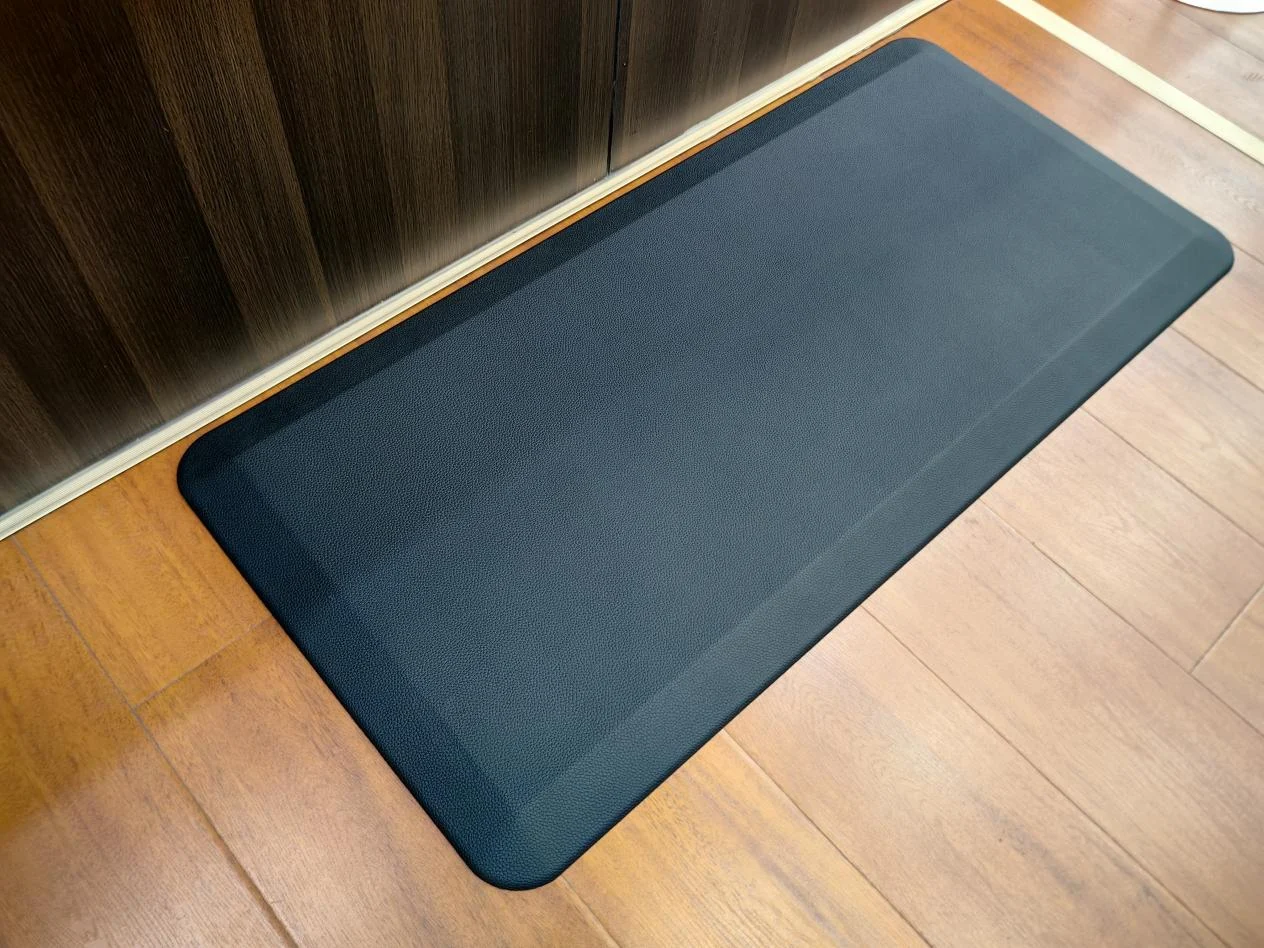
A tapered, sloped perimeter prevents tripping and keeps the mat’s edges from curling upward over time. This safety feature is especially important in high-traffic kitchens and offices. The bevel is not just about safety—it also allows office chairs and cleaning equipment to roll on and off the mat smoothly without catching.
Non-Slip Backing
The best anti fatigue floor mats incorporate textured or grip-enhanced bottoms that prevent shifting on tile, hardwood, laminate, or concrete floors. A mat that slides during use becomes a safety hazard rather than a comfort solution. In wet kitchen environments, this is non-negotiable.
Easy-Clean Surface
Kitchens present unique challenges: oil splatters, flour dust, and liquid spills. Look for mats with sealed, non-porous surfaces that can be wiped down with mild soap and water. Closed-cell foam and polyurethane constructions resist absorbing moisture and stains. Some advanced mats also feature antimicrobial treatments that inhibit the growth of mold, mildew, and odor-causing bacteria, which is a significant advantage in high-humidity areas.
Aesthetic Appeal
Today’s anti fatigue mats come in a wide range of colors, patterns, and finishes. Whether you prefer a mat that blends seamlessly with your kitchen décor or makes a stylish statement, options exist to match any interior design scheme. From faux wood grain to modern geometric prints, the mat can serve as both a functional tool and a design accent. It is no longer necessary to sacrifice visual appeal when installing an anti fatigue floor mat in a visible area of the home.
FAQ:
Q1: How long do anti fatigue floor mats typically last?
Lifespan varies by material. PVC foam mats last 1–3 years with regular home use, while premium polyurethane mats can last 7–10+ years in commercial environments with proper care.
Q2: Can I use an anti fatigue mat on any floor type?
Yes. Most quality mats work well on tile, hardwood, laminate, concrete, and vinyl flooring. Ensure the mat features a non-slip backing to prevent shifting on smooth surfaces.
Q3: How do I clean and maintain an anti fatigue kitchen mat?
Wipe regularly with mild soap and water using a soft cloth or mop. For deeper cleaning, use a gentle cleanser with a soft-bristle brush, then rinse thoroughly and air dry completely.
Q4: What thickness should I choose for maximum relief?
Select a mat at least 3/4 inch (19mm) thick. Thicker mats provide better cushioning and longer-lasting support, while very thin mats offer minimal fatigue reduction.
Q5: Are anti fatigue mats worth it for home use?
Absolutely. Anyone who spends more than 1–2 hours standing in the kitchen, at a desk, or doing household tasks will notice meaningful relief from foot, leg, and back fatigue after adding an anti fatigue mat.
Conclusion
Standing shouldn’t come at the cost of your comfort. An anti fatigue floor mat delivers science-backed relief that you’ll feel from the very first use — reducing foot pressure, easing lower back strain, and improving circulation throughout the day. Whether you’re cooking a family dinner, powering through a work session at your standing desk, or managing a busy commercial kitchen, the right ergonomic mat transforms hard floors into a supportive, fatigue-fighting foundation.
Ready to experience the difference? Explore our collection of premium anti fatigue floor mats designed to blend durability, easy cleaning, and stylish aesthetics into one essential upgrade for your home or workspace.
