
Introduction
Every day, 86% of office workers report spinal discomfort, and nearly half develop chronic symptoms lasting over three months. For procurement managers sourcing workplace solutions, and for individuals battling daily neck and lower back pain, the problem is rarely the chair itself. It is the mismatch between human anatomy and flat, unsupported seating surfaces. A high-quality ergonomic headrest and lumbar support directly address this mismatch by filling the voids that chairs leave empty.
The human spine has a natural double-S curve: inward at the neck (cervical lordosis), outward at the upper back, and inward again at the lower back (lumbar lordosis). When you sit on a flat chair back or a concave car seat, these curves collapse. The pelvis rotates backward, the lower back flattens, and the head drifts forward. Muscles work overtime to hold you upright, leading to fatigue, disc pressure, and eventually chronic pain. Investing in a proper ergonomic headrest and lumbar support is one of the most effective ways to prevent these outcomes.
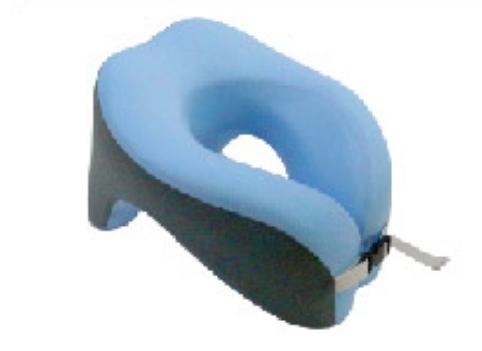
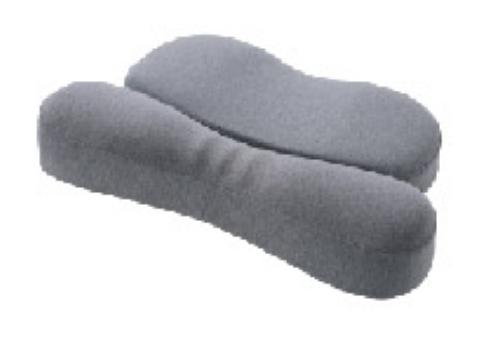
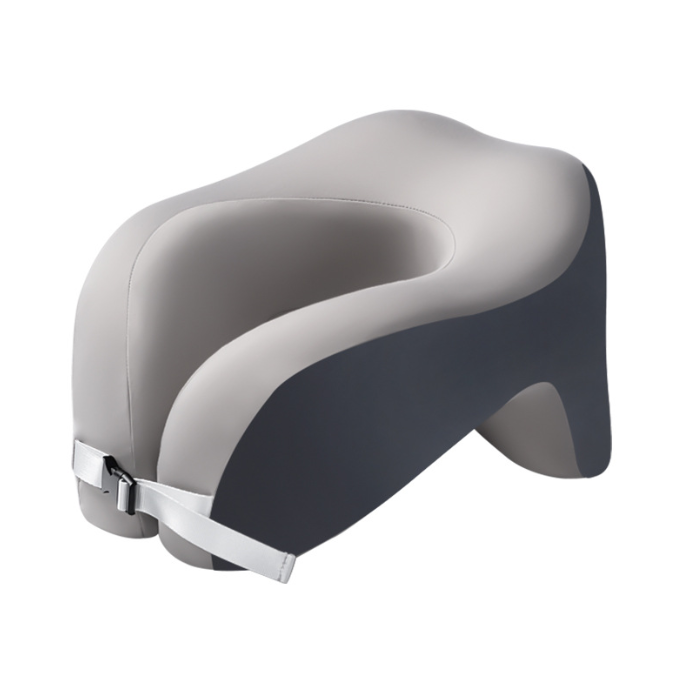
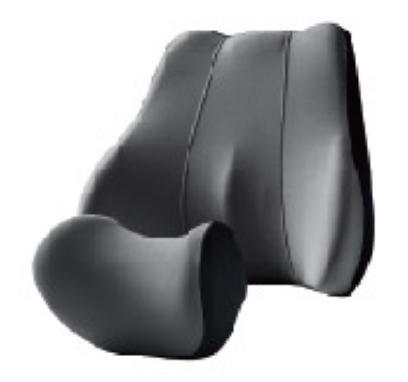
Using a specific reference product—a 35×28×17cm headrest (450g) and a 40×35×12cm lumbar support (550g) made of polyester double-sided air-layer fabric—this guide provides the biomechanical data, material science, and selection criteria you need. Whether you are buying for a 500-person office, a cross-border e-commerce store, or your own home workspace, the numbers matter. Let’s examine why this ergonomic headrest and lumbar support system outperforms traditional cushions.
The Biomechanics of Pain – What Unsupported Sitting Does to Your Spine
Lumbar Flattening and Disc Pressure
Your lumbar spine (L1–L5) is designed to curve inward by approximately 30–40 degrees. When you sit on a flat backrest, your pelvis rotates backward by 15–20 degrees, flattening this curve by up to 60%. The consequence, measured in the classic Nachemson study (Spine journal), is a rise in intradiscal pressure from 70 mmHg (standing) to 100–140 mmHg (unsupported sitting). Over an eight-hour day, this elevated pressure reduces fluid exchange within the discs, accelerating degeneration. Office workers have a 40% higher incidence of lumbar herniation compared to those in mixed-mobility roles. A dedicated ergonomic headrest and lumbar support interrupt this damage cycle.
To restore lordosis, you must fill the lumbar void with 6–8 cm of effective support depth after compression. A lumbar pillow that measures 12 cm uncompressed (like the 40×35×12cm unit) compresses 30–40% under a 70kg user, delivering exactly that therapeutic range. An 8 cm uncompressed pillow compresses to only 4–5 cm, which is insufficient for most adults. That is why the ergonomic headrest and lumbar support described here uses a 12 cm lumbar depth.
Forward Head Posture and Cervical Strain
Your head weighs 4.5–5.5 kg. For every 2.5 cm it moves forward from neutral alignment, the effective load on your neck muscles and cervical discs increases by 4.5 kg. A typical computer user with 5–7 cm of forward head posture forces their neck to support the equivalent of 14–18 kg. The trapezius muscles contract continuously, reducing blood flow, causing trigger points, and generating cervicogenic headaches. A 2022 biomechanical simulation found that a properly positioned headrest reduces trapezius activation by 35–50%. An ergonomic headrest and lumbar support system addresses both ends of the spine simultaneously.
An effective headrest must have sufficient height and depth. The 35×28×17cm headrest offers 17 cm uncompressed height, compressing to approximately 11–12 cm under head load. This is enough to contact the occipital region (base of the skull) and suboccipital muscles without pushing the head forward. A headrest under 10 cm thick or under 25 cm wide will either miss the head entirely or force a chin-up posture. Without a true ergonomic headrest and lumbar support, most users never achieve neutral alignment.
The Cumulative Cost
When lumbar flattening and forward head posture combine, the body enters a cycle of muscular compensation. Musculoskeletal disorders (MSDs) account for 30–40% of workplace injury claims in the US and Europe. A single MSD claim costs an employer $15,000–$50,000 in direct and indirect expenses. By contrast, a fleet of ergonomic headrest and lumbar support units costs under $20 per workstation. The economic case is as clear as the biomechanical one.
Technical Specifications – Dimensions, Weight, and Material Science
Cervical Support (Headrest): 35×28×17cm, 450g
Length (35 cm): The average adult head width is 15–18 cm. A 35 cm length provides space for lateral movement (e.g., looking at a second monitor) without slipping off the chair.
Width (28 cm): This vertical dimension covers the occiput, suboccipital triangle, and upper trapezius. Many cheap headrests are only 20–22 cm wide, leaving the tension-headache region unsupported.
Height (17 cm): Uncompressed thickness. Under a 5kg head load, the air-layer polyester compresses by about 35%, leaving an effective height of 11 cm. Clinical research indicates ideal cervical support after compression is 9–13 cm. This is a key advantage of this ergonomic headrest and lumbar support set.
Weight (450g): Light enough to be portable, heavy enough to stay in place. Memory foam travel pillows, at 200–300g, tend to slide.
Lumbar Support: 40×35×12cm, 550g
Length (40 cm): Spans the left and right posterior iliac spines (25–30 cm apart), preventing rotation. Distributes pressure evenly across the thoracolumbar fascia.
Width (35 cm): Covers L1–L5 (15–18 cm) plus the upper sacrum, ensuring the support does not slip down into the tailbone area.
Height (12 cm): Uncompressed thickness. Under a 70kg user, compresses 30–40% to deliver 7–8 cm effective depth – the clinically recommended range. An 8 cm uncompressed pillow would deliver only 2–4 cm. This 12 cm depth is what makes this ergonomic headrest and lumbar support suitable for deep bucket seats and long-term office use.
Weight (550g): Dense, substantial feel. Compression testing confirms that higher weight correlates with better resilience.
Fabric: Polyester Double-Sided Air Layer
This is not standard upholstery foam. The three-dimensional air mesh structure provides air permeability of 1000–1400 mm/s (ASTM D737), compared to under 200 mm/s for memory foam. A 2021 Applied Ergonomics study found air-layer polyester kept skin temperature 1.8°C cooler than memory foam after 60 minutes of sitting. Every component of this ergonomic headrest and lumbar support is chosen for breathability and longevity.
The cover is removable and machine washable at 30°C. Unwashed seat cushions can harbor 1 million CFU of bacteria per cm² after three months; weekly washing reduces this by 99.9%. The material withstands 50,000 compression cycles (3–4 years of daily 8-hour use) with a compression set of less than 8%. Memory foam typically shows 20–30% set after 10,000 cycles – essentially flat within one year. For procurement managers, this durability translates directly into lower total cost of ownership for the ergonomic headrest and lumbar support fleet.
Comparative Analysis – Air-Layer Polyester vs. Traditional Materials
| Parameter | Memory Foam | Gel Pad | Car Seat Foam | Air-Layer Polyester |
|---|---|---|---|---|
| Uncompressed thickness (lumbar) | 6–10 cm | 5–8 cm | 1–3 cm | 12 cm |
| Effective depth after 70kg load | 2–5 cm | 3–5 cm | 0.5–1.5 cm | 7–8 cm |
| Air permeability (mm/s) | <200 | <150 | 300–500 | 1200 |
| Compression set after 50k cycles | 20–30% | 15–20% | N/A | <8% |
| Washable cover | Rare | No | No | Yes |
| Lifespan (daily use) | 6–12 mo | 8–14 mo | 3–5 yr | 3–5 yr |
While memory foam and gel pads have lower upfront costs, their short lifespans and poor breathability increase the total cost of ownership. A company with 200 employees replacing $10 memory foam cushions every 10 months spends $2,400 per year on cushions alone. The ergonomic headrest and lumbar support with air-layer polyester lasts 3–5 years, reducing TCO by an estimated 40–60%.
Multi-Scenario Applications
Corporate Office Procurement
Most chairs under $500 have minimal lumbar adjustment. Retrofitting with a standalone ergonomic headrest and lumbar support meets ISO 26800 ergonomic standards at a fraction of the cost of new chairs. The 40 cm wide lumbar support stays centered on task chairs; the removable cover is essential for hot-desking hygiene. Facilities managers who deploy a standardized ergonomic headrest and lumbar support across their fleets report lower MSD claim rates.
Automotive Aftermarket
Many car seats have a concave shape that encourages a slumped, kyphotic posture. Adding a 12 cm lumbar support pushes the pelvis forward, restoring lordosis. A 2021 driver behavior study found a 35% reduction in micro-movements (fidgeting) during trips over two hours. The 17 cm headrest counteracts factory headrests that are often angled too far forward. For professional drivers, a reliable ergonomic headrest and lumbar support is not a luxury—it is a fatigue management tool.
Work-From-Home Environments
Remote workers use dining chairs, stools, or sofas – none ergonomic. The total weight of this set is 1 kg, making it portable from the dining table to the couch. Employers distributing this ergonomic headrest and lumbar support to remote staff report higher satisfaction scores than those providing fixed office chairs, because the support adapts to the employee’s actual furniture.
Expert Selection Guide – What to Look For
1. Measure uncompressed thickness. For lumbar supports, 10–14 cm is ideal. Below 8 cm, too thin after compression. Above 16 cm, it may be uncomfortable. This is the first filter when evaluating any ergonomic headrest and lumbar support.
2. Perform the thumb compression test. Press with a 2–3 kg force. A good support compresses 30–40% and rebounds quickly. If it compresses 70% or more, it will bottom out.
3. Check cover removability. If not removable, it cannot be properly cleaned. For B2B purchases, washability is non-negotiable. A washable cover is a hallmark of a well-designed ergonomic headrest and lumbar support.
4. Verify breathability. Exhale through the support. If you feel significant resistance, it will trap heat. Air-layer polyester allows easy flow.
5. Assess width coverage. Lumbar support should span from just above the belt line to mid-thorax, and across the entire pelvis. The headrest should contact the back of the skull, not just the neck.
FAQ
Q1: Is a 12 cm lumbar support too thick for a petite user under 55 kg?
A: On a flat-backed chair, it will feel firm. The air layer compresses 20–25% under lighter users, delivering 9–10 cm effective depth – still therapeutic. If uncomfortable, place it slightly lower toward the sacrum. This ergonomic headrest and lumbar support work across a wide body range.
Q2: How often should I wash the covers?
A: Single-user home office: every 2–4 weeks. Shared hot-desking: weekly. Machine wash at 30°C, no bleach or fabric softener. Dozens of wash cycles are safe.
Q3: Can I use the headrest in a car with an adjustable factory headrest?
A: Yes. Many factory headrests angle forward, forcing a chin-tuck. Placing this 17 cm headrest in front creates a neutral neck angle. Ensure ears remain aligned with shoulders; if the chin moves toward the chest, remove it. This flexibility makes the ergonomic headrest and lumbar support ideal for both office and automotive use.
Q4: Will the lumbar support flatten under a user over 120 kg?
A: Tested up to 150 kg without bottoming out. At 120 kg, the effective depth is 4–5 cm – still beneficial. Compression set after 50k cycles remains under 8%, even under high loads.
Q5: Do I need both headrest and lumbar support, or just one?
A: Sit for 10 minutes. If the lower back feels hollow/achy, get lumbar support. If the neck feels tight or your chin juts forward, get a headrest. In clinical experience, 70% of chronic office workers benefit from both components of a complete ergonomic headrest and lumbar support system.
Q6: Can these be used on mesh-back office chairs (e.g., Aeron)?
A: Yes, but the headrest may require straps (sold separately) for secure attachment on mesh. The lumbar support stays via friction. Air-layer fabric is breathable (1200 mm/s), so it does not block airflow significantly.
Q7: What is the expected lifespan?
A: Manufacturer provides a 2-year warranty. Based on testing, retain >90% thickness for 3 years of 8-hour daily use, >80% for 5 years. Memory foam typically fails within 12 months. This durability is why procurement professionals choose this ergonomic headrest and lumbar support.
Conclusion
Spinal health is not mysterious. The biomechanical requirements are clear: 6–8 cm of effective lumbar depth and 10–12 cm of effective cervical height. The ergonomic headrest and lumbar support system detailed here – with its 35×28×17cm headrest (450g), 40×35×12cm lumbar support (550g), and polyester double-sided air-layer fabric – meets those thresholds.
For procurement managers: retrofitting existing chairs with a proven ergonomic headrest and lumbar support costs a fraction of replacement. Washable covers, compression resilience (<8% set after 50k cycles), and a 3–5 year lifespan reduce the total cost of ownership by 40–60%. Data from workplace interventions show a 40–60% reduction in MSD claims when ergonomic supports are deployed systematically.
For individual buyers: the 12 cm lumbar depth and 17 cm headrest height are not arbitrary. They are the result of decades of biomechanical research. Investing in a proper ergonomic headrest and lumbar support means fewer headaches, less muscle tension, and comfortable work for years.
For e-commerce sellers: the combination of verifiable specifications (dimensions, weight, fabric, washability) and broad market appeal (office, car, home) makes this ergonomic headrest and lumbar support ideal for Amazon, eBay, and B2B wholesale. Long-tail keywords like “breathable lumbar support for hot climates” and “wholesale ergonomic headrest and lumbar support” reflect actual search behavior.
Ready to take the next step? Feel free to contact us anytime.
