
Introduction
That lower back ache after hours at your desk. The stiffness after a long drive. Sound familiar?
In many cases, the problem isn’t the chair itself, but the lack of proper support between your lower back and the backrest, which leads to poor posture and constant muscle strain throughout the day.
A memory foam lumbar support cushion helps fill that gap by supporting the natural curve of your spine and reducing pressure while you sit. The real question is whether it’s truly necessary or just a comfort upgrade—let’s take a closer look.
The actual mechanical problem with standard chairs
Look at most office chairs or car seats. The backrest is usually flat. But your lower back has a natural curve, called lumbar lordosis. This curve helps your spine carry weight and stay balanced. When you sit against a flat surface, there is a gap between your lower back and the chair.
Without proper support, your pelvis slowly tilts backward. Your lower back flattens, and sometimes even rounds in the wrong direction. This puts uneven pressure on your spine and makes your back muscles work all day just to keep you sitting upright. Over time, this leads to fatigue, stiffness, and discomfort.
A memory foam combination lumbar support cushion helps by filling that gap. It supports your lower back and helps keep your spine in a more natural position. Your muscles can relax instead of working constantly. It’s a simple fix, but it makes sitting much easier.
What the numbers actually say about lumbar support
This is not just about comfort. There is real research behind it.
One study found that office workers who used seat support cushions for several months had about 40% lower risk of neck pain and around 50% lower risk of lower back pain in high-risk groups. This shows that better sitting support can make a real difference over time.
At the same time, more people are sitting for long hours every day—at work, in cars, or at home. Because of this, demand for ergonomic seating products keeps growing.
A properly designed memory foam combination lumbar support cushion does more than feel soft. It helps support your spine in a natural position and spreads pressure more evenly. This can reduce tiredness and stiffness after long periods of sitting, helping you feel more comfortable at the end of the day.
Memory foam versus everything else
Memory foam dominates the lumbar support market for good reason. A quality memory foam combination lumbar support cushion moulds gently to the natural curve of your spine, offering pressure relief across the entire lumbar region. The material adapts to your body shape for consistent support that stays comfortable through hours of continuous use.
Compare that to other common cushion materials:
-
Standard polyurethane foam feels firm initially but compresses permanently over time. After a few months, you’re essentially sitting on a flattened pancake. Not ideal for a memory foam combination lumbar support cushion that you expect to last.
-
Gel-infused foam adds a cooling layer and a bit more firmness, but it’s more responsive and less contouring. Some people prefer that “waking your back up with a high-five” feeling. Others find it too firm.
-
Inflatable cushions offer adjustable firmness but introduce failure points—valves leak, seams burst, and you’re constantly adjusting pressure. A memory foam combination lumbar support cushion has no moving parts to break.
-
High-resilience memory foam hits the sweet spot. It adapts to your shape, holds that shape without sinking, and bounces back after you get up. Unlike regular cushions that flatten, the foam stays supportive.
The product uses memory foam construction designed to provide consistent, lasting support without flattening over time. That matters because a memory foam combination lumbar support cushion that compresses after six months isn’t really supporting anything anymore.
What the “combination” design actually does
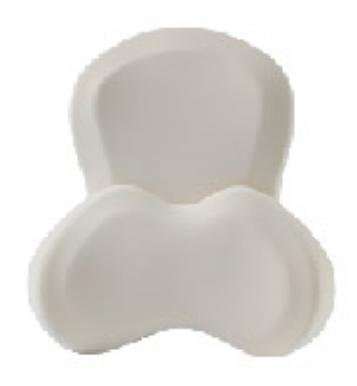
You might wonder why a memory foam combination lumbar support cushion is called “combination.” It simply means the design supports more than just one area of your back.
Basic lumbar pillows usually focus only on the lower back. A combination design works differently. It supports both your lower back and the seat area together, helping your body stay in a more natural position from your pelvis up to your spine. This can reduce pressure on your lower back and tailbone, especially during long hours of sitting at work or while driving.
Size also plays an important role. At 40 by 45 cm, this memory foam combination lumbar support cushion offers wider coverage than many standard cushions. The 12 cm thickness is enough to support the lower back without pushing you too far forward, which can happen with thicker or poorly designed cushions.
For comparison, many common cushions are around 33 by 33 cm, which means less surface area and less overall support. The larger size of this memory foam combination lumbar support cushion helps cover more of your back, not just a small lower section.
Adjustable straps: the detail that decides if you actually use it
Here’s something most product pages don’t talk about. You attach a memory foam combination lumbar support cushion to your chair… and after a short time, it starts sliding down, shifting to one side, or even falling off completely.
This is a small problem, but it’s usually the reason people stop using lumbar cushions.
A good memory foam combination lumbar support cushion solves this with strong adjustable straps. Dual straps wrap around the chair and hold the cushion firmly in place. This keeps it from moving around while you sit, even if you change position or lean back.
This is especially important in car seats, where movement, turns, and bumps can easily shift a poorly secured cushion.
Many users report the same experience: cheap straps break or don’t hold well, leading to constant adjustment and frustration. In contrast, a cushion that stays in place becomes part of your daily routine. If a memory foam combination lumbar support cushion doesn’t stay fixed, most people simply stop using it.
Who actually needs this and who doesn’t
Let’s be honest: not everyone needs a memory foam combination lumbar support cushion. If you spend most of your day standing, moving, or reclining in a chair with built-in adjustable lumbar support that actually fits your spine, you can probably skip it.
But if any of these describe your daily life, a memory foam combination lumbar support cushion starts to look less like an optional accessory and more like basic equipment:
-
Office workers who sit five or more hours a day. Studies show prolonged sitting creates constant low-grade stress on spinal structures that accumulates over the years.
-
Long-distance drivers who log regular commutes or road trips. Car seats are notoriously flat-backed. Your lumbar spine rounds, and by hour three, you’re shifting position constantly trying to find comfort. A memory foam combination lumbar support cushion changes that.
-
Remote workers are using kitchen chairs, dining chairs, or sofas as makeshift office furniture. Those seats offer zero lumbar support. Zero. Your back is paying for that makeshift setup every single day.
-
Anyone with existing back conditions like herniated discs, sciatica, or chronic lower back pain. A well-fitted memory foam combination lumbar support cushion can help restore a more neutral sitting position, reducing sustained strain on already vulnerable areas.
-
Gamers who spend hours in front of screens. Gaming chairs often have aggressive bolstering but surprisingly poor lumbar support. The cushion fills that gap.
-
Postpartum mothers whose core strength hasn’t fully recovered. Extra lumbar support helps maintain alignment while abdominal muscles rebuild.
One user review captures the universal appeal: “This is such a soft yet supportive back cushion. I bought it with my mother in mind. She has scoliosis and needs a comfortable back support behind her.” That’s the range—from chronic conditions to everyday comfort, the same memory foam combination lumbar support cushion works for all of them.
Office chairs: where lumbar support makes the biggest difference
The office chair is where most people spend the majority of their seated hours. And most office chairs—even expensive ones—have either non-adjustable lumbar support that doesn’t fit your spine, or no lumbar support at all.
An ergonomic memory foam combination lumbar support cushion addresses this by using your own body weight to maintain alignment. The force of your weight supports a natural forward tilt, which can alleviate discomfort caused by poor posture and improve spinal health over time.
High-density memory foam provides the right balance—firm enough to maintain spinal alignment, soft enough to remain comfortable for eight-hour workdays. Some cushions feel great for 30 minutes and then turn into torture devices. A quality memory foam combination lumbar support cushion doesn’t do that. It stays supportive hour after hour.
Real-world testing confirms this matters. Users report that after sitting with a good lumbar cushion for long workdays, the difference becomes noticeable within days—less end-of-day tiredness, fewer tension headaches, and a noticeable reduction in that heavy, achy feeling that used to set in around 3 PM.
Car seats: the overlooked use case that might matter most
Car seats present a unique challenge. The seat itself is angled. The backrest is often recessed. And you’re dealing with vibration, turns, and sudden stops that shift your body weight constantly.
A memory foam combination lumbar support cushion designed for automotive use needs to do three things: fill the lumbar gap created by the seat’s contour, stay in place during movement, and maintain support despite vibration.
The cushion fits this use case. One user tested it in their driver’s seat and reported: “This product fitted the contours of my driver’s car seat perfectly. There is no doubt that it will help to save my spine from strain injury when travelling over a longer journey.” Another user confirmed the difference behind the wheel, noting that long hours strain your back, and proper lumbar support maintains natural posture, reduces fatigue, and improves comfort.
For daily commuters or professional drivers, the cumulative effect is significant. A 30-minute commute each way, five days a week, adds up to 260 hours of seated driving time annually. That’s 260 hours of lumbar rounding if you’re not supported. Or 260 hours of neutral spine alignment if you are, thanks to your memory foam combination lumbar support cushion.
The posture correction effect you didn’t expect
Here’s something most lumbar cushion reviews don’t mention: the passive posture correction.
Slouching feels comfortable initially because it requires less active muscle engagement. But that comfort is deceptive. Poor posture compounds over time, creating habits that become increasingly difficult to break.
A memory foam combination lumbar support cushion provides passive correction. The physical presence of support behind your lower back makes slouching feel uncomfortable, and proper posture becomes the path of least resistance. Users naturally sit more upright without conscious effort.
This effect is surprisingly powerful. You don’t have to think about sitting up straight. The cushion simply makes slouching feel wrong. Your body gravitates toward proper alignment because it’s actually more comfortable to sit correctly when the support is there. That’s passive posture correction, and it’s the hidden benefit that keeps people using their memory foam combination lumbar support cushion year after year.
Real user experiences: what works and what doesn’t
Search through lumbar support reviews, and you’ll find two distinct camps: people who swear by their cushions and people who gave up after a week. The difference almost always comes down to fit and expectation management.
Positive experiences cluster around a few themes. Relief from chronic pain appears consistently. “Great lumbar support cushion. Has relieved my back pain while sitting on the lounge,” one user reported. Another user noted after back surgery that a cushion set provided excellent support during recovery.
Durability matters too. Users notice when foam holds its shape versus when it flattens. “The foam doesn’t flatten out like cheap alternatives,” one reviewer observed after extended use. The memory foam construction of this memory foam combination lumbar support cushion resists permanent compression, maintaining support through repeated use.
Versatility gets mentioned frequently. Office chair, car seat, couch, even airplane seats—a portable cushion travels with the user. Users appreciate being able to move their memory foam combination lumbar support cushion from their desk chair to their car to their living room recliner without buying three separate cushions.
Negative experiences usually come down to a few specific issues. Thickness complaints appear regularly—some users find the cushion too thick for their particular chair, making it difficult to find a comfortable position. That’s why a 12-centimeter depth needs to work with your specific seat, and why adjustable straps that let you position the cushion vertically are essential. Fit issues also arise with chairs that have aggressive bucket-style contours or seats with built-in lumbar bulges that conflict with the cushion placement.
Comparison: how this cushion measures up
Here’s how a well-designed memory foam combination lumbar support cushion compares to other types of back support products:
| Feature | Basic Lumbar Roll | Standard Memory Foam Pillow | Combination Lumbar Support Cushion |
|---|---|---|---|
| Shape retention | Moderate—roll compresses | Good—holds shape | Excellent—integrated design |
| Lower back coverage | Narrow (roll shape) | Moderate (pillow shape) | Wide (40 cm coverage) |
| Upper back support | Minimal | Some | Moderate |
| Strap security | Usually, a single strap | Dual adjustable straps | Dual adjustable straps |
| Thickness adjustability | No | No | Strategic placement |
| Best use case | Brief seated periods | Single chair | Multiple chairs, extended sitting |
This product occupies the “combination” category—the integrated design that provides broader coverage and a more versatile fit than basic lumbar rolls or standard pillows. The 40 x 45 x 12 cm dimensions give it a larger footprint than many alternatives, meaning you get more support area from your memory foam combination lumbar support cushion.
The fabric and construction details that matter
A memory foam combination lumbar support cushion’s outer fabric matters as much as the foam inside. Polyester double-sided fabric provides durability and breathability. Unlike single-sided covers that wear unevenly, double-sided construction means the cover maintains its integrity through repeated use and washing.
The cushion weighs 650 grams, which is light enough to carry between locations but heavy enough to stay put when properly strapped in place. Compare that to some ultra-light options that users describe as feeling cheap or insubstantial. There’s a balance: too light, and it shifts during use; too heavy, and it becomes inconvenient to move.
Durable outer materials resist abrasion from daily contact with chair backs. Cheaper cushions develop worn spots, pilling, or seam failures within months. Quality construction with reinforced stitching and abrasion-resistant fabric extends the usable life of your memory foam combination lumbar support cushion significantly.
The adjustment period nobody mentions
Here’s something almost no product listing tells you: lumbar support cushions take time to work.
Your body has spent years developing its slouching habits. Your muscles have adapted to holding you in a rounded position. When you first introduce proper lumbar support, it can feel strange. Maybe even uncomfortable for the first few days.
Experts recommend allowing one to three weeks for your body to adjust to a new sitting position. During this period, use your memory foam combination lumbar support cushion consistently. Your postural muscles need time to relearn their relaxed position. By week two, proper alignment starts to feel normal. By week three, sitting without support feels wrong.
This adjustment period is normal. Don’t give up after two days because the cushion feels different. Different is the point. Different means your spine is finally getting the support it’s been missing.
