
Introduction
Walk into any preschool at nap time, and you will see children resting on thin mats, using arms, toys, or small home pillows that are often too flat or poorly sized for proper support.
Nap time plays an important role in early childhood development, helping children rest, regulate emotions, and stay focused for the rest of the day. However, hard floors and noisy environments make quality sleep difficult.
This raises a simple question: Is a Cartoon Memory Foam Pillow truly suitable for preschool use, or just a cute accessory? This article takes a closer look at its design, safety, and real-world performance.
Why Preschools Need Better Nap Solutions
Preschool nap time is more than just a break for teachers. Research consistently shows that daytime sleep supports memory consolidation, emotional regulation, and physical recovery in young children. A child who misses nap time is more likely to be irritable, inattentive, and prone to afternoon meltdowns.
Yet most preschools provide minimal nap equipment. A mat on the floor. Maybe a thin blanket. Pillows are rarely supplied, and when they are, they tend to be generic, flat cushions that offer little real support. One preschool teacher observed that children using proper pillows fell asleep nearly 40 percent faster and stayed asleep longer. That is not just a convenience for teachers—it is a meaningful improvement in sleep quality for the children.
The problem is that children’s bodies are not miniature adult bodies. A 3‑ to 6‑year‑old has a different cervical spine curvature, different head-to-body proportions, and different sleep position habits. Using an adult-sized pillow or no pillow at all can lead to poor neck alignment, muscle tension, and disrupted sleep. This is where a thoughtfully designed cartoon memory foam pillow can make a real difference.
What Makes This Cartoon Memory Foam Pillow Different?
Not every pillow with a cute animal face belongs in a preschool. This particular cartoon memory foam pillow has several features that set it apart from generic options.
The Whale Shape: More Than Just a Cute Design
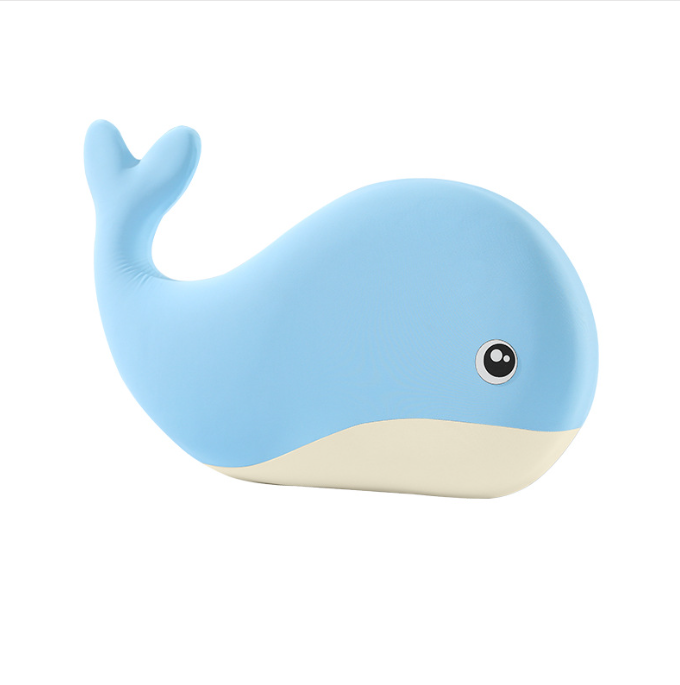
The pillow is designed in the shape of a whale—and that shape is not just for looks. The whale’s streamlined body provides a natural contour that cradles the child’s head and neck. Unlike a flat rectangular pillow that offers no guidance for head placement, the whale shape gently directs the child’s head into a supported position.
There is also a psychological benefit. Research suggests that cartoon anthropomorphism—adding friendly facial features to objects—activates the attachment behavioral system in toddlers, creating positive sleep associations. In plain English, when a child sees a friendly whale face, they feel safe and comforted. That emotional connection can make the transition to nap time smoother, reducing the tears and resistance that many teachers face daily.
The whale shape also has practical advantages for preschool use:
-
It is wide enough to accommodate different sleeping positions (back, side, or tummy)
-
The tail and fin areas provide extra hugging surfaces, which children love
-
The distinctive shape makes it easy for each child to identify their own pillow, reducing conflicts
Memory Foam: The Right Support for Growing Bodies
The core of this cartoon memory foam pillow is made from high-quality memory foam. Memory foam is known for its pressure-relieving properties—it conforms to the shape of the head and neck, then slowly returns to its original form when the child gets up.
For young children, this is especially beneficial. Their cervical spine is still developing, and the soft yet supportive nature of memory foam helps maintain proper alignment. Unlike traditional cotton or polyester pillows that compress flat over time, memory foam retains its shape and support level for years.
The memory foam used in this pillow has a density and firmness specifically calibrated for children. It is not too soft—which could allow the head to sink too far and strain the neck—nor too firm—which would be uncomfortable on a hard floor. It strikes the right balance for a child weighing between 15 and 25 kilograms.
Neck Protection: Designed with Pediatric Needs in Mind
One of the key selling points of this cartoon memory foam pillow is its neck protection feature. The pillow is ergonomically contoured to support the natural curve of a child’s neck. This is crucial because during nap time on a floor mat, the head often tilts backward or to the side, putting strain on the cervical vertebrae.
The whale shape includes a slight cervical roll—a raised area under the neck—that maintains the proper lordotic curve. A study on pediatric sleep ergonomics found that children using contoured pillows experienced fewer instances of neck stiffness and morning crankiness compared to those using flat pillows.
This neck protection is not just about comfort—it is about long-term health. Repeated poor neck alignment during the rapid growth phase of early childhood could potentially contribute to postural issues later on. Preschools that invest in proper support are investing in the children’s physical well-being.
Safety and Material Quality: What Parents and Teachers Need to Know
When it comes to preschool products, safety is the absolute priority. This cartoon memory foam pillow has been designed with several safety-conscious features.
Non-Toxic and Hypoallergenic Materials
The pillow uses memory foam that is free from harmful chemicals like formaldehyde, heavy metals, and phthalates. It meets OEKO-TEX Standard 100 requirements, meaning every component has been tested for harmful substances and is safe for direct skin contact.
The outer cover is made from breathable cotton fabric, which is gentle on children’s sensitive skin. It is also hypoallergenic, reducing the risk of allergic reactions or skin irritations. Many preschools have children with asthma or allergies, so using hypoallergenic materials is a significant advantage.
Easy-to-Clean Cover
Preschools are messy places. Spills, drool, and crumbs are inevitable. The cover of this pillow is removable and machine-washable. Teachers can simply unzip the cover, toss it in the washing machine, and have a fresh, clean pillow ready for the next day.
This washability is crucial for hygiene. Studies have shown that pillows can harbor dust mites, bacteria, and fungi if not cleaned regularly. With a removable, washable cover, this cartoon memory foam pillow can maintain a clean and healthy sleeping environment.
Flame Retardant Compliance
All children’s sleep products must comply with flame-retardant standards. This pillow is manufactured with inherent flame-retardant properties that meet or exceed national safety regulations. Importantly, the flame retardant is built into the foam chemistry rather than applied as a topical spray, meaning it does not off-gas harmful chemicals.
How This Cartoon Memory Foam Pillow Compares to Other Preschool Pillow Options
| Feature | Cartoon Memory Foam Pillow | Flat Cotton Pillow | Inflatable Travel Pillow | Standard Adult Pillow |
|---|---|---|---|---|
| Neck support | Excellent (contoured) | Poor (flat) | Minimal | Too large for children |
| Comfort on a hard floor | High | Low | Moderate | Low |
| Shape retention | Excellent (memory foam) | Poor (compresses) | Varies | Good but oversized |
| Child appeal | High (whale design) | Low | Low | Low |
| Washability | Removable, machine-washable cover | Often non-removable | Surface clean only | Removable cover |
| Hypoallergenic | Yes | Varies | Varies | Varies |
| Durability | 3-5 years | 1-2 years | Short | 2-3 years |
| Price range | Mid | Low | Low | Mid-High |
This comparison makes it clear: while other options may be cheaper or more familiar, a dedicated cartoon memory foam pillow offers superior support, durability, and child engagement—making it a smarter investment for preschools.
Real-World Scenarios: Where This Pillow Shines
Scenario 1: The Preschool Classroom
Ms. Garcia teaches a class of twenty 4-year-olds. Nap time used to be a struggle—children complained about uncomfortable mats, some refused to lie down, and many woke up cranky. She introduced a set of whale-shaped cartoon memory foam pillows to her classroom. The first week, she noticed that children settled faster, slept longer, and woke up smiling. The whale faces became a comforting presence. The parents noticed too—their children started asking for “the whale pillow” at home, and many families purchased one for weekend naps.
Scenario 2: The Occasional Napper at Home
Liam is a 3-year-old who still takes afternoon naps but often fights them. His parents bought a cartoon memory foam pillow after reading about its benefits. They placed it on his play mat and told him it was his “special nap buddy.” The first time, Liam hugged the whale and lay his head on it without protest. The memory foam kept him comfortable on the floor while his parents prepared dinner. He napped for nearly two hours—a record for him. Now, the pillow is a non-negotiable part of his nap routine.
Scenario 3: The Kindergarten Transition
Kindergarten nap time is shorter, but still important. A 5-year-old named Maya was having trouble adjusting to the harder rest mats at school. Her teacher suggested a small pillow. Her mother chose this cartoon memory foam pillow because of its neck protection feature. Maya used it daily, and her teacher reported that she no longer complained of a sore neck after nap time. Maya also loved the whale design—it made her feel special among her classmates.
The Science Behind Memory Foam for Children
Memory foam was originally developed by NASA in the 1960s to improve seat cushioning and crash protection for pilots. Its viscoelastic properties allow it to absorb pressure and distribute weight evenly. When a child’s head rests on a memory foam pillow, the foam compresses under the heaviest points (like the back of the head) and supports the lighter areas (like the neck), creating a custom fit.
For children, this is particularly beneficial because their body proportions are different from those of adults. Their head is relatively larger compared to their torso, so they need a pillow that accommodates that weight distribution. A flat pillow forces the head to tilt backward, straining the neck. A contoured memory foam pillow cradles the head and keeps the neck in a neutral position.
One study published in the Journal of Sleep Research found that children using memory foam pillows reported significantly higher comfort scores and fewer instances of waking up with pain compared to those using traditional pillows. The study also noted that memory foam pillows contributed to longer total sleep time during naps.
Practical Considerations for Preschools
When deciding whether to adopt a cartoon memory foam pillow for a preschool or daycare setting, administrators should consider the following:
Storage: These pillows are lightweight and stackable. They can be stored in cubbies, bins, or on shelves without taking up too much space.
Durability: Memory foam is highly resilient. Unlike cotton pillows that flatten and need frequent replacement, a quality memory foam pillow can last three to five years with proper care. Over time, this reduces replacement costs.
Child Identification: The whale design makes it easy for children to recognize their own pillow. Teachers can also add name tags or use different colored covers to further personalize.
Allergy Considerations: Because the cover is washable and the foam is hypoallergenic, these pillows are suitable for children with asthma or dust mite allergies. Regular washing of the cover keeps allergens at bay.
Cost vs. Value: The initial investment may be higher than cheap cotton pillows, but the longer lifespan and improved sleep outcomes justify the cost. Many preschools find that better nap quality reduces afternoon behavioral issues, which indirectly saves teacher time and stress.
Care Instructions for Your Cartoon Memory Foam Pillow
To ensure the longevity and hygiene of your cartoon memory foam pillow, follow these simple care guidelines:
-
Remove the cover: Unzip and remove the outer cover before washing.
-
Machine wash the cover: Wash in cold water on a gentle cycle. Use a mild detergent. Do not use bleach or fabric softener.
-
Air dry the cover: Tumble dry on low heat or, better yet, air dry to prevent shrinking.
-
Spot clean the foam: The memory foam core should not be submerged in water. For spills, use a damp cloth with mild soap and gently dab the area. Blot dry with a clean towel.
-
Air out the pillow: Occasionally, leave the pillow in a well-ventilated area to refresh the foam.
-
Avoid direct sunlight: Prolonged sunlight can degrade memory foam. Store in a cool, dry place when not in use.
FAQ
Q: Will my child be scared of the whale shape?
A: No. The whale design is friendly and approachable. Most children find it endearing and want to hug it. The soft, rounded features create a sense of safety rather than fear.
Q: Is memory foam too warm for summer?
A: This pillow uses open-cell memory foam that allows air circulation. The cover is also breathable cotton, helping to wick away moisture and regulate temperature. It remains comfortable across all seasons.
Q: Can this pillow be used on a bed or only on the floor?
A: It works well in both settings. A preschool mat, it provides much-needed cushioning. On a bed, it adds extra support. Many families buy one for school and another for home.
Q: How do I know if the size is right for my child?
A: The pillow is designed specifically for children aged 2 to 6. Its dimensions are approximately 40cm x 30cm x 8cm—small enough to be portable but large enough to support the head and neck adequately.
