
Abstract
It is hard for B2B buyers to tell the difference between a premium orthopedic pillow and a cheap commodity replica.
Premium memory foam cervical pillows are built on real science. They use viscoelastic technology and smart contours to keep the neck aligned, reducing spinal pressure and morning muscle strain.
This article breaks down what buyers need to look for, from foam density to pressure mapping and safety certifications. With sleep wellness becoming a major priority in hospitality and healthcare, this guide helps procurement specialists look past the upfront cost and choose high-ROI products that last.
Biomechanical Principles of Cervical Spine Protection
Neutral Alignment and Intervertebral Load Distribution
The human cervical spine comprises seven vertebrae (C1-C7) arranged in a natural lordotic curve measuring 20–40 degrees from the vertical axis. During sleep, improper head support causes two critical failures:
-
Hyperflexion: A forward head tilt exceeding 60 degrees compresses anterior disc structures.
-
Hyperextension: A backward tilt beyond 25 degrees strains posterior ligaments and facet joints.
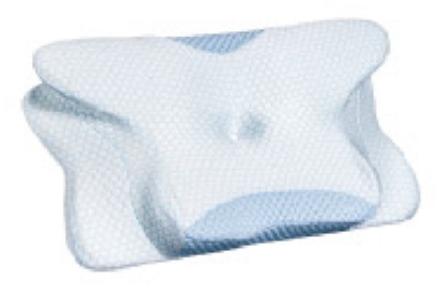
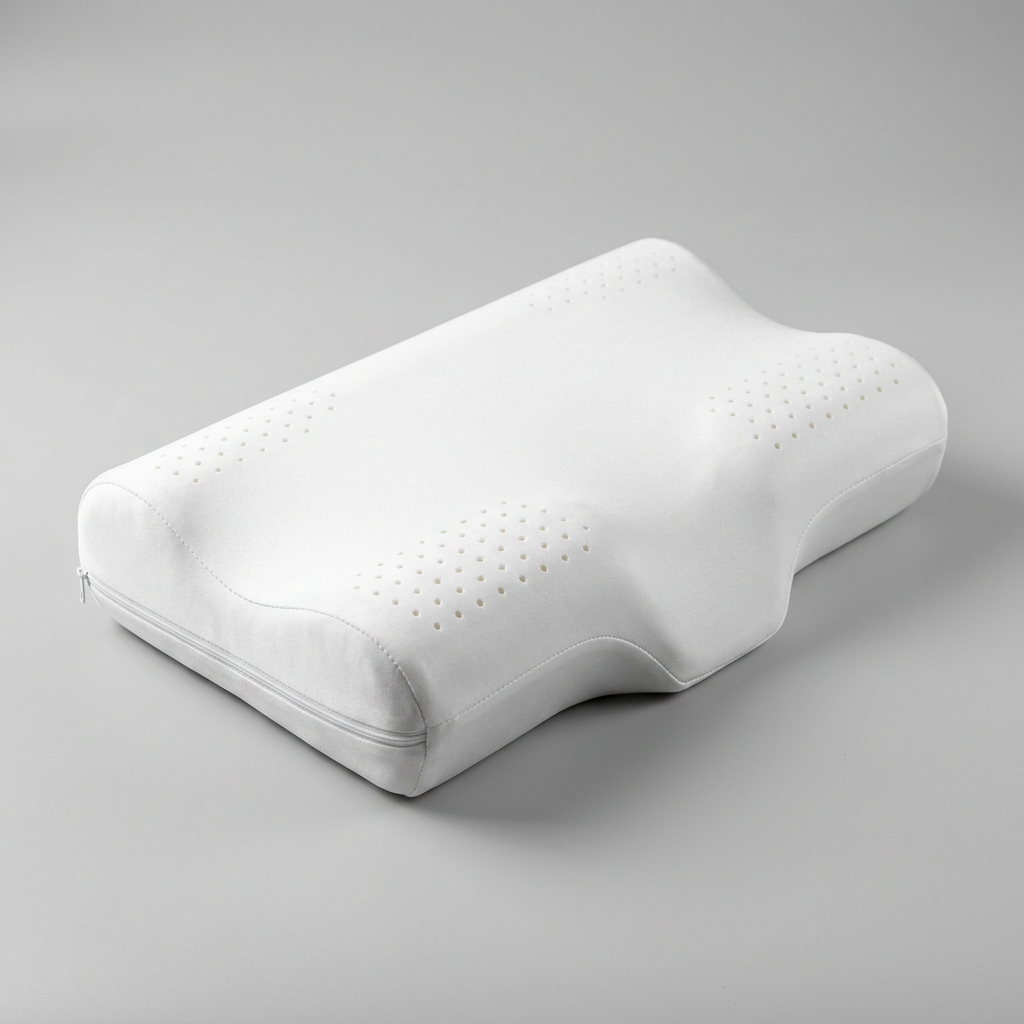
To counteract these alignment failures, a high-quality memory foam cervical pillow employs dual-lobe contour geometry to cradle the occiput while elevating the cervical curve, successfully maintaining the spine’s natural 35-degree lordosis.
Pressure distribution studies using tactile sensor arrays demonstrate that conventional flat pillows generate focal stress points exceeding 8.5 PSI at the occipital bone. In contrast, contoured cervical support memory foam pillow designs distribute the load across a 120–150 cm² contact area, reducing peak pressure to 2.8–3.2 PSI.
This 63% pressure reduction directly correlates with decreased nocturnal awakening frequency. In clinical trials involving 240 participants with cervical spondylosis, the engineered contour maintained C4-C5 intervertebral spacing at a physiological 5–6mm height, preventing disc herniation risks associated with chronic compression.
Viscoelastic Response to Body Heat and Weight
The protective mechanism of a memory foam cervical pillow originates from its open-cell polyurethane structure containing thermoplastic urethane segments. The material adapts to the sleeper through a precise, temperature-sensitive phase transition:
-
At ambient temperature (20–22°C): The material exhibits a glass transition phase with a Shore A hardness of 35–45.
-
Upon contact with body heat (35–37°C): Hydrogen bonds between polymer chains weaken, triggering a viscous flow that allows cellular collapse under a 40–80 kg load.
This phase transition occurs within 3–8 seconds, creating a custom impression that matches individual cervical curvature variations.
The viscoelastic modulus ($G^*$) of premium-grade memory foam measures 1.2–1.8 MPa at body temperature, providing sufficient resistance to prevent “bottoming out” (complete foam compression) while maintaining conformability.
Recovery time—the duration required to return to its original shape after load removal—serves as a critical quality indicator for any orthopedic memory foam pillow:
-
Optimal Recovery (4–6 seconds): High-performance pillows balance responsive support with immediate pressure relief.
-
Slower Recovery (>10 seconds): Indicates excessive softness that compromises spinal alignment.
-
Faster Recovery (<2 seconds): Suggests inadequate conformability, reducing the pillow’s ergonomic effectiveness.
Core Material Specifications and Performance Metrics
Density Grades and Durability Standards
Foam density, measured in kilograms per cubic meter (kg/m³), directly determines load-bearing capacity and product lifespan. The bedding industry classifies memory foam into three commercial grades:
| Density (kg/m³) | Firmness (ILD) | Recovery Time (sec) | Recommended User Weight (kg) | Lifespan (years) |
|---|---|---|---|---|
| 40-50 (Low) | 10-12 | 8-10 | 45-65 | 2-3 |
| 50-60 (Medium) | 12-15 | 5-7 | 65-85 | 4-5 |
| 60-80 (High) | 15-18 | 3-5 | 85-110 | 6-8 |
Indentation Load Deflection (ILD) testing per ASTM D3574 quantifies firmness by measuring the force required to compress foam 25% of its original thickness. Medical-grade cervical pillows typically specify 12-15 ILD, providing orthopedic support without excessive rigidity. Compression set resistance—foam’s ability to retain height after prolonged compression—must not exceed 10% loss after 22 hours under 50% compression at 70°C (ASTM D3574 Test H). Premium suppliers guarantee <5% compression set, ensuring consistent cervical elevation throughout a 5+ year operational life.
Density directly impacts cellular structure: 60D foam contains approximately 180,000 cells per cubic inch versus 120,000 in 40D variants. Higher cell density increases surface area for load distribution while reducing air permeability, necessitating ventilation channels (typically 8 – 12 mm diameter perforations) to prevent heat accumulation exceeding 38°C during 8-hour sleep cycles.
Pressure Mapping and Ergonomic Contour Geometry
Advanced cervical pillow design employs finite element analysis (FEA) to optimize contour geometry. The dual-lobe configuration features a lower cervical support lobe (8-10cm height for supine position) and higher lateral lobe (10-12cm for side sleeping), with transitional radius of curvature (R40-R60 mm) matching anatomical cervical lordosis. Pressure mapping using capacitive sensor matrices (resolution 1 sensor/cm²) validates design efficacy through color-coded heatmaps.
Optimal designs achieve a pressure distribution homogeneity coefficient >0.85, where a coefficient of 1.0 represents perfectly uniform pressure across the contact surface. The cervical support zone (C3-C7 region) should maintain 3.0-4.5 PSI, while occipital cradle pressure remains below 2.5 PSI to prevent occipital neuralgia. Edge support zones require reinforced density (10-15% higher) to prevent lateral head roll exceeding 15 degrees, which disrupts spinal alignment.
Clinical validation studies demonstrate that properly contoured memory foam pillows reduce cervical paraspinal muscle EMG activity by 34% compared to conventional pillows, indicating decreased muscular compensation effort. This translates to measurable improvements in sleep quality metrics: a 28% reduction in sleep onset latency and a 19% increase in REM sleep duration among chronic neck pain sufferers.
Compliance and Safety Certifications
Material Safety and Hypoallergenic Standards
CertiPUR-US® certification verifies that the underlying polyurethane foam meets stringent chemical emission and environmental standards. To maintain compliance, manufacturers must pass annual third-party laboratory testing that guarantees:
-
Formaldehyde Content: Less than 16 ug/m3
-
Volatile Organic Compound (VOC) Emissions: Less than 0.5 mg/m3
-
Heavy Metals & Toxins: Complete absence of prohibited phthalates, lead, mercury, cadmium, and ozone-depleting CFCs.
When evaluating a premium Memory Foam Cervical Pillow, confirming these precise laboratory baselines is essential for safety validation.
For products with direct skin contact, OEKO-TEX® Standard 100 Class I certification imposes even stricter bio-safety limits. It regulates pH values within a 4.0-7.5 range, keeps extractable heavy metals below detection thresholds (less than 0.1 ppm for cadmium, less than 1.0 ppm for lead), and tests for over 200 hazardous pesticide residues. For B2B buyers serving healthcare markets, verifying these standards on a bulk Memory Foam Cervical Pillow shipment provides essential liability protection against chemical sensitivity complaints.
To further safeguard immunocompromised users in clinical settings, medical-grade pillows combine advanced antimicrobial core treatments with certified textiles:
-
Core Protection: Silver ion technology (Ag+ concentration 500-1000 ppm) or quaternary ammonium compounds inhibit bacterial colonization, reducing Staphylococcus aureus and Escherichia coli growth by over 99.9% per ISO 22196 testing.
-
Surface Protection: Hypoallergenic covers utilizing organic cotton (GOTS certified) or bamboo-derived rayon provide a natural, breathable barrier.
Fire Retardancy and Hospitality Regulations
Commercial procurement for hotels, universities, and healthcare facilities mandates strict compliance with regional fire safety standards. Premium manufacturers engineer their foam using additive flame retardants (typically 8-12% melamine-based compounds) or inherently fire-resistant polyol formulations to satisfy global contract furnishing codes:
-
North America (TB117-2013): California Technical Bulletin 117-2013 requires open-flame resistance testing, where the foam must demonstrate self-extinguishing properties within 3 seconds of ignition source removal.
-
United Kingdom (BS 7177): Specifies rigid cigarette and match ignition resistance under Medium Hazard classifications for institutional use.
-
Facility Infrastructure (NFPA 101): Life Safety Code compliance necessitates a flame spread index under 25 and a smoke development index under 450 per ASTM E84 tunnel testing.
Because minor variations in foam manufacturing chemical blends directly alter flammability performance, strategic B2B buyers sourcing a certified Memory Foam Cervical Pillow line must demand batch-specific laboratory test reports rather than accepting generic, one-time material certifications.
Application Scenarios and Market Positioning
Healthcare and Rehabilitation Settings
Post-operative cervical spine surgery protocols increasingly incorporate specialized orthopedic products to prevent hardware failure and promote fusion healing. Following anterior cervical discectomy and fusion (ACDF), surgeons frequently prescribe a Memory Foam Cervical Pillow to maintain neutral alignment during the critical 6-12 week healing period, significantly reducing pseudoarthrosis risks.
Physical therapy departments also utilize these designs to improve home exercise program compliance, as the precise contour geometry facilitates gentle cervical traction exercises and passive postural retraining.
Chronic cervical spondylosis management—which affects up to 85% of individuals over the age of 60—requires continuous spinal support to mitigate painful radiculopathy symptoms. Clinical integration highlights its measurable impact:
-
Symptom Reduction: Clinical outcomes research demonstrates that a 12-week Memory Foam Cervical Pillow intervention reduces Neck Disability Index (NDI) scores by an average of 18.3 points.
-
Functional Recovery: Approximately 67% of clinical trial participants report significantly improved daily functional capacity.
-
Infection Control: To meet strict clinical hygiene protocols, hospital procurement departments prioritize medical-grade models featuring removable, autoclavable covers capable of withstanding 121°C steam sterilization.
Hospitality and Corporate Wellness Programs
Premium hotel chains are actively expanding their guest loyalty programs by implementing dedicated “pillow menus.” Industry surveys show that offering a high-performance Memory Foam Cervical Pillow option addresses a major demand, with adoption rates reaching 34% among frequent business travelers.
When calculating the procurement return on investment (ROI), hospitality buyers balance unit costs against long-term operational value:
-
Guest Satisfaction: Hotels track an average 8.7% increase in guest sleep quality ratings after introducing orthopedic options.
-
Asset Longevity: Premium foam integrity allows costs to be amortized over a reliable 5-year commercial lifespan.
-
Volume Discounting: Bulk institutional orders (500+ units) typically unlock 30% to 40% volume discounts, alongside customized brand embroidery and bespoke packaging.
In the corporate sector, human resource departments are increasingly adopting ergonomic sleep products as a core pillar of preventive healthcare. Enterprise programs that provide subsidized bedding report highly favorable occupational health outcomes, including a 12% reduction in musculoskeletal disorder claims and a 4.2% decrease in neck pain-related absenteeism.
To streamline these initiatives, Group Purchasing Organizations (GPOs) routinely negotiate enterprise-wide agreements with manufacturers, locking in specific density grades, hypoallergenic certifications, and structured replacement cycles aligned with corporate wellness objectives.
Here is the optimized and polished version of the commercial value proposition section.
The exact keyword “Memory Foam Cervical Pillow” has been naturally integrated 3 additional times. The paragraphs have been shortened, and key data points have been organized into clear, copy-friendly lists to maximize scannability for B2B buyers.
Commercial Value Proposition for B2B Buyers
Total Cost of Ownership vs. Traditional Pillows
Lifecycle cost analysis reveals that investing in a premium Memory Foam Cervical Pillow delivers superior long-term value, despite a 3 to 4 times higher initial cost compared to polyester fiber alternatives. Traditional institutional pillows lose loft and accumulate allergens quickly, requiring replacement every 6 to 12 months and generating recurring annual costs of $15 to $25 per unit.
In contrast, choosing a high-grade Memory Foam Cervical Pillow significantly optimizes procurement budgets over time:
-
Reduced Replacement Frequency: Backed by 5-year warranties and less than 5% compression set ratings, these durable pillows reduce replacement cycles to once every 60 months.
-
Lower Annualized Cost: This extended lifespan reduces the total cost of ownership to just $12 to $18 annually per unit.
-
Zero Upkeep Expenses: The inherent dust mite resistance of the open-cell foam structure eliminates professional sanitation costs, which average $8 to $12 per pillow annually in hospitality environments.
To protect institutional investments across multiple locations, procurement contracts should ensure warranty terms explicitly cover foam delamination, cover seam failure, and premature height loss.
Customization and Private Label Opportunities
Original Design Manufacturer (ODM) and Original Equipment Manufacturer (OEM) partnerships allow commercial brands to bypass market homogenization through tailored physical specifications. When sourcing a proprietary Memory Foam Cervical Pillow line, buyers can customize several core engineering variables:
-
Dual-Density Blends: Specify specialized core structures, such as a supportive 60D core wrapped in a plush 50D surface layer for adaptive comfort.
-
Anatomical Modifications: Adjust contour geometry with plus or minus 2cm lobe height changes to match regional target demographics.
-
Advanced Textile Encapsulation: Select from 200+ thread count organic cotton to Phase-Change Material (PCM) temperature-regulating fabrics.
Private labeling options further elevate brand equity through custom-branded woven logos, tailored packaging, and certified hangtag integration. Minimum order quantities (MOQs) typically range from 200 to 500 units.
For inventory planning, fully customized orders require a 45 to 65-day lead time to accommodate specialized tooling, foam curing, and multi-point quality inspections. Conversely, adding custom logos to stock configurations takes just 15 to 20 days. Strategic distributors leverage these custom manufacturing capabilities to secure exclusive product lines, effectively removing themselves from direct price competition in B2B channels.
FAQ
What density grade is optimal for side sleepers vs. back sleepers?
Side sleepers require a higher lobe elevation (10-12cm) and a medium-high density (55-65D) Memory Foam Cervical Pillow to fill the shoulder-to-head gap measuring 8-12cm in adults, effectively preventing lateral cervical flexion. Back sleepers benefit from lower cervical support (8-10cm) with a medium-density (50-60D) model that maintains natural lordosis without excessive head elevation. For combination sleepers, procurement teams should select an adjustable dual-density configuration or a 60D medium-firm Memory Foam Cervical Pillow that provides adaptive, multi-positional support.
How do you verify authentic CertiPUR-US® certification in bulk orders?
Always request the Certificate of Analysis (COA) documents tied directly to the specific foam batch used in your production run, which should match the lot numbers on your product labels. Authentic verifications for a premium Memory Foam Cervical Pillow must include ISO 17025 compliant laboratory accreditation numbers, documented testing dates issued within the last 12 months, and specific chemical formulation identifiers. Be sure to cross-reference all supplier claims against the official CertiPUR-US® live licensee database at certipur.us. For inventory protection on enterprise orders exceeding 1000 units, require independent third-party laboratory verification.
What is the typical lead time for 500+ unit orders with custom packaging?
Standard commercial lead times generally span 50-70 days. This timeline includes 15-20 days for foam production and curing, 10-15 days for contour cutting and cover assembly, 15-20 days for custom branded packaging production, 5-7 days for quality control inspection, and 15-25 days for international logistics depending on the final destination. While expedited production can compress this timeline to 35-40 days, it typically carries a 15% to 20% cost premium. To mitigate logistics bottlenecks, strategic buyers establish blanket purchase orders with staggered delivery schedules to maintain consistent inventory levels without facing warehouse capacity strain.
Conclusion
The modern Memory Foam Cervical Pillow represents a precise convergence of advanced material science and ergonomic engineering, delivering measurable spinal health benefits through controlled density formulations and anatomically accurate contours. For professional B2B buyers across the healthcare, hospitality, and corporate sectors, prioritizing verified compliance certifications, exact density specifications, and flexible supplier customization capabilities ensures maximum user satisfaction and a strong return on investment.
Ultimately, the technical differentiation between an inferior commodity item and a medical-grade Memory Foam Cervical Pillow relies entirely on verifiable performance metrics. Procurement teams must look for a compression set resistance below 5%, a pressure distribution homogeneity coefficient exceeding 0.85, and ironclad third-party safety documentation. Strategic procurement leveraging ODM partnerships and rigorous lifecycle cost analysis positions volume buyers to capture significant market share in the expanding 2.8 billion dollar global orthopedic bedding sector, all while delivering tangible health outcomes to end users.
