
Abstract
Prolonged standing can cause physical strain and discomfort in both workplaces and daily environments. Extended standing on hard surfaces is often linked to muscle fatigue, lower limb pressure, and reduced comfort during long working periods. An anti fatigue floor mat helps relieve these issues through ergonomic cushioning, durable materials, and functional surface designs.
This article explains how to choose the right anti fatigue floor mat by evaluating key factors such as cushioning performance, material quality, safety standards, application requirements, and supplier reliability. Whether used in commercial kitchens, production areas, or home workspaces, the right mat should provide lasting comfort, durability, and practical value.
The Science Behind Anti Fatigue Floor Mats — How Ergonomic Cushioning Reduces Standing Fatigue
Biomechanical Principles of Fatigue Relief
Standing fatigue is mainly caused by prolonged muscle tension and reduced natural movement when standing on hard surfaces. When the body remains in a fixed standing position, lower leg muscles continuously contract to maintain balance, which can accelerate fatigue and discomfort over time. At the same time, limited foot and calf movement may reduce the efficiency of blood circulation in the lower limbs, increasing the feeling of heaviness and strain during extended standing periods.
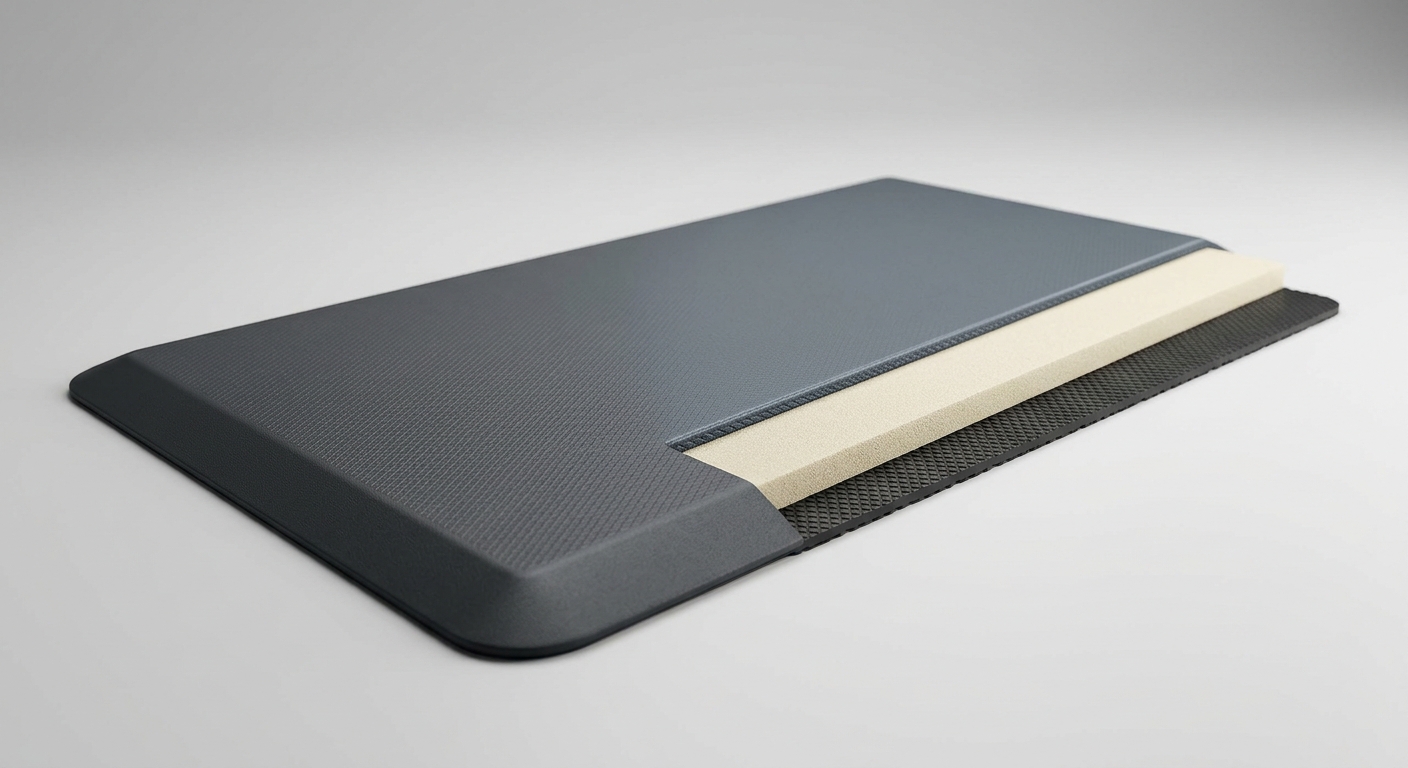
An anti fatigue floor mat helps reduce these effects by providing controlled cushioning underfoot. The flexible surface allows small postural adjustments in the ankles and legs, helping reduce pressure on the feet, knees, and hips. Compared with rigid flooring such as concrete or ceramic tile, a properly designed mat provides better shock absorption and improves overall standing comfort during long working periods.
Core Material Technologies — Foam, Gel, and Composite Layers
The performance of an anti fatigue floor mat largely depends on its core material structure. Different materials provide different levels of cushioning, support, durability, and application suitability.
- PU (Polyurethane) Foam:PU foam offers high resilience and durability under repeated compression, making it a cost-effective choice for commercial kitchens, workshops, and large-area standing applications.
- Memory Foam:Memory foam adapts to foot contours and helps distribute pressure more evenly. It is suitable for home offices and low-movement standing environments where comfort is the primary consideration.
- Gel-Infused Composite:Gel layers provide enhanced pressure distribution and heat dissipation. Although they usually have a higher cost, they are often selected for healthcare facilities, laboratories, and precision work areas where operator comfort is important.
- Multi-Layer Composite:Multi-layer structures combine materials such as gel, memory foam, PU foam, and non-slip backing layers. This design provides a balanced combination of cushioning, stability, durability, and floor protection for demanding applications.
| Parameter | PU Foam | Memory Foam | Gel-Infused | Composite |
|---|---|---|---|---|
| Thickness Range | 3/4″ – 1″ | 1″ – 1.5″ | 1″ – 2″ | 3/4″ – 2″ |
| Rebound Rate | 70–85% | 40–60% | 55–70% | 65–80% |
| ILD Hardness | 25–40 | 15–25 | 20–35 | 25–45 |
| Anti-Slip Base | PVC texture | Rubber | Rubber | Rubber/PVC |
| Best Application | Commercial floors | Home/office | Healthcare/precision | Industrial |
| Key Certifications | CE, RoHS | CertiPUR-US | FDA, RoHS | OSHA, CE |
| Cleanability | Wipe-clean | Spot-clean | Wipe-clean | Wipe/rinse |
Key Specifications & Compliance Standards for Procurement
Critical Product Parameters Buyers Must Evaluate
When preparing procurement specifications for an anti fatigue floor mat, buyers should define key performance requirements clearly rather than relying on general supplier descriptions. The following factors directly influence comfort, durability, safety, and long-term usability.
Thickness:
Thickness should match the intended application. A 3/4″ (19mm) mat is generally suitable for light-duty office use, while 1″ (25mm) thickness works well for kitchens, retail areas, and general standing tasks. For industrial workstations involving shifts longer than 6 hours, 1.5″–2″ (38–50mm) mats provide additional cushioning and support.
Surface Coefficient of Friction (COF):
Slip resistance is essential, especially in wet or high-traffic environments. Buyers should request COF test results under both dry and wet conditions and confirm that the mat meets relevant workplace safety requirements.
Foam Density:
High-density PU foam provides better resistance to repeated compression and helps maintain cushioning performance over time. Lower-density materials may lose thickness and support more quickly under continuous heavy use.
Dimensional Tolerance & Load Capacity:
For modular or large-area installations, accurate dimensions help ensure seamless placement. Buyers should also confirm the maximum load rating, especially when mats are used around equipment, workstations, or high-weight applications.
International Safety & Quality Certifications
Certification requirements depend on the target market and application environment. A reliable anti fatigue floor mat supplier should provide relevant testing documents to verify material safety and product performance.
- OSHA Ergonomic Guidelines (USA): OSHA recognizes anti-fatigue matting as a potential ergonomic control for standing workstations. Buyers should review supplier documentation related to workplace safety requirements and applicable standards.
- CE Marking (EU): For European markets, CE compliance demonstrates that products meet applicable safety and material requirements for commercial use.
- RoHS / REACH Compliance: These regulations help verify that mat materials do not contain restricted substances such as heavy metals or harmful chemicals. They are particularly important for products used in food-related or indoor environments.
- FDA Food-Contact Compliance (USA): For commercial kitchens and food-processing areas, buyers should request relevant FDA 21 CFR testing documents to confirm material suitability rather than relying only on supplier statements.
- CertiPUR-US: For foam-based residential mats, CertiPUR-US certification provides information regarding low VOC emissions and restricted chemical content.
Application Scenarios — Matching the Right Mat to the Right Environment
Residential Use — Kitchens, Bedrooms & Laundry Areas
For home applications, the ideal anti fatigue floor mat should combine ergonomic comfort with easy maintenance and attractive design. Kitchens often involve repeated standing during cooking and cleaning, while laundry areas require comfort for shorter but frequent standing periods.
Key residential considerations include:
- Aesthetic integration: Choose designs with beveled edges, suitable colors, and surface textures that match different interior styles and flooring materials.
- Easy-clean surface: Water-resistant or waterproof surfaces help prevent liquid absorption and make cleaning easier when exposed to food spills, grease, or daily dirt.
- Recommended specifications: A 1″ thickness with standard sizes such as 18″×30″ or 20″×36″ is commonly suitable for kitchen areas. Non-slip rubber backing or textured surfaces can improve floor stability.
- Waterproof performance: A fully waterproof surface is preferred in food preparation areas because it reduces moisture accumulation and supports better hygiene.
Commercial & Industrial Use — Workstations, Retail Floors & Production Lines
Commercial and industrial environments require higher durability because employees may stand for 6–10 hours per shift on hard floors such as concrete. These applications often involve higher foot traffic, equipment loads, and exposure to workplace contaminants.
Key commercial requirements include:
Chemical resistance:
For areas exposed to oils, cleaning chemicals, or industrial fluids, buyers should select materials with suitable chemical resistance and request supporting test data when necessary.
Anti-fatigue and anti-slip performance:
Industrial mats should provide both cushioning and stable footing, especially in wet-process environments where slip prevention is critical.
Modular configurations:
Interlocking mat systems allow flexible installation across large or irregular work areas and make individual section replacement easier.
Workplace safety compliance:
Ergonomic mats should be included as part of a broader workplace comfort and safety program, with product specifications documented during supplier evaluation.
Commercial Value & Supplier Selection Criteria
Evaluating the Value of Anti Fatigue Floor Mats for Commercial Applications
For businesses with long-standing workstations, investing in an anti fatigue floor mat can improve workplace comfort while supporting long-term operational efficiency. The overall value should be evaluated through factors such as employee comfort, maintenance costs, productivity support, and workplace safety.
Reduced physical discomfort:
Ergonomic floor mats help reduce pressure on the feet, legs, and joints during extended standing periods, which can contribute to a more comfortable working environment.
Improved workplace efficiency:
By reducing discomfort caused by hard flooring, anti fatigue mats can help employees maintain better focus and comfort during long shifts, especially in standing-intensive roles.
Lower ergonomic risks:
Musculoskeletal discomfort is a common concern in industries such as manufacturing, retail, and food service. Implementing ergonomic solutions, including suitable floor mats, can support workplace health and safety programs.
Employee satisfaction improvement:
Providing ergonomic equipment demonstrates attention to workplace conditions and may contribute to improved employee experience and retention.
For facilities with multiple standing workstations, selecting durable and properly designed mats can help reduce replacement frequency and improve long-term cost efficiency.
Evaluating Suppliers — MOQ, Customization & Lead Time
When selecting an anti fatigue floor mat supplier, buyers should evaluate more than product pricing. Key supplier qualification factors include production capability, customization options, delivery reliability, and quality assurance.
- Minimum Order Quantity (MOQ):Established manufacturers usually offer standard MOQs based on product specifications, sizes, and customization requirements. Buyers should confirm whether trial orders and repeat production use the same materials and manufacturing standards.
- OEM/ODM Capability:A reliable supplier should support customization options such as different sizes, colors, surface designs, packaging, and branded solutions to meet specific market requirements.
- Lead Time:Production schedules should match order requirements. Buyers should confirm standard production timelines, inventory availability, and the supplier’s ability to support repeat orders.
- Warranty & Durability Guarantee:Suppliers should provide clear warranty terms covering material performance, surface durability, and long-term cushioning stability.
- Certification Documentation:Buyers should request valid test reports and certification documents to verify product safety, material quality, and compliance with target market requirements.
FAQ
Q1: What thickness of anti fatigue floor mat is best for long hours of standing?
For standing periods exceeding 4 hours, an anti fatigue floor mat with around 1″ (25mm) thickness is generally recommended. Thicker 1.5″–2″ mats are more suitable for industrial workstations where employees stand for extended shifts on hard surfaces.
Q2: Which certifications should I check when buying anti fatigue floor mats?
Certification requirements depend on the application and market. Buyers should check documents related to material safety, such as REACH, RoHS, FDA compliance for food-related use, and relevant third-party test reports to verify product quality.
Q3: How can I compare PU foam and gel anti fatigue mats?
PU foam mats usually provide better durability and cost efficiency for high-traffic areas, while gel-infused mats offer enhanced pressure distribution and comfort. The best choice depends on workload, standing duration, and application environment.
Q4: How do I choose an anti fatigue floor mat for a kitchen?
For kitchens, choose an anti fatigue floor mat with a waterproof, easy-clean surface and non-slip backing. Materials that resist moisture, grease, and daily wear are ideal for cooking areas and commercial food environments.
Q5: Can anti fatigue floor mats be customized for commercial projects?
Yes. Many suppliers offer customization options, including different sizes, colors, surface designs, and branding. Buyers should confirm OEM capability, minimum order quantities, and production lead times before placing bulk orders.
Q6: How long does an anti fatigue floor mat typically last?
The service life depends on material quality, usage frequency, and working conditions. High-quality mats used in suitable environments can maintain cushioning performance for several years with proper cleaning and maintenance.
Conclusion
An anti fatigue floor mat is more than a simple floor covering—it is an ergonomic solution that combines cushioning performance, durable materials, safety compliance, and application-specific design. For buyers, selecting the right mat requires evaluating product specifications, quality standards, and supplier capabilities to ensure long-term performance.
Choosing a supplier with verified certifications, customization options, and reliable production support can help reduce sourcing risks and improve overall value. If you are looking for a dependable anti fatigue floor mat supplier, contact Hengjia to discuss your application requirements and customized solutions.
