
Introduction
Driving discomfort is a common issue for people who spend long hours behind the wheel. Lower back pressure, neck stiffness, and poor seating posture can make daily commutes and long journeys less comfortable. According to the J.D. Power 2025 U.S. Seat Quality and Satisfaction Study, seat-related issues continue to affect vehicle satisfaction, with headrest comfort being one of the frequently mentioned concerns.
A quality car headrest and lumbar support system helps improve seating comfort by providing better support for the neck and lower back. With high-density memory foam and ergonomic contours, these cushions are designed to enhance posture, reduce pressure points, and create a more comfortable driving experience. This article explores how car headrest and lumbar support products work and what features buyers should consider when selecting the right solution.
Why Is Driving Comfort a Growing Concern for Consumers?
As consumers spend more time commuting and traveling by car, expectations for seating comfort and support continue to increase. Beyond basic transportation, drivers are looking for solutions that improve overall comfort during daily commutes, long-distance trips, and professional driving.
Seat comfort has become an important factor influencing vehicle satisfaction. According to J.D. Power research, seating-related issues are among the key factors affecting vehicle appeal, showing that interior comfort plays a meaningful role in customer experience. For manufacturers and retailers of car headrest and lumbar support products, this trend creates opportunities to provide practical solutions that enhance driving comfort.
How Does Ergonomic Design in Car Headrest and Lumbar Support Improve Comfort?
Long periods of driving can place continuous pressure on the neck and lower back, especially when factory seats do not provide sufficient support. Ergonomic car headrest and lumbar support products help address these gaps by supporting key areas of the body and promoting a more balanced sitting posture.
The headrest component helps support the neck and reduce unnecessary movement, while the lumbar cushion fills the space between the lower back and seatback to provide additional support. Advanced designs, such as contoured spine shapes and wrap-around structures, help distribute pressure more evenly and improve comfort during extended driving.
By combining ergonomic design with supportive materials, these products can help reduce discomfort caused by prolonged sitting and provide a more enjoyable driving experience for commuters, professional drivers, and other users who spend significant time on the road.
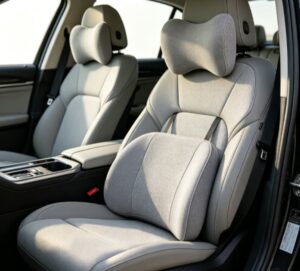
What Role Does Memory Foam Play in Car Headrest and Lumbar Support Performance?
The cushioning material plays a critical role in determining the comfort and durability of any car headrest and lumbar support product. Among various foam options, memory foam has become a widely used material in automotive comfort accessories due to its combination of support, adaptability, and long-term performance.
High-density memory foam, also known as slow-rebound or viscoelastic foam, is designed to adapt to body contours while maintaining stable support. Unlike conventional polyurethane foam, which mainly provides basic cushioning, memory foam responds to heat and pressure by adjusting its shape around contact areas while preserving overall structure. This characteristic helps distribute pressure more evenly and improves sitting comfort during extended driving.
The memory foam used in quality car headrest and lumbar support products provides several practical advantages:
- Adaptive support: The foam gradually conforms to the curves of the neck, back, and waist, creating a more personalized support experience compared with standard cushions.
- Pressure distribution: By spreading body weight across a wider contact area, memory foam helps reduce concentrated pressure points and improves overall comfort during long periods of sitting.
- Slow rebound performance: The material slowly returns to its original shape after compression, helping the cushion maintain its structure and support performance through repeated use.
- Vibration absorption: High-quality memory foam can absorb part of the vibration generated during driving, contributing to a smoother and more comfortable seating experience.
The performance of memory foam in car headrest and lumbar support applications has made it a preferred choice for both personal vehicles and commercial use scenarios. Compared with lower-quality foam materials that may lose shape over time, high-density memory foam offers better resilience and durability, making it suitable for daily commuters, professional drivers, and fleet applications.
How Do Breathable Materials and Construction Enhance the Driving Experience?
Comfort is determined not only by support but also by temperature control and surface performance. A cushion with strong ergonomic support may still affect the user experience if it retains excessive heat or moisture, especially during long drives or in warmer climates.
High-quality car headrest and lumbar support products address this challenge through careful material selection and structural design. Polyester double-sided fabric with an air-layer construction is commonly used for cushion covers because it improves airflow, helps reduce heat buildup, and provides a more comfortable surface during extended use. The breathable fabric structure also helps manage moisture, making it suitable for drivers in humid environments or those who spend many hours on the road.
Cover materials also influence product durability and user experience. Soft, skin-friendly fabrics provide a comfortable touch in different seasons, whether drivers are wearing lightweight clothing in summer or thicker layers in colder conditions. In addition, removable and washable covers improve product maintenance and extend the service life of the cushion.
The combination of memory foam and breathable fabric creates a balanced support system for automotive comfort products. The foam delivers structural support and pressure management, while the fabric layer improves ventilation and surface comfort. Together, these materials help distinguish premium car headrest and lumbar support solutions from basic alternatives.
What Should Buyers Look for in Car Headrest and Lumbar Support Products?
With the interior car accessories market growing rapidly, the range of available car headrest and lumbar support options has expanded significantly. However, quality varies widely. Here is what discerning buyers should evaluate.
| Feature | What to Look For | Why It Matters |
|---|---|---|
| Filling Material | High-density memory foam with slow-rebound properties | Conforms to body curves, distributes pressure evenly, maintains shape over time |
| Cover Fabric | Breathable polyester with air-layer or similar ventilation | Prevents heat and moisture buildup, comfortable in all seasons |
| Ergonomic Design | Triple-contour or dual-wing construction following spinal curvature | Reduces pressure points, promotes proper posture, and minimizes fatigue |
| Dimensions (Headrest) | Approximately 35 × 28 × 17 cm (varies by model) | Must adequately fill the gap between the neck and the seat |
| Dimensions (Lumbar) | Approximately 40 × 35 × 12 cm (varies by model) | Must bridge the lower back gap without pushing the driver forward |
| Weight | Headrest ~450g, Lumbar ~550g (typical range) | Light enough for easy installation, substantial enough for durable support |
| Compatibility | Universal fit for cars, SUVs, trucks, and office chairs | Versatile product that serves multiple use cases |
The ideal car headrest and lumbar support set should integrate seamlessly with the existing seat while providing noticeable improvement in posture and comfort. It should be easy to install and adjust, with secure straps or buckles that prevent shifting during driving. For commercial applications—such as taxi services, ride-sharing vehicles, or long-haul trucking—durability and ease of cleaning become additional priorities.
Who Benefits Most from Car Headrest and Lumbar Support?
The applications of car headrest and lumbar support products go beyond personal vehicles. Understanding different user scenarios helps brands and buyers identify suitable designs, materials, and product features for specific markets.
Daily commuters spend significant time in their vehicles, especially in urban areas with frequent traffic congestion. A well-designed headrest and lumbar support set can improve seating comfort during everyday driving and provide additional support for longer commutes.
Long-distance drivers have higher demands for seating support due to extended hours behind the wheel. Reliable car headrest and lumbar support solutions can help maintain a more comfortable sitting posture and reduce discomfort caused by prolonged driving, making them suitable for truck drivers, fleet operators, and professional drivers.
Business travelers and ride-share drivers also rely heavily on vehicle comfort. For users who spend most of their working hours on the road, ergonomic seat accessories can improve the overall driving experience and add practical value to their vehicles.
Office workers who use vehicles for mobile work or spend extended periods sitting at desks can also benefit from versatile support products. Many car headrest and lumbar support designs can be adapted for office chairs, providing a flexible comfort solution across different environments.
Families with children often prioritize comfort during road trips and daily travel. Providing better seating support for different passengers can enhance the overall in-car experience and make longer journeys more enjoyable.
How Can Brands Position Car Headrest and Lumbar Support in a Competitive Market?
The automotive accessories market is highly competitive, but car headrest and lumbar support products offer clear opportunities for brands that focus on comfort, functionality, and product differentiation.
Comfort-focused positioning can effectively attract consumers who are looking for better support during daily driving. Rather than making medical-related claims, brands can highlight ergonomic design, improved seating support, and enhanced driving comfort as key product benefits.
Performance and durability claims should be supported by clear product specifications. Features such as high-density memory foam, breathable cover materials, universal compatibility, and customized designs help distinguish premium products from basic alternatives. Providing detailed information on dimensions, materials, and construction also helps buyers evaluate product quality.
Versatility is another valuable selling point. Products compatible with cars, SUVs, trucks, and even office chairs can appeal to a wider customer base and create additional application opportunities for retailers and distributors.
Long-term value remains an important purchasing factor. Although premium car headrest and lumbar support products may require a higher initial investment, their durability, comfort, and user experience can provide stronger value over time. Brands that demonstrate product reliability through testing, customer feedback, and quality assurance can build greater trust with buyers.
Comparison of Car Headrest and Lumbar Support Options
| Feature | Basic Foam Cushion | Standard Memory Foam | Premium Memory Foam Set |
|---|---|---|---|
| Filling Material | Standard polyurethane | Basic memory foam | High-density memory foam |
| Cover Fabric | Standard polyester | Basic breathable fabric | Air-layer breathable fabric |
| Ergonomic Design | Flat or slightly contoured | Basic contour | Triple-contour spinal curve |
| Durability | Moderate (flattens over time) | Good | Excellent (maintains shape) |
| Temperature Control | Poor (traps heat) | Moderate | Good (breathable construction) |
| Typical Weight (Set) | ~600g | ~800g | ~1000g |
| Best For | Occasional use, budget buyers | Regular commuters | Daily drivers, professionals |
Conclusion
Car headrest and lumbar support products have become practical solutions for improving vehicle seating comfort. With growing demand for better in-car experiences, these accessories help enhance support through a combination of high-density memory foam, ergonomic structures, and breathable materials. For drivers, retailers, and automotive brands, choosing the right support solution can create better user experiences while adding value to their product offerings.
If you are looking for a reliable car headrest and lumbar support supplier, our team can provide customized solutions based on your target market, product requirements, and application scenarios. From material selection and size adjustment to OEM customization and bulk production, we help partners develop comfortable and durable seat support products for personal, retail, and commercial vehicle applications.
