
Аннотация
Standing for long hours on hard surfaces such as ceramic tile, concrete, or hardwood floors can gradually increase pressure on the feet, legs, and lower back, causing discomfort and fatigue for home cooks, professional chefs, and industrial workers.
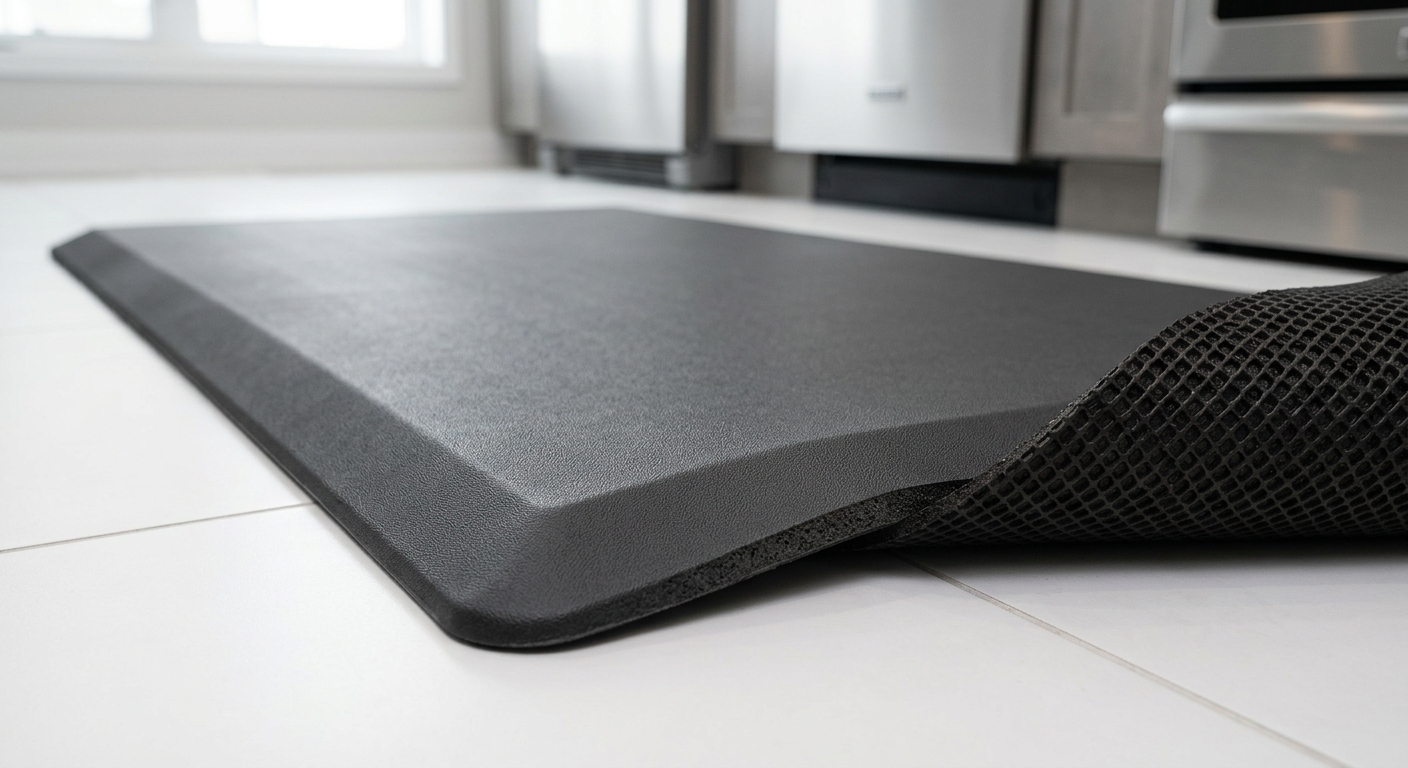
Правильно разработанный Противоусталостный напольный коврик provides more than simple cushioning. Through engineered materials, optimized thickness, and ergonomic support, it helps reduce static muscle strain, encourage natural movement, and create a safer standing environment for extended work periods.
This article explores the science behind anti fatigue floor mats, including how cushioning technology works, which material and safety specifications buyers should evaluate, and how to select the right solution for different applications. Whether for residential kitchens, commercial food service areas, or professional workplaces, understanding these factors helps buyers choose durable and effective floor mat solutions.
1. The Science Behind Anti Fatigue Floor Mats
1.1 How Standing on Hard Surfaces Causes Pain and Fatigue
When people stand for extended periods on hard surfaces such as ceramic tile, concrete, or hardwood floors, the body experiences continuous static muscle load. The muscles in the feet, legs, and lower back must remain contracted to maintain posture, while limited movement reduces natural blood circulation and increases physical strain over time.
Unlike active movement, prolonged standing does not allow muscles to regularly relax and recover. As a result, reduced circulation in the lower limbs can contribute to foot discomfort, calf heaviness, and swelling. At the same time, continuous pressure on the knees, hips, and lower back increases joint stress because the body’s natural shock-absorbing systems receive little opportunity to recover.
For professional kitchens and busy home cooking environments, these effects are often intensified by repetitive tasks such as leaning toward countertops, standing in one position near cooking areas, and maintaining fixed postures for extended periods. This is why ergonomic solutions such as an Противоусталостный напольный коврик are increasingly used to reduce the physical impact of long-duration standing.
1.2 How Anti Fatigue Mats Trigger Micro-Movements to Relieve Strain
The benefit of an anti fatigue mat comes from more than simple softness. A well-designed mat provides controlled cushioning that creates slight instability beneath the feet, encouraging natural micro-movements in the ankles, legs, and posture. These small adjustments help activate muscles, improve weight distribution, and reduce the effects of prolonged static standing.
By promoting continuous low-level movement, an Противоусталостный напольный коврик helps support better circulation in the lower limbs and reduces the feeling of fatigue during long working periods. This makes ergonomic mats valuable in applications such as kitchens, food preparation areas, workshops, and other environments where standing time is unavoidable.
However, cushioning performance depends heavily on material structure and density. A mat that is too soft may compress completely under body weight and provide insufficient support, while an overly firm surface offers little improvement compared with the original hard floor. Therefore, buyers should evaluate factors such as thickness, material resilience, and compression recovery when selecting the right anti fatigue floor mat solution.
2. Key Specifications and Material Standards to Evaluate
2.1 Material Composition, Thickness, and Density Parameters
The material structure of an Противоусталостный напольный коврик directly determines its comfort, durability, and long-term ergonomic performance. A high-quality mat should provide more than a soft surface — it needs the right balance of cushioning, support, and recovery ability for extended standing applications.
The three main material categories include:
- PU Foam (Polyurethane Foam):
PU foam offers excellent cushioning performance with a lightweight structure and strong compression recovery. High-density PU foam mats are widely used in residential kitchens and light commercial environments because they provide comfortable support while maintaining shape after repeated daily use. - Rubber-Based Mats:
Natural rubber and nitrile rubber mats provide higher density, durability, and load-bearing capacity compared with foam alternatives. Their resistance to grease, heat, moisture, and heavy foot traffic makes them suitable for restaurants, commercial kitchens, and industrial workplaces where long-term performance is required. - PVC Mats:
PVC represents a more economical option for basic standing comfort. While lightweight and easy to clean, standard PVC mats generally provide less cushioning resilience and are better suited for occasional home use rather than continuous standing applications.
Thickness is another critical factor when selecting an Противоусталостный напольный коврик. For most kitchen and workplace environments, a thickness of around 19mm (3/4 inch) is considered a practical minimum to provide effective cushioning support. Thicker mats around 25mm (1 inch) are often preferred for commercial kitchens with concrete floors or extended standing periods.
2.2 Safety and Compliance: Surface Grip, Beveled Edges, and Certifications
Comfort alone is not enough when choosing a kitchen anti fatigue mat. Safety features such as slip resistance, edge design, and material compliance are essential, especially in areas exposed to water, oil, and frequent cleaning.
A reliable Противоусталостный напольный коврик should include a non-slip backing system, such as textured rubber surfaces or specialized grip coatings, to prevent unwanted movement during use. This is particularly important in kitchens where wet floors or grease contamination can increase slipping risks.
Beveled edges are another important design feature. By creating a gradual transition between the mat and surrounding flooring, beveled edges help reduce tripping hazards when users step on or off the mat. This feature is especially valuable in commercial kitchens, workshops, and other high-traffic environments.
For professional applications, buyers should also review relevant compliance documentation. Certifications such as NSF/ANSI standards for food-service environments and ASTM slip resistance testing can help verify material safety and surface performance.
When evaluating anti fatigue floor mats, buyers should consider not only comfort but also safety, durability, and compliance requirements to ensure the product meets the demands of its intended application.
| Технические характеристики | Basic PVC Mat | Mid-Range PU Foam Mat | Premium Rubber Anti Fatigue Mat |
|---|---|---|---|
| Толщина | 6–10mm | 15–20mm | 19–25mm |
| Support Level | Низкий | Medium–High | High |
| Non-Slip Rating | Basic | Certified grip | Commercial-grade certified |
| Waterproof | Partial | Да | Да |
| Grease Resistance | Низкий | Средний | High |
| Best Application | Light home use | Home / light commercial | Professional commercial kitchen |
| Price Range (USD) | $15–$35 | $40–$90 | $80–$200+ |
| Сертификаты | None typical | ASTM slip resistance | NSF, ASTM, OSHA-aligned |
3. Choosing the Right Kitchen Anti Fatigue Mat for Your Scenario
3.1 Home Kitchen vs. Commercial Kitchen: Different Demands, Different Specs
Выбор правильного Противоусталостный напольный коврик depends largely on where and how the mat will be used. Residential kitchens and commercial food service environments have very different requirements in terms of standing time, durability, cleaning conditions, and material performance.
For home kitchens, standing time is usually limited to several hours per day. A high-density PU foam mat with approximately 19mm (3/4 inch) thickness can provide sufficient cushioning support for cooking, food preparation, and daily household tasks. Its lightweight structure, comfortable feel, and easy maintenance make it a practical choice for residential applications.
Commercial kitchens require a more demanding solution. Restaurant staff may stand for six to ten hours daily on floors exposed to cooking oil, moisture, heat, and frequent cleaning chemicals. In these environments, grease resistance and structural durability become essential selection factors. Nitrile rubber mats are widely preferred for heavy-duty applications because they offer strong load-bearing performance and better resistance to oil and harsh working conditions.
For commercial buyers, evaluating total cost of ownership is often more important than the initial purchase price. A durable rubber Противоусталостный напольный коврик with a longer service life can reduce replacement frequency and maintenance costs compared with lower-cost alternatives that require frequent replacement.
3.2 Size, Shape, and Placement Strategy for Maximum Coverage
The effectiveness of an anti fatigue mat depends not only on material quality but also on correct placement. A properly positioned Противоусталостный напольный коврик should cover the areas where standing time is concentrated, allowing users to receive continuous ergonomic support during daily tasks.
The most common kitchen placement areas include:
- Sink Area:
The sink is one of the highest-frequency standing zones in both residential and commercial kitchens. A mat extending approximately 24 inches in front of the sink provides better coverage during dishwashing and food preparation activities. - Cooking Range Area:
The area directly in front of the stove requires stable standing support during cooking. A common size option is around 20″ × 36″, providing sufficient coverage while maintaining easy movement around the kitchen. - Primary Preparation Area:
For kitchen islands or dedicated preparation stations, longer runner-style mats such as 20″ × 60″ or larger can provide continuous comfort during extended food preparation tasks.
For commercial environments, modular anti fatigue floor mat systems can be configured around workstations, machinery, and fixed equipment layouts. This flexible approach helps minimize uncovered areas while maintaining safety and workplace efficiency.
4. Real-World Benefits: Comfort, Safety, and Long-Term Value
4.1 Does an Anti Fatigue Floor Mat Really Help with Back Pain and Foot Fatigue?
An Anti Fatigue Floor Mat is designed to reduce the physical stress caused by prolonged standing on hard surfaces. Research in occupational ergonomics suggests that properly engineered anti fatigue mats can help decrease perceived discomfort during extended standing tasks compared with rigid flooring conditions.
The benefit comes from more than simple cushioning. By reducing static pressure on the feet and encouraging small postural adjustments, anti fatigue floor mats help distribute body weight more evenly and reduce excessive strain on the lower limbs, hips, and lower back.
For users experiencing foot discomfort, especially during long cooking sessions or standing work, a supportive mat can reduce pressure concentration around the heel and arch areas. When combined with suitable footwear and proper workstation design, an ergonomic floor mat provides a practical solution for improving standing comfort.
In commercial environments such as kitchens, restaurants, and production areas, properly selected anti fatigue floor mats can also contribute to lower fatigue levels and improved worker comfort throughout long shifts.
4.2 ROI for Commercial Buyers: Productivity, Safety, and Long-Term Value
For commercial buyers, the value of an Anti Fatigue Floor Mat extends beyond immediate comfort. A well-designed ergonomic mat can support workplace safety, improve employee satisfaction, and help reduce the physical strain associated with standing-intensive jobs.
In food service, hospitality, and industrial environments, employees often spend several hours standing on hard surfaces. Providing ergonomic flooring solutions can help create a safer and more comfortable workspace while reducing the risk of fatigue-related performance issues.
From a procurement perspective, durability and total cost of ownership are more important than initial purchase price alone. A high-quality mat with strong compression resistance, slip protection, and long service life can reduce replacement frequency and maintenance costs.
For businesses evaluating commercial kitchen or workplace flooring solutions, selecting a reliable Anti Fatigue Floor Mat supplier with consistent quality control, customization capability, and performance testing support is essential for achieving long-term value.
ЧАСТО ЗАДАВАЕМЫЕ ВОПРОСЫ
1. Can an Anti Fatigue Floor Mat reduce foot pain during long cooking sessions?
Yes. A high-density Anti Fatigue Floor Mat helps distribute body weight more evenly and reduces pressure on the heel and arch. Choosing a mat with at least 19mm thickness and proper cushioning support can improve comfort during extended standing.
2. Does a standing mat help reduce back discomfort while cooking?
Yes. An ergonomic standing mat encourages small postural movements and reduces static pressure on the lower body. This helps minimize muscle strain caused by prolonged standing and may improve comfort during long cooking or workstation activities.
3. How thick should an anti fatigue mat be for a kitchen?
For most kitchens, a 19mm (3/4-inch) thickness provides effective cushioning. Commercial kitchens with concrete floors or long standing hours may benefit from thicker mats with higher density and stronger compression resistance.
4. Which material is best for an Anti Fatigue Floor Mat?
PU foam is suitable for residential kitchens because it offers comfort and flexibility. Rubber-based mats are preferred for commercial kitchens due to better durability, grease resistance, and long-term performance.
5. Are Anti Fatigue Floor Mats suitable for commercial kitchens?
Yes. Commercial-grade Anti Fatigue Floor Mats are designed for demanding environments with long standing periods, moisture, and heavy foot traffic. Buyers should prioritize slip resistance, durability, easy cleaning, and certified material performance.
6. Can an anti fatigue floor mat be customized for different applications?
Yes. Manufacturers can customize size, thickness, material, surface design, and colors based on application requirements. Custom solutions are commonly developed for kitchens, factories, workshops, and other standing-intensive workplaces.
Заключение
A high-quality Anti Fatigue Floor Mat is more than a comfort accessory — it is an ergonomic solution designed to reduce standing fatigue, improve workplace safety, and enhance long-term user comfort. Choosing the right material, thickness, slip resistance, and durability performance is essential for achieving reliable results.
Whether for home kitchens, restaurants, or industrial workspaces, the ideal mat should match the specific standing environment and usage requirements. Partner with an experienced anti fatigue floor mat supplier to explore customized solutions, request samples, and select a product that delivers lasting comfort and performance.
