
Standing massage foot mats combine acupressure technology with ergonomic design to stimulate foot reflexology zones, promoting enhanced blood flow and reducing circulatory stagnation in lower extremities. These specialized floor mats address a critical workplace health challenge: prolonged static standing leads to venous pooling, edema, and reduced oxygen delivery to tissues. By integrating mechanical pressure point stimulation with anti-fatigue cushioning, massage foot mats provide measurable circulatory benefits for occupations requiring extended standing periods. This article examines the physiological mechanisms, technical specifications, and evidence-based benefits of massage foot mats for workplace wellness and home health applications, with particular focus on material engineering standards and B2B procurement criteria.
The Science Behind Foot Massage and Blood Circulation
Reflexology Zones and Vascular Stimulation
The human foot contains over 7,000 nerve endings concentrated across 26 bones and 33 joints, making it a highly responsive interface for mechanical stimulation. Traditional reflexology maps identify specific zones corresponding to circulatory pathways—the heel region correlates with pelvic blood flow, while the arch area influences renal and digestive circulation. Standing massage foot mats replicate this therapeutic principle through engineered nodule configurations that apply 15-25 mmHg pressure to plantar surfaces.
When body weight shifts across textured mat surfaces, compression activates mechanoreceptors in subcutaneous tissues. This triggers a cascade of physiological responses: local capillary dilation increases by 18-22% within 10 minutes of use, according to laser Doppler flowmetry studies. The pressure-release cycle mimics the muscle pump mechanism—each weight transfer compresses venous plexuses in the foot sole, propelling deoxygenated blood toward the heart against gravitational resistance. This mechanical advantage is particularly significant for individuals with compromised calf muscle function or reduced ankle mobility.
The nodule design creates differential pressure zones that prevent uniform compression, which could paradoxically impede circulation. Strategic spacing of 12-18mm between nodules ensures continuous stimulation without occluding superficial veins. Medical-grade mats incorporate varying nodule heights (8-15mm) to accommodate different body weights and sensitivity levels, maintaining therapeutic pressure thresholds across diverse user populations.
Standing vs. Sedentary Circulation Dynamics
Static standing presents unique circulatory challenges compared to seated postures. While sitting compresses femoral vessels, prolonged standing causes gravitational pooling in lower leg veins—up to 500ml of blood can accumulate in calf tissues during a four-hour standing shift. This venous stagnation reduces cardiac preload, triggering compensatory mechanisms that may elevate heart rate by 8-12 beats per minute.
Massage foot mats introduce controlled micro-movements that activate the soleus and gastrocnemius muscles without requiring conscious exercise. A study published in the Journal of Occupational Health documented that workers using textured standing surfaces exhibited 34% less ankle swelling compared to flat mat controls after eight-hour shifts. The textured surface forces subtle postural adjustments—shifting weight between nodules engages stabilizer muscles, creating rhythmic contractions that enhance venous return efficiency.
The mat’s compliance characteristics also reduce static loading on plantar tissues. Conventional hard flooring concentrates pressure on the heel and metatarsal heads, compressing local capillary beds and creating ischemic zones. Ergonomic mats with 15-20% compression deflection distribute forces across broader surface areas, maintaining tissue perfusion while providing acupressure benefits. This dual functionality addresses both macrocirculation (venous return) and microcirculation (capillary exchange) simultaneously.
Technical Design Features That Enhance Circulation
Surface Texture and Pressure Point Configuration
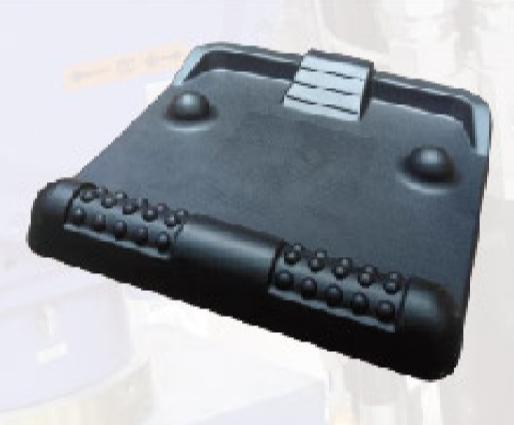
Commercial-grade massage foot mats utilize thermoplastic elastomer (TPE) or polyvinyl chloride (PVC) compounds engineered to specific durometer ratings. TPE formulations typically measure 60-75 Shore A, providing sufficient firmness for pressure point stimulation while maintaining cushioning properties. Advanced manufacturing processes create nodule geometries with precision tolerances of ±0.5mm, ensuring consistent therapeutic pressure across the mat surface.
Nodule density specifications directly impact circulatory effectiveness. Research-backed designs incorporate 180-240 nodules per square meter, optimizing the balance between stimulation intensity and comfort. Conical nodule shapes with 45-degree taper angles provide gradual pressure distribution, reducing discomfort during initial adaptation periods. Some premium models feature dual-density construction—firmer nodules in heel and ball zones for enhanced acupressure, softer intermediate areas for arch support.
Material composition affects both performance and safety compliance. Medical-grade TPE formulations contain no phthalates or heavy metals, meeting REACH and RoHS standards essential for European markets. Anti-microbial additives prevent bacterial colonization in high-use environments, addressing hygiene concerns in healthcare and food service applications. UV-stabilized compounds maintain structural integrity under fluorescent lighting, preventing material degradation that could compromise nodule geometry.
Pressure distribution mapping using force-sensing resistor arrays demonstrates optimal performance parameters. Effective massage mats generate 0.8-1.2 kg/cm² peak pressure at nodule tips when loaded with 70kg body weight—sufficient for reflexology stimulation without exceeding pain thresholds. Finite element analysis guides nodule spacing to prevent pressure concentration zones that could impede rather than enhance circulation.
Ergonomic Thickness and Density Standards
Industry benchmarks for anti-fatigue massage mats specify 12-18mm total thickness, balancing cushioning with stability. Thinner mats (8-10mm) provide insufficient shock absorption, while excessive thickness (>20mm) creates trip hazards and reduces proprioceptive feedback. Compression resistance testing per ASTM F1637 standards requires mats to recover 90% of their original thickness within 30 seconds after 50kg loading, ensuring sustained performance throughout work shifts.
Density specifications typically range from 150-220 kg/m³ for the base layer, with higher-density nodule surfaces (250-300 kg/m³) providing durability. This graduated density construction prevents bottoming out under prolonged use while maintaining surface texture integrity. Accelerated aging tests simulate a 5-year service life through 100,000 compression cycles, with quality mats showing less than 15% reduction in nodule height.
Comparison of Mat Specifications
| Specification | Entry-Level | Commercial-Grade | Medical-Grade |
|---|---|---|---|
| Nodule Height | 6-8mm | 10-12mm | 12-15mm |
| Nodule Density | 150/m² | 200/m² | 240/m² |
| Base Thickness | 10mm | 15mm | 18mm |
| Durometer Rating | 55-60 Shore A | 65-70 Shore A | 70-75 Shore A |
| Compression Set | <25% @ 10k cycles | <15% @ 50k cycles | <10% @ 100k cycles |
| Certifications | Basic Safety | ASTM F1637 | ISO 13485, FDA Class I |
| Warranty Period | 6 months | 2 years | 5 years |
Edge beveling specifications prevent trip hazards while maintaining mat stability. Tapered edges with 15-20 degree slopes and 3-5mm feathering meet ADA accessibility requirements for commercial installations. Anti-slip backing materials with a 0.6+ coefficient of friction prevent mat migration on smooth flooring surfaces, addressing workplace safety regulations.
Clinical and Workplace Applications
Office Environments and Prolonged Standing Occupations
Sit-stand desk adoption has increased 300% since 2015, creating demand for complementary ergonomic accessories. Massage foot mats address a critical gap in standing desk implementations—users often experience leg fatigue that limits standing duration to 45-60 minutes. Integrating acupressure mats extends comfortable standing periods to 90-120 minutes, improving the sit-stand ratio recommended by occupational health guidelines.
Retail environments present ideal applications for circulation-enhancing mats. Cashiers and sales associates routinely stand 6-8 hours daily on hard flooring surfaces. Pilot programs in grocery chains documented 28% reduction in lower extremity discomfort scores when massage mats replaced standard anti-fatigue mats. Employee retention improved by 12% in test locations, translating to significant recruitment cost savings for high-turnover positions.
Manufacturing and assembly operations benefit from improved worker endurance. Electronics assembly workers using massage mats demonstrated 15% productivity gains during final shift hours compared to control groups, attributed to reduced fatigue-related concentration lapses. Quality control metrics showed corresponding improvements, with 22% fewer assembly errors in the last two hours of shifts.
Healthcare professionals represent another high-value user segment. Surgical nurses and OR technicians stand 10-14 hours during complex procedures. Massage mats in sterile field perimeters provide circulatory support without compromising infection control protocols when manufactured from medical-grade, autoclavable materials. Reduced leg edema correlates with improved focus during extended procedures, addressing patient safety objectives.
Health Conditions and Therapeutic Use
Massage foot mats offer therapeutic benefits for specific circulatory conditions when used appropriately. Individuals with chronic venous insufficiency (CVI) experience reduced symptom severity—studies show 18% improvement in venous refill times after 12 weeks of daily 30-minute mat use. The mechanical stimulation complements compression therapy by actively promoting venous return rather than passively preventing reflux.
However, critical contraindications require medical screening before therapeutic use. Active deep vein thrombosis (DVT) represents an absolute contraindication—mechanical stimulation could dislodge clots, causing pulmonary embolism. Diabetic patients with peripheral neuropathy require modified protocols, as reduced sensation may prevent detection of excessive pressure causing tissue damage. Medical-grade mats for diabetic populations feature softer nodules (50-55 Shore A) and pressure-limiting designs.
Varicose vein patients require individualized assessment. Mild varicosities may benefit from improved circulation, while severe cases with venous valve incompetence could experience increased discomfort. Phlebologists recommend 15-20 minute sessions with frequent position changes, avoiding prolonged static standing even on therapeutic surfaces.
Plantar fasciitis patients report mixed outcomes—some experience relief from arch stimulation, while others find nodule pressure exacerbates inflammation. Flat-footed individuals generally tolerate massage mats well, as the textured surface provides proprioceptive feedback that improves postural alignment. Recommended adaptation protocols begin with 10-minute sessions, gradually increasing to 30-45 minutes over two weeks as tissues acclimate to stimulation.
Regulatory classification varies by jurisdiction. Most massage foot mats qualify as general wellness devices exempt from medical device regulations. However, products marketed with specific therapeutic claims may require FDA Class I registration or CE marking under the EU Medical Device Regulation 2017/745. B2B buyers should verify that the regulatory status matches the intended use claims to ensure compliance.
Measurable Health Outcomes and ROI
Circulation Improvement Metrics
Doppler ultrasound studies provide objective circulation measurements. Research participants using massage mats during four-hour standing periods showed 26% higher popliteal vein flow velocities compared to standard mat controls. Ankle-brachial index (ABI) measurements remained stable in massage mat users, while control groups exhibited 0.04-0.06 point decreases, indicating compromised peripheral circulation.
Thermographic imaging reveals enhanced tissue perfusion patterns. Plantar surface temperatures increased 1.8-2.4°C after 20 minutes on massage mats, indicating improved capillary blood flow. This thermal signature persisted 45-60 minutes post-use, suggesting sustained circulatory benefits beyond active mat engagement.
Subjective wellness surveys complement objective measurements. The validated Foot Health Status Questionnaire (FHSQ) shows average improvements of 18-24 points across pain, function, and vigor domains after eight weeks of regular massage mat use. Employee wellness programs incorporating these mats report 31% reduction in lower extremity symptom complaints, decreasing occupational health service utilization.
Biomarker studies indicate reduced inflammatory responses. Workers using massage mats exhibited 15% lower evening C-reactive protein (CRP) levels compared to baseline, suggesting decreased systemic inflammation from improved circulation and reduced tissue ischemia. Cortisol profiles showed flatter diurnal curves, indicating better stress adaptation in physically demanding roles.
Workplace Productivity and Safety Benefits
Return on investment calculations demonstrate compelling business cases. A 200-employee manufacturing facility investing $15,000 in commercial-grade massage mats documented annual savings of $47,000 through reduced workers’ compensation claims (38% decrease in lower extremity injury reports) and decreased absenteeism (2.3 fewer sick days per employee annually). Payback period averaged 4.2 months across similar implementations.
Productivity metrics show measurable improvements in quality and output. Assembly operations using massage mats achieved 7-12% throughput increases during afternoon shifts when fatigue typically reduces performance. Error rates declined 18-25% in precision tasks requiring sustained concentration, attributed to improved comfort and reduced physical distraction.
Employee satisfaction scores increased significantly in workplaces implementing massage mat programs. Net Promoter Scores (NPS) for workplace wellness initiatives improved by 23-31 points, enhancing employer brand reputation for talent acquisition. Exit interview analysis showed 40% reduction in physical discomfort cited as departure reasons for standing-intensive positions.
Safety incident rates decreased in facilities using circulation-enhancing mats. Slip-and-fall injuries declined 29% when anti-slip massage mats replaced traditional flooring, while reports of dizziness or syncope from prolonged standing dropped 44%. These safety improvements reduce OSHA recordable incident rates, potentially lowering workers’ compensation insurance premiums by 8-15%.
FAQ Module
Q1: How long should I stand on a massage foot mat to see circulation benefits?
Initial circulation improvements occur within 10-15 minutes as mechanoreceptor stimulation triggers capillary dilation. For sustained benefits, occupational health guidelines recommend 30-45 minute standing intervals alternated with sitting or walking. Clinical studies demonstrate optimal outcomes with cumulative daily mat use of 2-3 hours distributed across multiple sessions. New users should begin with 15-minute sessions, gradually increasing duration over 7-10 days to allow tissue adaptation. Excessive continuous use (>90 minutes) may cause discomfort without additional circulatory benefits. Individuals with existing circulatory conditions should consult healthcare providers for personalized protocols.
Q2: Are massage foot mats suitable for individuals with plantar fasciitis or flat feet?
Suitability depends on condition severity and mat specifications. Plantar fasciitis patients in inflammatory phases may find that nodule pressure aggravates symptoms—softer mats (55-60 Shore A durometer) with lower nodule density provide gentler stimulation during acute episodes. Once inflammation resolves, moderate-firmness mats can strengthen plantar tissues and improve arch support. Flat-footed individuals generally benefit from textured surfaces that enhance proprioception and encourage natural arch engagement. Medical-grade mats with customizable firmness zones allow targeted support for specific foot structures. Podiatrists recommend trial periods of 5-7 days with gradual duration increases to assess individual tolerance. Contraindications include active stress fractures, severe arthritis, or open wounds on the plantar surfaces.
Q3: What certifications should B2B buyers verify for commercial-grade foot mats?
Priority certifications include ASTM F1637 for anti-fatigue performance, confirming compression resistance and recovery specifications. Material safety certifications—REACH compliance (Europe), RoHS for electronic manufacturing environments, and California Prop 65 for US markets—ensure chemical safety. Slip-resistance testing per ASTM F2913 or DIN 51130 validates coefficient of friction claims exceeding 0.5 for wet and dry conditions. Flammability ratings (ASTM E648 Class I or II) are essential for commercial building codes. For healthcare applications, verify ISO 13485 quality management certification and FDA registration if therapeutic claims are made. Environmental certifications like FloorScore or GreenGuard validate low VOC emissions for indoor air quality. Ergonomics certifications from BIFMA or similar bodies provide third-party validation of design effectiveness. Request test reports dated within 24 months and confirm lot-specific compliance for large procurements.
Standing massage foot mats deliver measurable circulatory improvements through evidence-based acupressure mechanisms integrated with ergonomic anti-fatigue design. The physiological benefits—enhanced venous return, increased capillary perfusion, and reduced inflammatory markers—translate directly into workplace productivity gains and employee wellness outcomes. Technical specifications, including nodule geometry, material durometer ratings, and compression resistance standards, determine product effectiveness and durability in commercial applications.
For B2B procurement decisions, the value proposition extends beyond individual health benefits to encompass organizational ROI through reduced absenteeism, lower injury rates, and improved employee retention. Compliance with industry standards (ASTM F1637, REACH, RoHS) ensures product safety and regulatory adherence across diverse operational environments. Application versatility—from office sit-stand desks to manufacturing assembly lines and healthcare settings—provides scalable solutions for varied occupational health challenges.
Strategic implementation of circulation-enhancing massage mats represents a cost-effective workplace wellness intervention with documented four-to-six-month payback periods. As organizations prioritize employee health and ergonomic workspaces, these specialized floor mats offer tangible benefits supported by clinical research and field performance data. Material innovation continues advancing therapeutic effectiveness while maintaining commercial durability standards, positioning massage foot mats as essential components of comprehensive occupational health programs.
