
Most drivers rarely think about the car’s headrest unless they need to adjust it. It sits quietly at the top of the seatback, blending into the interior design. Yet in modern vehicle engineering, the car headrest is not a decorative add-on. It is a carefully engineered safety component that plays a measurable role in injury prevention, posture alignment, and long-distance driving comfort.
In rear-end collisions, the difference between proper head support and poor alignment can determine whether a driver walks away with mild stiffness or suffers long-term cervical strain. At the same time, during daily commuting and extended highway travel, the headrest helps reduce fatigue and maintain spinal balance.
Understanding how a car headrest improves both safety and comfort requires looking beyond surface design and into biomechanics, structural engineering, material science, and manufacturing standards.
What Is a Car Headrest and How Is It Engineered?
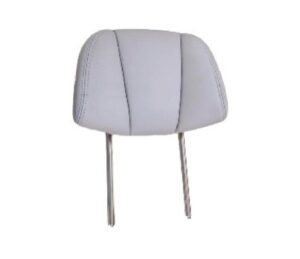
A car headrest is mounted at the top of a vehicle seatback and is designed to support the head during both normal driving conditions and sudden impacts. Although it appears simple, its internal construction follows specific mechanical principles.
A standard modern headrest consists of:
-
A reinforced internal frame or insert
-
Dual steel support rods
-
Energy-absorbing polyurethane foam
-
An exterior upholstery layer (fabric, PU leather, or genuine leather)
The dual support rods insert into guide sleeves inside the seatback. These rods are not merely height adjusters; they are structural anchors. During a rear impact, they transfer force into the seat structure rather than allowing uncontrolled backward motion.
The foam density is carefully calibrated. If it is too soft, it collapses excessively under load. If it is too rigid, it fails to absorb kinetic energy efficiently. Manufacturers test foam compression resistance and rebound performance under simulated crash loads.
Modern vehicles typically use one of three headrest categories:
| Type | Structure | Safety Capability | Typical Application |
|---|---|---|---|
| Fixed Headrest | Integrated into the seat frame | Basic protection | Entry-level vehicles |
| Adjustable Headrest | Dual rod height adjustment | Moderate to high | Most passenger cars |
| Active Headrest | Crash-responsive forward motion | Enhanced whiplash protection | Mid-to-high-end vehicles |
Active headrests are particularly interesting from an engineering standpoint. In some designs, a mechanical linkage connected to the seatback triggers forward movement of the headrest when rear acceleration exceeds a threshold. In others, electronic sensors activate a small deployment mechanism. The purpose is to reduce the distance between the head and the restraint at the critical moment of impact.
The engineering goal is simple but precise: minimize differential motion between the torso and the skull.
The Safety Science Behind a Car Headrest
Rear-end collisions produce a distinctive injury pattern known as whiplash. The mechanism begins with the sudden forward acceleration of the vehicle. The seatback pushes the torso forward while the head initially remains in place due to inertia. This creates rapid extension of the cervical spine.
The cervical spine is composed of seven vertebrae, intervertebral discs, ligaments, and neural pathways. It is designed for flexibility, not violent acceleration.
A properly positioned headrest reduces the extension arc by:
-
Limiting the backward travel distance of the skull
-
Distributing impact force across a wider surface area
-
Reducing the acceleration peak transmitted to the neck
Research in crash biomechanics consistently demonstrates that reducing head-to-rest distance significantly lowers injury severity. Even a few centimeters of additional gap can increase the rotational velocity of the head.
In other words, geometry saves necks.
The headrest does not eliminate impact forces. It moderates them. It transforms abrupt hyperextension into controlled deceleration.
Comfort Engineering: More Than Just Support
Safety is only one dimension of headrest design. In daily driving, comfort becomes equally important.
Driving posture is a semi-static position. Muscles in the upper back and neck maintain alignment for extended periods. Micro-fatigue accumulates gradually. Without proper support, drivers often compensate by leaning forward or slouching, which increases muscular strain.
An ergonomically designed headrest supports the natural curvature of the cervical spine. When adjusted properly, it allows the head to rest without pushing it forward excessively. Poorly angled headrests can cause forward head posture, ironically increasing discomfort.
Comfort performance depends on:
-
Foam density and resilience
-
Surface breathability
-
Contour shaping
-
Stitching placement and seam pressure points
High-density foam retains shape under repeated compression, preventing long-term sagging. Perforated leather or ventilated surfaces reduce heat accumulation, especially in warm climates.
In premium vehicles, headrests may integrate additional features such as:
-
Memory foam layers
-
Adjustable tilt mechanisms
-
Integrated speakers
-
Ventilation channels
Comfort engineering is subtle. When done correctly, drivers forget about the headrest entirely because it simply works.
Material Selection and Manufacturing Considerations
From a manufacturing perspective, the car headrest must balance structural integrity, cost efficiency, aesthetic quality, and long-term durability.
Internal Metal Structure
The steel rods require tensile strength sufficient to withstand crash loads. They must also resist corrosion. Many manufacturers apply protective coatings to prevent rust in humid environments.
Foam Molding
Polyurethane foam is typically molded under controlled temperature and pressure. Density variation influences both comfort and safety performance. Compression set testing ensures that the foam maintains thickness after repeated load cycles.
Upholstery Process
Cover materials are cut, stitched, and tension-fitted over the foam core. Stitch integrity directly affects longevity. Poor seam construction can lead to tearing, especially in fleet or commercial vehicles.
Quality Testing Standards
Manufacturers often perform:
-
Cyclic durability tests
-
UV exposure simulations
-
Abrasion resistance testing
-
Structural pull-out strength testing for rods
OEM headrests are subject to vehicle safety compliance standards. Aftermarket suppliers must match these structural requirements to remain competitive in B2B supply chains.
For suppliers and distributors, production consistency and defect rate control are critical. A headrest failure under load is not merely a warranty issue. It becomes a liability concern.
When Should You Replace a Car Headrest?
Headrests are rarely inspected unless visible damage appears. However, there are specific situations where replacement should be considered.
A car headrest may require replacement if:
-
The vehicle has experienced a moderate or severe rear-end collision
-
The support rods show looseness or deformation
-
Height adjustment mechanisms fail
-
Upholstery deterioration exposes internal foam
-
Active deployment systems have been triggered
After a collision, internal structural stress may not be visible externally. Even if the covering appears intact, the internal frame may have absorbed force beyond its design threshold.
Replacement decisions are particularly important for fleet operators and commercial vehicle managers, where cumulative risk exposure is higher.
Ignoring structural degradation compromises future safety performance.
Customization Trends and Aftermarket Demand
The global automotive aftermarket has increasingly embraced interior customization. Headrests are among the components frequently modified for branding or aesthetic enhancement.
Common aftermarket trends include:
-
Embroidered logos for corporate fleets
-
Contrast stitching for sport aesthetics
-
Upgraded leather materials
-
Integrated multimedia displays
-
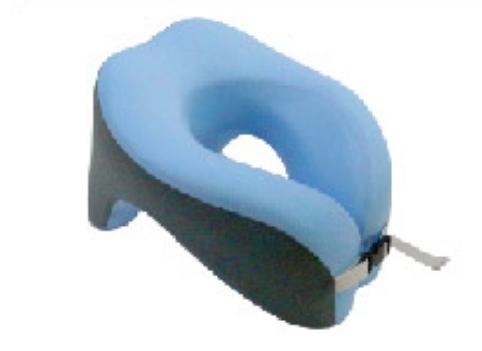
Travel pillow attachments
In premium markets, headrest design is also evolving alongside luxury interior concepts. Electric vehicles and autonomous driving prototypes experiment with reclined seating positions, requiring re-evaluation of head support geometry.
However, customization must never compromise structural performance. Replacement headrests must maintain proper rod diameter, anchoring strength, and foam density standards.
There is a difference between aesthetic customization and structural redesign. Responsible suppliers ensure that safety compliance remains intact.
Alignment and Proper Adjustment
Even the most advanced headrest design fails if improperly adjusted.
Correct positioning guidelines include:
-
The top of the headrest should align with or slightly above the top of the occupant’s head
-
The horizontal distance between the head and the headrest should be minimized
-
The headrest should contact the skull area rather than the neck
Improper positioning, particularly low placement, creates a pivot point at the cervical spine. In a rear impact, this increases extension risk.
Driver education rarely emphasizes this adjustment, yet it is one of the simplest injury prevention steps available.
Integration with Modern Automotive Design
Modern vehicles integrate safety systems holistically. Seats, airbags, structural reinforcements, and headrests operate as a coordinated system.
In some vehicles, seatback geometry is specifically designed to manage energy transfer during rear impacts. The headrest functions within this integrated architecture.
Future vehicle trends may further influence headrest evolution:
-
Autonomous driving environments
-
Rotating seat configurations
-
Lightweight composite materials
-
Enhanced crash detection algorithms
As mobility patterns change, so will occupant posture. The headrest design will need to adapt accordingly.
A car headrest is more than a padded extension of the seatback. It is a biomechanical control device, a comfort support system, and a structural safety component integrated into modern vehicle engineering.
In rear-end collisions, it reduces whiplash risk by limiting excessive neck extension. In daily driving, it supports posture and reduces muscular fatigue. In manufacturing, it reflects careful decisions about material selection, structural integrity, and durability testing. In aftermarket markets, it represents both branding potential and safety responsibility.
What appears simple is in fact engineered complexity. The car headrest demonstrates how small components can carry disproportionate importance in occupant protection systems.
When properly designed, manufactured, adjusted, and maintained, it quietly performs one of the most essential tasks in automotive safety: protecting the most vulnerable segment of the human spine.
