
Introduction
Fleet managers, automotive distributors, and OEM procurement teams are constantly looking for seat support solutions that improve driver comfort, reduce fatigue during extended driving, and deliver reliable long-term value. While the headrest has traditionally been viewed as a passive safety component, it is now gaining recognition as an important part of vehicle ergonomics and driver experience.
This guide provides a detailed comparison between memory foam car headrest solutions and traditional headrest designs, examining key factors such as material performance, ergonomic support, durability, compliance considerations, and overall purchasing value. Whether you are managing a large vehicle fleet, developing automotive accessory product lines, or sourcing customized comfort solutions, understanding the differences between these two technologies can help you select a more suitable support system for your market needs.
1: Understanding the Core Differences — Material & Construction
1.1: How Memory Foam Technology Works in Automotive Headrests
Memory foam, technically known as viscoelastic polyurethane foam, features an open-cell structure that responds to both pressure and body temperature. When a driver’s head rests against a memory foam car headrest, the foam gradually adapts to the shape of the head and neck while distributing pressure across a wider contact area. This helps reduce pressure concentration and improves comfort during extended driving.
A key advantage of memory foam is its ability to provide personalized support. After compression, quality memory foam gradually recovers its original shape, maintaining consistent performance across different users. This recovery capability makes it suitable for shared vehicles, fleet applications, and commercial transportation environments.
For automotive applications, foam density plays an important role in durability and support performance. Higher-density memory foam formulations generally provide better structural stability and stronger resistance to long-term compression.
1.2: Traditional Headrest Materials and Their Structural Limitations
Traditional car headrests are commonly made from standard polyurethane (PU) foam, which provides fixed support rather than adaptive adjustment. Unlike memory foam, conventional PU foam does not conform as effectively to individual head and neck shapes, which may result in uneven pressure distribution during long periods of driving.
Over time, repeated compression and heat exposure can reduce the resilience of standard foam materials, affecting their ability to maintain stable support. For fleet operators, distributors, and automotive accessory buyers, this difference directly influences product durability, replacement frequency, and long-term value.
2: Ergonomic Performance & Comfort Comparison
2.1: Cervical Support and Driving Fatigue Reduction
Proper head and neck support plays an important role in driving comfort, especially during long journeys. Traditional headrests with fixed structures may not provide the same level of adaptability for different body shapes and seating positions, potentially increasing discomfort caused by prolonged driving postures.
A memory foam car headrest improves support through its pressure-responsive structure. By conforming to the head and cervical area, it helps distribute pressure more evenly and provides a more comfortable support experience. For professional drivers and fleet users, this adaptive design can help reduce frequent posture adjustments and improve overall driving comfort.
2.2: Integrated Lumbar Support — Added Value of Combo Units
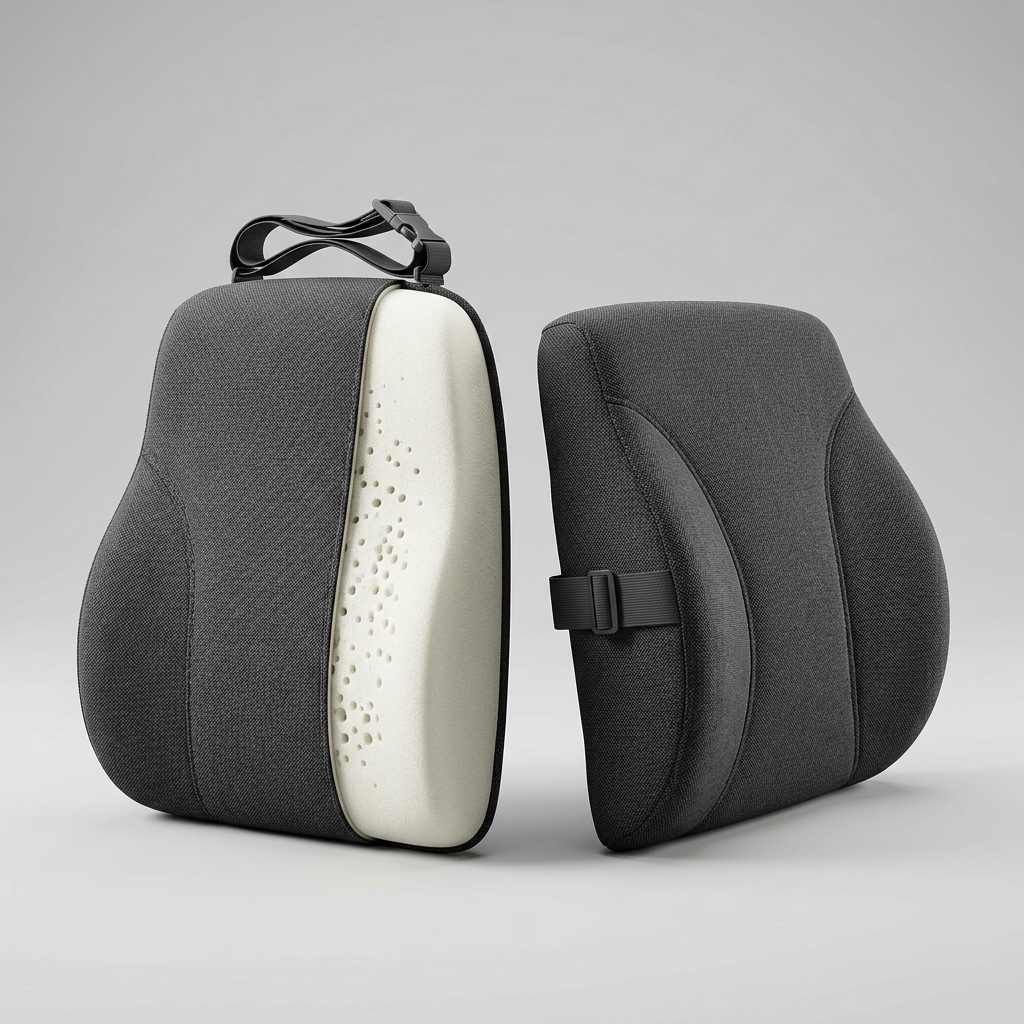
The combination of memory foam car headrest and lumbar support provides a dual-zone ergonomic solution that supports both the neck and lower back areas. While the headrest improves upper-body support, the lumbar cushion helps maintain a more comfortable sitting position during extended driving.
For distributors and fleet buyers, an integrated solution offers practical advantages over separate accessories. A combined unit simplifies product selection, reduces installation complexity, and provides a convenient support solution for various vehicles, including sedans, SUVs, commercial vans, and passenger vehicles.
Comparative Specification Table
| Comparison Dimension | Memory Foam Headrest | Traditional Headrest |
|---|---|---|
| Type de matériau | Viscoelastic polyurethane foam (50–80 kg/m³) | Standard PU foam (25–40 kg/m³) |
| Support Mechanism | Adaptive, pressure-responsive | Static, uniform resistance |
| Pressure Distribution | Multi-point, anatomically distributed | Concentrated at contact point |
| Cervical Conformity | High — contours to individual geometry | Low — fixed profile |
| Lumbar Support Integration | Available as combo unit | Typically separate or absent |
| Service Lifespan | 3–5 years under daily commercial use | 12–18 months before compression fatigue |
| Vehicle Compatibility Range | Universal fit with adjustable straps | OEM-specific or limited aftermarket fit |
| Certification Standards | OEKO-TEX, REACH, ECE R17 compatible | Basic OEM safety compliance |
3: Compliance Standards, Durability & Procurement Considerations
3.1: Relevant Safety & Quality Considerations for Car Headrests
For commercial buyers, distributors, and automotive accessory brands, quality documentation and material compliance are important factors when evaluating a reliable Memory Foam Car Headrest supplier. While requirements may vary depending on the application and target market, several commonly referenced standards and testing frameworks can help buyers assess product quality and material safety.
- ECE Regulation No. 17 (ECE R17):
ECE R17 is a United Nations Economic Commission for Europe regulation related to vehicle seat strength, seat anchorage, and head restraint performance. For automotive seating applications, understanding relevant head restraint requirements helps manufacturers and buyers evaluate support structure, positioning, and safety considerations. - FMVSS 202a:
The U.S. Federal Motor Vehicle Safety Standard FMVSS 202a covers requirements related to head restraint height, position, and energy absorption performance for vehicle seats. It is particularly relevant for companies supplying automotive products to North American markets. - OEKO-TEX Standard 100:
OEKO-TEX Standard 100 verifies that textile components, including commonly used headrest covers such as polyester mesh, velvet, or leatherette materials, are tested for harmful substances. This certification is especially valuable for products involving frequent direct contact with users. - REACH Compliance:
REACH compliance helps ensure that foam materials, adhesives, and other components meet European chemical safety requirements by limiting restricted substances. This is an important consideration for suppliers serving European distributors and international automotive accessory markets.
When evaluating suppliers, procurement teams should review available test reports, material specifications, and quality control procedures. Consistent foam density, stable production processes, and reliable material sourcing are key indicators of long-term product performance.
3.2: Durability Metrics and Sourcing Considerations
When selecting a Memory Foam Car Headrest for commercial applications, durability performance is often just as important as initial comfort. Buyers should evaluate several key factors before making a purchasing decision:
Compression Set Performance:
Compression set measures the permanent deformation of foam after continuous pressure exposure. High-quality memory foam formulations are designed to maintain their shape and support characteristics after repeated use, helping extend product service life.
Cover Abrasion Resistance:
The durability of the outer cover directly affects the user experience and product appearance over time. Materials commonly used for automotive accessories should provide sufficient resistance against friction, daily wear, and repeated cleaning requirements.
Strap and Fastener Durability:
For adjustable headrest products used in fleet vehicles or shared transportation environments, strap strength and fastening reliability are important considerations. Durable attachment systems help ensure stable installation and reduce maintenance requirements during repeated use.
For OEM customers, distributors, and fleet buyers, customization capability is another important supplier selection factor. Options such as logo embroidery, branded packaging, customized cover materials, and color matching allow companies to create products that better fit their target markets. Flexible order quantities and customized configurations can also help buyers develop differentiated automotive accessory product lines.
4: Application Scenarios & Commercial Value
4.1: Target Applications — Fleet, Rideshare, and Aftermarket Channels
- Corporate and Government Fleets:
For companies managing multiple vehicles, driver comfort and operational efficiency are increasingly important considerations. Memory Foam Car Headrest solutions with universal-fit designs can be installed across different vehicle models, providing a practical way to standardize ergonomic support across mixed fleets. - Rideshare and Transportation Services:
In passenger-focused transportation services, interior comfort can influence overall user experience and service perception. A memory foam headrest and lumbar support combination provides additional comfort features that can help vehicles stand out in competitive markets. - Automotive Aftermarket Retail:
For distributors and retailers, ergonomic driving accessories continue to attract consumer interest due to increasing awareness of long-distance driving comfort. Memory foam products can offer stronger market positioning compared with basic foam alternatives by combining improved comfort, premium materials, and enhanced product value.
4.2: ROI Considerations for Bulk Procurement Buyers
For fleet operators, distributors, and automotive accessory companies, investing in higher-quality seat support products involves more than the initial purchase price. The overall value of a Memory Foam Car Headrest solution can be evaluated through several practical factors:
- Improved User Comfort and Productivity:
Better ergonomic support can help reduce discomfort caused by prolonged driving positions, contributing to improved driver experience and greater satisfaction among professional users. - Longer Product Service Life:
Compared with lower-quality foam alternatives, durable memory foam materials are designed to maintain their shape and support performance for a longer period. This can help reduce replacement frequency and improve overall cost efficiency throughout the product lifecycle. - Brand Value and Customer Experience:
For automotive accessory brands and distributors, offering well-designed ergonomic products can strengthen market positioning and improve customer perception. Reliable materials, customization options, and consistent product quality can become important competitive advantages in crowded markets.
FAQ
Q1: What certifications should buyers consider when sourcing a memory foam car headrest?
Certification and material compliance requirements may vary depending on the target market and application. When sourcing a memory foam car headrest, buyers should review relevant documentation such as material safety reports, textile certifications, and applicable automotive testing information. Common references include OEKO-TEX Standard 100 for cover materials, REACH compliance for chemical safety, and other regional requirements based on distribution markets.
Q2: How does a combined headrest and lumbar support unit compare with separate support accessories?
A combined headrest and lumbar support unit provides an integrated ergonomic solution by supporting both the neck and lower back areas through one product design. Compared with purchasing separate accessories, a combination unit can simplify product selection, installation, and inventory management. This makes it a practical option for distributors, fleet operators, and automotive accessory brands looking for a more convenient support solution.
Q3: What is the expected lifespan difference between memory foam and traditional foam headrests?
The service life of a headrest depends on factors such as foam density, material quality, usage frequency, and environmental conditions. Compared with standard foam materials, a memory foam car headrest is generally designed to maintain its shape, resilience, and support characteristics for a longer period under regular use. This durability advantage can help reduce replacement frequency and improve long-term product value.
Q4: What factors should buyers consider when selecting a memory foam car headrest supplier?
When selecting a memory foam car headrest supplier, buyers should evaluate several factors, including foam quality, material consistency, production capability, customization options, and quality control processes. A reliable supplier should provide clear product specifications, material information, sample testing support, and manufacturing experience to ensure stable product performance across different orders.
Q5: Can a memory foam car headrest be customized for different automotive accessory markets?
Yes. A memory foam car headrest can be customized based on different market requirements, vehicle applications, and brand positioning. Common customization options include foam density, cover materials, product dimensions, logo embroidery, color selection, and packaging solutions. These options allow automotive distributors, retailers, and OEM customers to develop products that better match their target markets.
Q6: How should buyers evaluate the quality of a memory foam car headrest before bulk purchasing?
Before placing bulk orders, buyers should review key factors such as foam resilience, shape recovery performance, cover durability, installation design, and supplier quality management procedures. Requesting product samples and technical specifications can help verify whether a memory foam car headrest meets the expected requirements for long-term commercial use.
Conclusion
The comparison between memory foam car headrests and traditional headrest designs shows that memory foam solutions provide better adaptive support, comfort, durability, and long-term value. With improved pressure distribution, enhanced neck support, and integrated lumbar support options, they are becoming a preferred choice for fleet managers, automotive distributors, and accessory brands.
For companies evaluating seat support upgrades, choosing a reliable supplier with strong manufacturing capability, quality control, and customization options can help improve product performance, reduce replacement frequency, and deliver greater value over the product lifecycle.
