
Many people believe that the comfort and safety of a vehicle are associated with its engine, seats, or safety belts. However, they often disregarded a crucial component that has a significant role as well — the headrest in cars. While its presence may appear inconsequential, the headrest in the car has a significant impact on both safety and comfort in the vehicle. It reduces fatigue associated with long drives, supports the neck against jerks, and safeguards passengers during accidents or stops.
Today’s automotive design has progressed beyond the simple addition of a headrest. It’s now technologically enhanced and ergonomically designed, combining safety knowledge, human anatomy, and innovative technology. With the introduction of new memory foam technology, intelligent sensors, adjustable mechanisms, and climate features, the headrest car has become a symbol of the progress of vehicle interior design in balancing comfort, aesthetics, and protection.
Overview of Car Headrest Benefits for Modern Vehicles
Initially, a headrest car seat may appear as a simple expansion of the seat. However, its influence on safety and posture is significant. What is necessary for a car to have a headrest? Why do automobile manufacturers devote so much time to perfecting the design?
The answer is located in its multiple functions – from avoiding whiplash to improving spinal alignment, the headrest has a direct effect on both physical health and overall driving enjoyment. Whether you’re commuting every day or driving across long distances, or taking care of family members, the headrest effect on your neck, shoulders, and spine will be affected by the car.
In general, the headrest car is no longer considered an accessory, but it is now a significant component of interior design that promotes healthy posture and facilitates sustained attention for both drivers and passengers.
The Role of Ergonomics in Car Headrest Usage
Today’s lifestyle involves long hours of sitting, whether at home, at work, or while driving. Extended driving that lacks proper head and neck support can lead to pain, stiffness, and long-term neck issues. That’s the location of the headrest that is ergonomically designed.
A proper headrest design reduces the strain on the neck, aligns the spine’s curvature, and maintains the default position of the cervical region. Through structured padding, adjustable height options, and contoured shapes, the headrest will maintain the head’s position with the torso rather than tilting forward.
Additionally, the headrest’s ergonomic design enhances the seat’s ergonomics. When both components are incorporated, they produce pressure that is uniformly distributed across the top of the body; this results in less fatigue and a better focus on the road. Over greater distances, this optimization has the result of improving the posture, reducing fatigue, and decreasing muscular imbalances, all of which are important to any consistent driver.
Car Headrest and Passenger Safety
The Auto-Kopfstütze has a significant role in the safety of vehicles, particularly in preventing neck injuries during rear-end collisions. One of the most common injuries in this type of accident is whiplash, which is caused by a sudden jolt to the head followed by a quick flick.
Without proper headrest placement, this movement can lead to severe neck strain and muscle injury. A correctly placed headrest — which is ideally positioned alongside the back of the head and doesn’t fall too low — can greatly reduce the likelihood of whiplash.
Now, manufacturers have extensive testing dedicated to crash testing and ergonomic design that is intended to ensure that every car headrest is safe. Many modern cars have active headrest systems that automatically move forward during an impact to dissipate the kinetic energy and maintain the head’s motion.
This innovation is significant because it implies one important truth: the car headrest is not solely about providing comfort, but also has a safety function that is designed to prevent death.
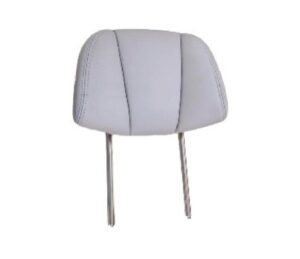
Functions of the Key Car Headrest
Comfort Support Provided by Car Headrest Padding
The first interaction that most people have with the headrest is sensory, the way it feels. Modern car headrest fillings include memory foam, high-density polyurethane, gel-based layers, and multiple zone foam composites.
Memory foam headrests, in particular, have gained popularity because of their capacity to conform to the shape of the head and neck. This facilitates a uniform distribution of weight, this diminishes the pressure points and prevents long-term driving that is stiffer. Some luxury brands have dual-density foam in addition to the standard layer, this extra layer is intended to provide support and comfort.
These materials augment the car headrest’s cushioning, but also serve as a personalized system that responds to the user’s body temperature and movement.
Alignment and Neck Protection from the Car Headrest Shape
The form and contour of his headrest directly impacted the spinal alignment. A headrest that is ergonomically designed complements the natural “S” shape of the spine. By preventing the excessive forward tilt of the head, it decreases the tension in the neck and shoulders.
For drivers who care about health, this feature is essential. It reduces the fatigue of the muscles, decreases the frequency of headaches caused by bad posture, and promotes a neutral position on the spine.
With the increasing popularity of health and wellness across the globe, consumers are now more likely to consider the ergonomic design of certification when purchasing car accessories. As a result, the headrest car has become an essential health accessory that supports physical well-being and increases long-term driving enjoyment.
Types of Car Headrest Design and User Applications
Adjustable Car Headrest Solutions for Personalization
Today, modern automotive technology is notable for its versatility. The adjustable car headrest is particularly noteworthy. These headrests have a height, angle, and sometimes a depth that is adjustable to accommodate different body types. A headrest that is positioned too low or too far back will lose its safety properties, but adjustable systems will easily correct this.
Multiple-level adjustment mechanisms—tilt, telescopic sliders, and multiple-axis rotations—allow drivers and passengers to customize the comfort of their vehicles. For families that have multiple drivers, share vehicles that are used for rides, or car owners who have a lot of money, this versatility is important.
More advanced versions now have motorized headrests, which are controlled via electronic panels or seat memory systems that will automatically adapt to the stored profile of each driver.
Fixed Car Headrest Applications and Minimalist Designs
Not all cars have variable headrests. In motorsports cars, cars with minimalist interiors, or integrated seats that are designed to remain stable and aesthetically pleasing, fixed headrests are still popular for this reason.
These fixed car headrests have internal structural support that provides comfort without requiring additional adjustment. This method maintains interior neatness and decreases mechanical difficulty.
In high-end vehicles like EVs or luxury sedans, fixed headrests are now frequently paired with soft, supportive materials and concealed memory foam that achieves comfort without compromising on design or functionality.
Advanced Features in Modern Car Headrest Technology
Heating and Cooling Systems in Car Headrest Designs
Controls over climate have become important components of modern heating and cooling systems. Heated and ventilated car headrests are now common in high-end vehicles. This adds another level of relaxation to the driving experience.
A heated car’s headrest will increase the temperature of the car during cold conditions, which will relax the muscles and reduce stiffness. Conversely, headrests that are ventilated and have micro air channels help to maintain airflow during long drives in warm climates.
This technology serves as a supplement to seat ventilation systems and facilitates the regulation of the microclimate, a growing concern in the luxury and electric car industries.
Smart Car Headrest Systems and Technology Integration
The smart car headrest marks the future of interior innovation. These intelligent systems integrate sensors, embedded speakers, microphones, and even vibration modules.
In advanced models, passengers can enjoy personalized audio zones directly from the headrest without external headphones. Some high-end brands also feature noise-cancellation systems, reducing cabin disturbance and enhancing acoustic privacy.
Additionally, biometric sensors in the car headrest can monitor posture, heart rate, and even fatigue levels — a crucial addition for autonomous or long-distance vehicles.
Luxury brands now envision car headrests as multifunctional interfaces — combining wellness, entertainment, and smart safety in one design.
Material Selection and Performance Considerations
Leather, Fabric, and Hybrid Car Headrest Upholstery
Material choice defines both the aesthetics and comfort of a car headrest.
-
Leather headrests exude luxury and durability but may trap heat in warmer climates.
-
Fabric headrests provide breathability and cost efficiency, ideal for mass-market vehicles.
-
Hybrid materials, combining microfiber, recycled fabric, and antimicrobial finishes, represent a growing trend toward performance textiles.
Some premium designs now incorporate antibacterial coatings or temperature-regulating fibers, enhancing hygiene and comfort during long use.
Memory Foam and Gel-Enhanced Car Headrest Padding
Memory foam remains the gold standard in comfort innovation. It conforms to individual body shapes and provides lasting support without deformation.
Gel-enhanced padding improves ventilation and thermal regulation, making long journeys less tiring. Many electric and hybrid cars incorporate such materials to emphasize sustainability and energy-efficient comfort.
Together, these innovations redefine the car headrest as an adaptive comfort technology rather than static cushioning.
Global Trends Shaping Car Headrest Development
Eco-Friendly and Sustainable Materials
Sustainability is reshaping automotive interiors. Manufacturers are now experimenting with plant-based foam, recycled leather alternatives, and eco-friendly microfibers.
Eco-conscious car headrests minimize carbon footprints and reduce waste. Many leading automakers now advertise vegan leather headrests and fully recyclable upholstery systems that support circular economy goals.
This evolution aligns with the global push for greener mobility and reflects consumers’ growing preference for responsible luxury.
Luxury Comfort Innovations in Car Headrest Systems
Luxury vehicles are redefining comfort. Features like vibration massage, adaptive positioning, and ambient lighting integration elevate the headrest from a safety component to a wellness accessory.
Soft-touch surfaces and adjustable micro-massage zones enhance relaxation during long drives. Combined with smart connectivity, these innovations demonstrate that the car headrest is no longer passive — it actively contributes to well-being.
Choosing the Best Car Headrest for Personal Needs
When selecting a car headrest, several factors should be evaluated:
-
Duration of use and driving frequency
-
Body posture and cervical health
-
Vehicle type and seat compatibility
-
Material and climate adaptability
-
Safety ratings and certification standards
For frequent travelers or professional drivers, an ergonomic, adjustable, and breathable car headrest can drastically improve health outcomes and comfort levels.
Maintenance Tips for Long-Lasting Car Headrest Performance
Maintaining your car’s headrest ensures both hygiene and longevity.
-
Regularly vacuum dust and debris.
-
Wipe leather surfaces with pH-neutral cleaners.
-
For fabric or microfiber, use mild detergent and air dry.
-
Inspect mechanical adjustment parts periodically to ensure smooth movement.
Proper maintenance not only extends the life of the car headrest but also keeps its performance — both comfort and safety — intact for years.
The Future of Car Headrest Design
For the future, the next generation of car headrests is expected to combine AI, biometrics, and adaptive ergonomics. Imagine a headrest that automatically changes based on the detection of fatigue, heart rate, or the posture of the face.
This amalgamation of health monitoring, AI-based comfort, and smart design will augment the car’s interior with more intelligence, intuitive, and personalized features. The car headrest, which was once a simple cushion, is now becoming the foundation of human-oriented automotive development.
The car headrest has been acknowledged as one of the most underestimated components of modern vehicle design. From safety precautions to emotional support, from sustainability to smart interaction, its evolution parallels the way automotive technology is redefining what it means to be comfortable in a vehicle.
For every driver, passenger, and designer: the headrest represents not only assistance, but also progress, innovation, and the care of human health.
