
Einführung
Long hours on planes, trains, or office chairs often lead to neck discomfort caused by poor support in upright sitting. Traditional fixes, such as rolled-up jackets or makeshift cushions, rarely solve the problem.
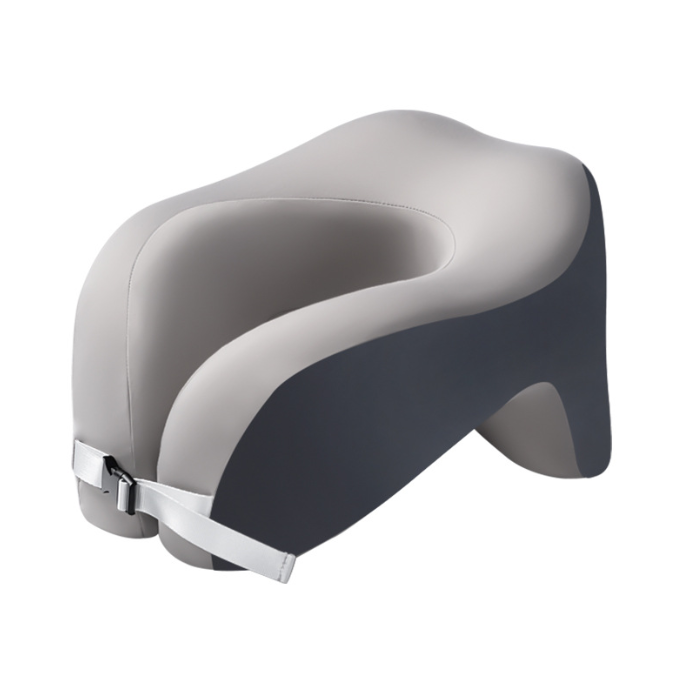
Ein gut durchdachtes U shaped memory neck pillow helps fill the gap between the neck and seat back, supporting the natural cervical curve during rest. Studies show that proper pillow design can reduce neck strain and improve comfort, while memory foam provides better pressure distribution than standard filling materials.
Whether for travel, office naps, or daily commuting, a U shaped memory neck pillow offers practical ergonomic support and a simple way to improve comfort on the go.
The Science Behind the Shape — Why U‑Shaped?
The U shape isn‘t an accident of design; it’s a solution to a specific problem. When we doze off upright, gravity relentlessly pulls our head forward or sideways. This disrupts the natural inward curve of the cervical spine (cervical lordosis) and increases pressure on the intervertebral discs. A U shaped memory neck pillow provides bilateral side support, preventing the head from tilting to either side. It also minimizes chin drop—a common issue during micro‑naps that can compress airways and strain the jaw joint.
A 2025 study evaluated four different pillow shapes (rectangular, cylindrical, and countered designs, including U‑shaped) and concluded that pillow shape plays a crucial role in managing neck muscle activation and perceived comfort according to sleeping position. The countered U‑shape—with higher sides and a lower, flattened center—was specifically compared against traditional forms.
The U‑shape is also favored in contemporary ergonomic pillow design because it matches the bony structure of the head and neck to maintain the physiological curvature of the cervical spine. A U shaped memory neck pillow isn‘t about forcing your neck into an unnatural brace; it’s about gentle guardrails that keep your head where it belongs while you drift off.
Memory Foam vs. Other Materials — Which One Actually Works?
The filler inside the pillow determines everything: support, durability, portability, and comfort. A U shaped memory neck pillow typically uses memory foam (polyurethane foam) as its core material, but you‘ll also encounter microbead and inflatable options in the market. Here’s how they compare.
Memory Foam — The Gold Standard for Support
Memory foam travel pillows conform to the position and shape of your neck. Unlike microbead pillows, which allow beads to shift and create inconsistent support, memory foam provides consistent support throughout use. A biomechanical evaluation of pillow materials found that memory foam showed the lowest head pressure distribution in the supine (lying face up) position, meaning it reduces pressure points on the head and neck better than conventional polyesters. High‑density memory foam used in quality U shaped memory neck pillow models typically ranges from 40–60 kg/m³, offering enough give to contour without collapsing. Some premium products use German BASF memory foam cores, known for zero‑delay contouring and high resilience.
Microbead — Lightweight but Lacking Support
Microbead pillows are filled with tiny polystyrene beads. They‘re lightweight, flexible, and soft—easy to compress and highly versatile. However, as the fabric stretches over time, the beads shift, and the pillow offers progressively less support. Microbead pillows provide the least amount of support among the three main types and are often too squishy for genuine neck stabilization. For longer journeys or serious neck support, a microbead is rarely adequate.
Inflatable — Portable but Compromised
Inflatable pillows win on portability: when deflated, they occupy virtually no space in a carry‑on bag and weigh next to nothing. They can be customized for firmness by adjusting the air volume. However, the trade‑offs are significant. Inflatable pillows often feel stiff or uneven, and even small leaks can deflate the pillow mid‑flight, leaving you with zero support. User reports frequently note that inflatable models struggle with air seal integrity, and support stability is far lower than that of memory foam variants. For occasional, short trips, an inflatable may work; for consistent daily comfort, a U shaped memory neck pillow with memory foam is the superior choice.
Here‘s a quick comparison table summarizing the key differences.
| Merkmal | Memory-Schaum | Microbead | Inflatable |
|---|---|---|---|
| Support consistency | Excellent — consistent throughout use | Poor — beads shift and compress over time | Variable — depends on air pressure; leaks are common |
| Pressure distribution | Lowest head pressure in the supine position | Mäßig | High if over‑inflated |
| Tragbarkeit | Moderate — can be compressed to half size | Poor — cannot be compressed | Excellent — deflates to pocket size |
| Dauerhaftigkeit | 2‑3 years with proper care | 6‑12 months before bead breakdown | Limited — seals degrade |
| Best use case | Long flights, office naps, daily commutes | Short trips, children‘s use | Ultralight packing, emergency backup |
For daily comfort across travel, office, and home use, memory foam is the clear winner. A U shaped memory neck pillow with memory foam delivers the biomechanical support your neck actually needs.
Performance Features That Matter — Support, Breathability, and Durability
Not all memory foam is the same. When evaluating a U shaped memory neck pillow, focus on these specific performance attributes.
Shape Retention and Foam Density
A-Qualität U shaped memory neck pillow will bounce back after being squished into luggage or a backpack. Low‑density foam (below 40 kg/m³) offers little resistance and will pancake under the weight of your head. High‑resilience memory foam with density around 60D (roughly 60 kg/m³) is widely considered the industry‘s “golden density,” delivering 3‑5 second slow rebound and maintaining 90% resilience after 100,000 compression cycles. This translates into 2‑3 years of usable life—about 40% longer than standard 30‑40D foam.
Breathability and Heat Management
One of the most common complaints about memory foam pillows is heat retention. Quality U shaped memory neck pillow products address this with breathable outer covers made from cotton blends, bamboo fiber, or cooling fabrics. A removable, washable cover is essential—not only for hygiene but also for maintaining fabric breathability over time. Some premium designs incorporate temperature‑regulating materials that actively absorb and release excess heat, helping to maintain a comfortable neck temperature even in warm cabins or stuffy office environments.
Portability Without Sacrificing Support
Daily comfort on the go means the U shaped memory neck pillow needs to come with you. Quality memory foam pillows can be compressed to about half their size and fit into a carry‑on bag, laptop sleeve, or water bottle pocket of a backpack. Some models include carabiner straps or travel pouches for attachment to luggage. A pillow that‘s too bulky to carry will end up left at home—where it does no good.
Cervical Curve Preservation
The primary job of any neck pillow is to maintain the neutral alignment of the cervical spine. A systematic review and meta‑analysis of pillow designs found that while pillow material influences neck pain reduction, the cervical alignment is “significantly impacted by the shape and height of the pillow”. This means that the specific contour of a U shaped memory neck pillow—the curve, the height differential between the back and sides—matters just as much as the foam inside it. Look for designs with a pronounced contour that cradles the neck while allowing the head to rest in a supported, natural position.
From Planes to Desks — Daily Scenarios Where the Pillow Shines
A U shaped memory neck pillow is most commonly associated with long‑haul flights. But its usefulness extends far beyond air travel.
Air Travel — The Classic Use Case
Research shows that 69% of people experience neck pain after flying. This isn‘t a coincidence. Airplane seats are designed for safety, not comfort, and the upright sleeping position forces the neck muscles to work overtime to keep the head balanced. A U shaped memory neck pillow reduces the muscular load by distributing head weight across a larger surface area, allowing the neck muscles to relax instead of constantly compensating for gravity. During long‑haul flights—especially red‑eye journeys where sleep is critical—a supportive memory foam pillow can mean the difference between arriving rested or spending the first day of a vacation nursing a stiff neck.
Office Desk Naps — The Underrated Use Case
For office workers, the lunch break often includes a 15‑20 minute nap at the desk. Without proper support, most people resort to the “head‑on‑arms” posture, which bends the cervical spine far beyond its neutral position. Data shows that the correct use of a U shaped memory neck pillow can reduce neck pressure by 30‑50% in office users. Neck pain scores among office workers using a properly fitted pillow dropped from 7.2 to 3.8 on a 10‑point scale—a reduction of nearly half the perceived discomfort. The pillow works by filling the gap between the neck and the office chair back, keeping the cervical spine aligned while the user reclines slightly.
Tägliches Pendeln
Whether on a train, bus, or as a passenger in a car, daily commuting involves prolonged sitting in a semi‑upright position. The repetitive jostling of transit can aggravate neck muscles, especially if the head is unsupported. A U shaped memory neck pillow worn during a 30‑minute train ride or a 45‑minute bus commute provides the same support benefits as during air travel, scaled down to shorter durations. For people with long commutes, this passive support accumulates over weeks and months—reducing daily muscle fatigue before it becomes chronic pain.
Home Lounging
Even at home, there are scenarios where upright neck support is helpful. Reading in a recliner, watching a movie on the couch, or working from a laptop on the bed—all of these activities can involve awkward neck postures. A U shaped memory neck pillow isn‘t just for travel; it‘s for any situation where the head needs support in an upright position without the full recline of a bed pillow. Many users keep one in their home office, another in their car, and a third in their travel bag—because once you experience the difference, you don‘t want to be without it.
Common Mistakes — Why Some People Think U‑Shaped Pillows Don’t Work
Online reviews of U shaped memory neck pillow products are deeply divided. Some users swear by them; others insist they‘re useless. The difference almost always comes down to one of four common mistakes.
Mistake 1: Using the Wrong Material
A $10 microbead pillow from an airport kiosk is not the same as a quality memory foam pillow. Cheap pillows lack the density to provide genuine support. The U shaped memory neck pillow you choose should have a foam density of at least 40‑50 kg/m³. Anything softer will compress fully under head weight, offering no meaningful lift.
Mistake 2: Wrong Size for Your Neck
A U shaped memory neck pillow that is too small will choke or pinch; one that is too large will slide around and fail to support. Adults generally need an inner circumference that accommodates their neck diameter—for most, this translates to an inner opening of roughly 14‑16 cm across. A pillow with an inner diameter below 13 cm will feel constricting for the average adult.
Mistake 3: Wrong Application
Using a U shaped memory neck pillow while lying flat in a bed makes no sense—that‘s what a standard pillow is for. The U‑shaped design is specifically for seated, upright, or semi‑reclined positions. If you‘re lying down, a cervical contour pillow for side or back sleeping is the appropriate tool.
Mistake 4: Poor Positioning
A U shaped memory neck pillow needs to be positioned correctly. The opening should face forward, with the thicker part of the cushion behind the neck. Many first‑time users place the pillow backward or too low, then wonder why it doesn‘t work. The pillow should sit snugly against the base of the skull and the upper shoulders, filling the gap.
Avoid these pitfalls, and your experience with a U shaped memory neck pillow will shift from “why does this exist?” to “how did I live without it?”
Who Benefits Most from a U Shaped Memory Neck Pillow?
Not everyone needs a U shaped memory neck pillow. For those who fall into these categories, the investment pays immediate dividends.
Frequent Flyers
Anyone who takes more than four flights per year, especially long‑haul or red‑eye flights, will benefit. The cumulative neck strain from multiple flights adds up, and arriving at a destination with a pre‑existing neck ache ruins the start of any trip. A quality U shaped memory neck pillow amortizes its cost across dozens of flights, each time delivering support that standard airline seats can‘t provide.
Office Workers Who Nap at Their Desks
If you regularly take a 15‑30 minute nap during your lunch break, you‘re already aware of the neck stiffness that follows. Switching from a head‑on‑arms position to a seated recline with a U shaped memory neck pillow can cut post‑nap neck pain by more than half, according to user data. That‘s not a small improvement—it‘s the difference between returning to work refreshed or returning to work with a sore neck.
Individuals with Chronic or Intermittent Neck Pain
For people who already experience neck pain or cervical spine issues, supportive posture is not optional. A U shaped memory neck pillow can help prevent exacerbations during travel or long sitting sessions. A meta‑analysis of pillow studies found that appropriate pillow use significantly reduces neck pain, waking symptoms, and neck disability, while enhancing user satisfaction. This benefit applies equally to travel pillows as to bed pillows—any sustained period of upright rest demands proper support.
Long‑Distance Drivers
Truck drivers, rideshare drivers, and anyone who spends hours behind the wheel faces a similar challenge: holding the head in a fixed, slightly forward position while the vehicle vibrates. A U shaped memory neck pillow worn while driving (ensuring it does not interfere with seatbelt or shoulder mobility) can reduce driver neck fatigue significantly, potentially improving alertness on long hauls.
Students and Remote Workers
University students studying in library chairs, remote workers moving between coffee shops and home desks—anyone who spends hours in various chairs, tables, and couches will appreciate a portable neck support solution. A U shaped memory neck pillow packs into a backpack and deploys anywhere, providing consistent cervical support regardless of the furniture quality at the location.
Choosing a Reliable Supplier — What to Look For
For B2B buyers, distributors, and retailers selecting a U shaped memory neck pillow supplier, the decision goes beyond individual comfort to quality assurance, consistency, and cost.
Foam Density and Certification
Ask the supplier for foam density specifications. Quality U shaped memory neck pillow products use foam with density of 40‑60 kg/m³. Suppliers should provide test reports showing resilience after compression cycles. Additionally, look for OEKO‑TEX Standard 100 certification, which ensures that the foam and fabric contain no harmful substances such as formaldehyde, heavy metals, or allergenic dyes. Without this certification, lower‑grade memory foam may off‑gas volatile organic compounds (VOCs) that can cause headaches or respiratory irritation—the opposite of what a comfort product should deliver.
Fabric Quality and Removability
The outer cover is the part that touches the user‘s neck. A quality U shaped memory neck pillow will have a removable, washable cover made from breathable, soft fabric—cotton blends, bamboo, or cooling polyester. Covers that are not removable cannot be properly cleaned, leading to hygiene issues over time. Suppliers offering machine‑washable covers demonstrate an understanding of end‑user needs.
Portability Features
For retail success, a U shaped memory neck pillow needs to solve the portability problem. Features such as compression travel pouches, carabiner straps, or built‑in elastic bands for attaching to luggage add significant value. Suppliers who offer these details in their design will outsell those who don‘t.
Testing and Sampling
Before committing to bulk orders, request samples and test for: foam rebound speed (3‑5 seconds is ideal), fabric breathability (hold the pillow against your mouth and breathe through it—resistance indicates low breathability), and compression recovery (stuff the pillow into a bag overnight, then check if it returns to full shape within minutes). A reliable supplier will provide these samples and answer technical questions without hesitation.
Lead Times and MOQs
Standard production lead times for U shaped memory neck pillow orders range from 30‑45 days, with sample lead times of 7‑14 days. Minimum order quantities (MOQs) vary: smaller suppliers may accept orders as low as 500‑1000 units, while larger manufacturers may require 3000‑5000 units. Custom colors, custom fabric printing, and branded packaging will add time and cost—discuss these early in the negotiation process.
Warranty and Customer Feedback
Auch die besten U shaped memory neck pillow can have manufacturing defects. Suppliers who offer at least a 12‑month warranty against material defects demonstrate confidence in their product. Ask for customer feedback, usage data, and any third‑party test reports. Real‑world user reviews are often more revealing than lab data alone.
FAQ
Q1: Can a U shaped memory neck pillow help with existing neck pain?
Yes, especially if the discomfort is caused by poor posture or muscle tension during upright sitting. It supports the cervical spine and helps reduce unnecessary muscle strain.
Q2: How do I clean a U shaped memory neck pillow?
Most quality pillows feature a removable, machine-washable cover. Wash it on a gentle cycle and air dry. The memory foam core should only be spot cleaned when necessary.
Q3: Is memory foam safe for people with allergies?
Yes. Memory foam is hypoallergenic, resistant to dust mites, and less likely to trap allergens than feather or down fillings. OEKO-TEX certified foam offers added reassurance.
Q4: Can children use a U shaped memory neck pillow?
Yes, but proper sizing is important. Many suppliers offer child-specific options. For younger children, always ensure safe use during rest.
Q5: How long does a U shaped memory neck pillow last?
With proper care, a high-density U shaped memory neck pillow typically lasts 2–3 years, while lower-density foam may lose support within 6–12 months.
Schlussfolgerung
So, can a U shaped memory neck pillow improve daily comfort? The answer is clear. For frequent travelers, office nappers, commuters, and anyone who spends long hours seated upright, the ergonomic benefits are real. Proper cervical support reduces strain, distributes head weight more evenly, and helps prevent the neck fatigue caused by unsupported sitting.
Ein gut durchdachtes U shaped memory neck pillow is not simply a travel accessory—it is a practical solution for better posture and more comfortable rest. Whether on a plane, in an office chair, or during a daily commute, the right pillow can help reduce discomfort and improve overall relaxation.
Ready to upgrade your comfort? Explore our premium U shaped memory neck pillow collection, available in multiple densities, breathable fabrics, and customizable options for bulk orders. Request a sample today and experience the difference.
