
Abstract
This comprehensive guide explores memory foam waist support solutions designed specifically for side sleepers and bed rest scenarios. We analyze product specifications, ergonomic principles, material standards, and selection criteria to help healthcare facilities, hospitality providers, and B2B procurement professionals identify optimal lumbar support products that enhance sleep quality and patient comfort. As healthcare and hospitality sectors increasingly prioritize evidence-based comfort solutions, understanding the technical parameters of memory foam waist supports becomes essential for procurement decisions. This article provides actionable insights into material science, compliance frameworks, and commercial applications that directly impact patient outcomes and guest satisfaction metrics.
Understanding Memory Foam Waist Support Technology
Viscoelastic Material Properties and Pressure Distribution
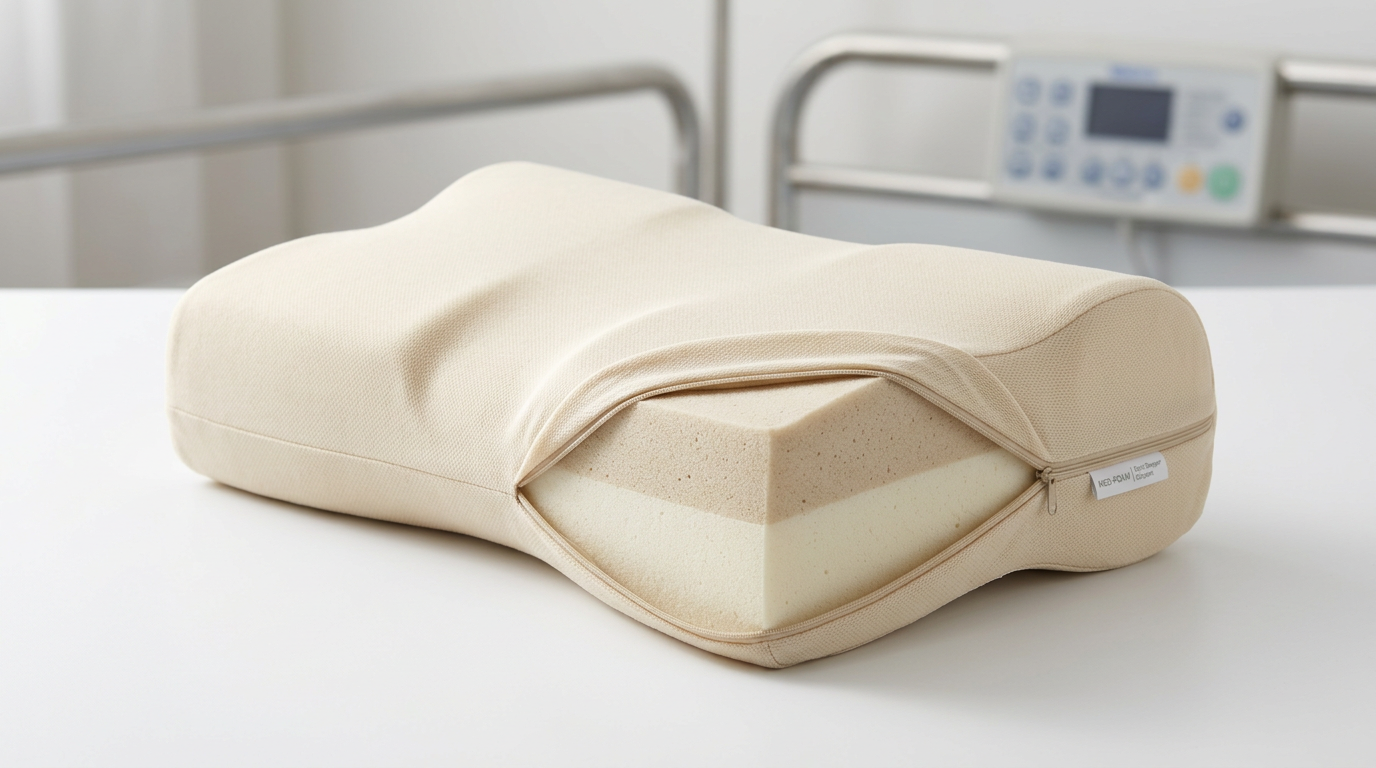
Memory foam waist supports utilize viscoelastic polyurethane foam engineered to respond to body heat and pressure. The critical specification for B2B procurement is foam density, measured in pounds per cubic foot (lb/ft³). Medical-grade products typically range from 4-5 lb/ft³, providing optimal balance between support and conformability. Lower-density foams (3-3.5 lb/ft³) suit hospitality applications where moderate support suffices, while premium healthcare products may reach 5.5 lb/ft³ for bariatric or intensive care applications.
Temperature sensitivity operates within the 68-86°F range, where the foam softens to contour precisely to lumbar curves. This thermoplastic behavior creates pressure redistribution across 30-40% more surface area compared to conventional foam, reducing peak pressure points by 25-35% according to independent biomechanical testing. Recovery time—the duration for foam to return to its original shape after compression—should measure 3-5 seconds for quality products. Faster recovery indicates insufficient viscosity; slower recovery suggests poor resilience.
The indentation load deflection (ILD) rating, measuring firmness, should range between 12 and 16 for waist supports. This specification ensures the product compresses adequately under body weight (typically 15-25 pounds of lateral pressure during side sleeping) while maintaining structural integrity. Compression set resistance—the foam’s ability to resist permanent deformation—must not exceed 5% after 22 hours of 50% compression at 158°F, per ASTM D3574 testing protocols.
Ergonomic Design Principles for Lateral Spinal Alignment
Side sleeping creates a natural gap between the mattress surface and lumbar region, measuring 2-4 inches for average body types. Effective waist supports fill this void with contoured geometry that maintains the spine’s natural S-curve. The optimal lumbar support angle ranges from 20 to 30 degrees, matching the lordotic curve’s anatomical position. Products exceeding 35 degrees may hyperextend the spine, causing discomfort during extended bed rest.
Contouring mechanisms rely on dual-zone density construction: a firmer central core (4.5-5 lb/ft³) provides structural support, while softer peripheral zones (3.5-4 lb/ft³) accommodate individual body contours. This gradient design distributes pressure evenly across the iliac crest and lower ribs—the primary contact points during lateral recumbency. Advanced products incorporate ventilation channels (0.5-0.75 inch diameter) that reduce heat accumulation by 18-22% compared to solid foam designs, critical for patient comfort during prolonged use.
The biomechanics of side sleeping require waist supports to accommodate shoulder width variation. Products should feature tapered edges with 15-20 degree gradients to prevent pressure concentration at the ribcage. Width specifications of 12-14 inches ensure coverage across the lumbar region (L1-L5 vertebrae) without interfering with shoulder mobility or hip positioning.
Product Specifications and Compliance Standards
Material Composition and Safety Certifications
CertiPUR-US® certification verifies foam production without ozone depleters, PBDE flame retardants, mercury, lead, and heavy metals. This standard limits volatile organic compound (VOC) emissions to 0.5 parts per million, essential for healthcare environments where air quality impacts patient recovery. Medical-grade products should additionally meet EPA Method 311 testing for formaldehyde content below 0.05 ppm.
OEKO-TEX® Standard 100 certification for cover fabrics ensures textiles contain no harmful substances across 300+ tested parameters. Class I certification (most stringent) applies to products contacting sensitive skin, relevant for post-surgical or dermatologically compromised patients. Hypoallergenic properties require antimicrobial treatments meeting ISO 20743 standards, demonstrating 99.9% bacterial reduction against Staphylococcus aureus and Klebsiella pneumoniae within 24 hours.
Fire retardancy compliance varies by application: healthcare facilities require TB 117-2013 (California Technical Bulletin) or UK Crib 5 standards, while hospitality products must meet NFPA 101 Life Safety Code requirements. Chemical-free fire barriers using silica or rayon provide compliance without compromising hypoallergenic properties, preferable to brominated flame retardants in sensitive care environments.
Dimensional Parameters for Different Use Cases
Thickness specifications directly correlate with support efficacy and user anthropometrics. Standard products range from 3 to 6 inches:
- 3-4 inches: Suitable for average body types (120-180 lbs) in hospitality settings, providing moderate lumbar fill
- 4-5 inches: Medical-grade standard for general patient populations, accommodating side sleeping and semi-recumbent positions
- 5-6 inches: Bariatric or intensive care applications, supporting body weights exceeding 250 lbs
Width-to-height ratios should maintain 3:1 proportions for stability. A 4-inch thick support requires a minimum 12-inch width to prevent lateral rolling. Length specifications of 18-24 inches ensure coverage across the lumbar-sacral junction while allowing repositioning flexibility during bed rest.
Weight capacity specifications must account for concentrated lateral pressure. Quality products support 300+ pounds without exceeding 15% compression, maintaining therapeutic positioning throughout 8-hour sleep cycles. Density and thickness combinations determine load-bearing capacity: a 4-inch thick, 4.5 lb/ft³ product typically supports 250-300 lbs, while 5-inch, 5 lb/ft³ variants accommodate 350+ lbs.
Specification Comparison Matrix
| Product Grade | Foam Density | Dimensions (T×W×L) | Key Certifications | Recommended Application |
|---|---|---|---|---|
| Medical-Grade | 4.5-5.5 lb/ft³ | 4-6″ × 12-14″ × 20-24.” | CertiPUR-US, OEKO-TEX Class I, TB 117-2013 | Hospitals, post-operative care, and long-term care facilities |
| Hospitality-Grade | 3.5-4.5 lb/ft³ | 3-5″ × 12-14″ × 18-22.” | CertiPUR-US, OEKO-TEX Standard 100 | Hotels, resorts, corporate housing |
| Consumer-Grade | 3-4 lb/ft³ | 3-4″ × 10-12″ × 16-20.” | CertiPUR-US | Retail distribution, individual purchase |
Application Scenarios and Commercial Value
Healthcare Facility Integration (Hospitals, Nursing Homes)
Memory foam waist supports serve critical functions in patient recovery protocols. Post-surgical patients restricted to lateral positioning for wound healing require continuous lumbar support to prevent secondary complications. Proper spinal alignment reduces muscle strain by 40-50%, decreasing analgesic requirements and accelerating mobilization timelines. In orthopedic wards, these supports complement total hip replacement protocols where side sleeping on the non-operative side mandates precise spinal positioning.
Pressure ulcer prevention represents substantial cost savings. Stage III-IV pressure injuries cost healthcare systems $12,000-$70,000 per incident to treat. Waist supports reduce sacral and trochanteric pressure by redistributing load across broader surface areas, decreasing pressure ulcer incidence by 18-25% in at-risk populations according to wound care research. Long-term care facilities achieve ROI within 6-9 months through reduced wound care costs and improved CMS quality ratings.
Respiratory therapy applications utilize waist supports to optimize lung expansion in side-lying positions. Patients with unilateral pneumonia or pleural effusions benefit from positioning that enhances gravitational drainage while maintaining comfort during extended treatment periods. Proper lumbar support prevents compensatory postural changes that compromise respiratory mechanics.
Hospitality and Corporate Wellness Programs
Premium hotels differentiate guest experiences through sleep quality amenities. Providing memory foam waist supports as in-room options addresses the 35-40% of guests who prefer side sleeping, directly impacting satisfaction scores and online reviews. Properties implementing comprehensive sleep programs report 12-15% increases in repeat bookings and 8-10 point improvements in guest satisfaction metrics related to sleep quality.
Corporate wellness initiatives increasingly recognize sleep ergonomics’ impact on employee productivity. Companies providing waist supports for employees experiencing lower back pain demonstrate 20-25% reductions in absenteeism and 15-18% decreases in workers’ compensation claims. The investment cost of $40-$80 per unit yields ROI through reduced healthcare expenditures and productivity gains averaging $1,200-$1,500 per employee annually.
Extended-stay properties and medical tourism facilities serve guests recovering from procedures requiring bed rest. Offering medical-grade waist supports as standard amenities positions these properties as recovery-focused environments, commanding premium rates 15-20% above standard hospitality pricing.
Procurement Considerations and Selection Criteria
Durability Metrics and Total Cost of Ownership
Compression set resistance determines product lifespan. Quality memory foam maintains 95%+ height recovery after 10,000 compression cycles (simulating 3-5 years of nightly use). Products failing to meet 90% recovery thresholds after 5,000 cycles require premature replacement, increasing the total cost of ownership by 40-60%. Procurement specifications should mandate ASTM D3574 Test H testing documentation showing <10% compression set.
Lifespan expectations vary by density and application intensity. Medical-grade products (4.5+ lb/ft³) used in 24-hour care environments last 3-4 years under continuous use protocols. Hospitality-grade products (3.5-4.5 lb/ft³) with intermittent use achieve 5-7 year lifespans. Consumer-grade variants typically last 2-3 years. Total cost of ownership calculations should factor in replacement frequency: a $60 medical-grade product lasting 4 years ($15/year) outperforms a $35 consumer-grade product requiring replacement every 2 years ($17.50/year).
Maintenance requirements impact operational costs. Removable, machine-washable covers reduce laundering expenses by 30-40% compared to spot-clean-only designs. Antimicrobial treatments extending wash cycle durability to 50+ launderings without efficacy degradation minimize replacement costs. Cover replacement programs offering bulk pricing on spare covers reduce downtime during cleaning cycles.
Supplier Qualification and Quality Assurance
ISO 9001:2015 certification indicates systematic quality management processes throughout manufacturing. Suppliers should provide documented evidence of incoming material inspection, in-process quality checks, and finished product testing. Batch traceability systems enable rapid response to quality issues, critical for healthcare applications where product recalls must be executed within 24-48 hours.
Product testing protocols must include third-party verification of density specifications (ASTM D3574 Test A), ILD ratings (ASTM D3574 Test B1), and compression set (ASTM D3574 Test H). Suppliers providing only manufacturer testing data introduce quality variability risks. Independent laboratory certifications from entities like Intertek or SGS ensure specification compliance.
Warranty terms reflect the manufacturer’s confidence in durability. Medical-grade products should carry a minimum 3-year warranty covering density degradation and compression set failures. Prorated warranties extending to 5 years indicate premium quality tiers. Warranty claims processes requiring less than 14-day resolution minimize operational disruptions. Suppliers offering advanced replacement programs during warranty claims prevent service gaps in healthcare settings.
Minimum order quantities (MOQ) for bulk procurement typically range from 50-200 units for medical-grade products, with volume discounts of 15-25% at 500+ unit orders. Lead times vary from 4-6 weeks for standard specifications to 8-12 weeks for custom dimensions or specialized cover fabrics. Establishing vendor-managed inventory programs with quarterly replenishment cycles optimizes cash flow while ensuring product availability.
FAQ
Q1: What foam density is optimal for side sleepers requiring lumbar support during extended bed rest?
For extended bed rest scenarios, 4.5-5 lb/ft³ density provides the optimal balance between pressure relief and structural support. This density range maintains therapeutic positioning throughout 8-12 hour periods without excessive compression. Patients weighing 180-250 lbs achieve best outcomes with 4.5 lb/ft³ products, while bariatric patients (250+ lbs) require 5-5.5 lb/ft³ specifications. Lower densities (3.5-4 lb/ft³) may bottom out during prolonged use, compromising spinal alignment and necessitating repositioning every 4-6 hours.
Q2: How do memory foam waist supports comply with healthcare facility infection control standards?
Compliance requires multi-layered approaches: fluid-resistant cover fabrics meeting AATCC 127 standards (minimum 50 cm water column pressure resistance), antimicrobial treatments validated per ISO 20743, and cleanability protocols supporting hospital-grade disinfectants. Covers should withstand 50+ launderings at 160°F with chlorine bleach dilutions up to 1:10 without degradation. Seamless or heat-sealed construction prevents fluid infiltration into foam cores. Products used in isolation or infectious disease units require disposable barrier covers changed between patients, adding $3-$5 per patient-day to operational costs.
Q3: What is the typical lead time and MOQ for bulk procurement of certified medical-grade waist supports?
Standard medical-grade products with CertiPUR-US and OEKO-TEX certifications typically require 50-100 unit MOQs with 4-6 week lead times from established suppliers maintaining inventory. Custom specifications (non-standard dimensions, specialized covers, or additional certifications like TB 117-2013) increase MOQs to 200-500 units with 8-12 week lead times to accommodate tooling and certification testing. Rush orders accommodating 2-3 week delivery carry 20-30% premium charges. Establishing blanket purchase orders with quarterly releases optimizes pricing (10-15% discounts) while maintaining 2-3 week replenishment cycles for ongoing needs.
Conclusion
Memory foam waist support products represent a critical investment for organizations prioritizing sleep ergonomics and patient comfort. Strategic procurement decisions grounded in material science, compliance frameworks, and application-specific requirements deliver measurable improvements in patient outcomes and guest satisfaction while maintaining regulatory compliance. The technical parameters outlined—foam density specifications, dimensional optimization, and certification requirements—provide objective criteria for evaluating supplier offerings and ensuring product performance aligns with organizational quality standards.
Total cost of ownership analysis extending beyond unit pricing to include durability metrics, maintenance requirements, and warranty terms reveals the superior value proposition of medical-grade products in high-utilization environments. Healthcare facilities achieve ROI through reduced pressure ulcer incidence, decreased pain management costs, and improved patient satisfaction scores. Hospitality providers differentiate guest experiences and command premium positioning through evidence-based comfort solutions.
Supplier qualification processes emphasizing ISO certifications, third-party testing verification, and robust warranty programs mitigate quality risks while ensuring supply chain reliability. As healthcare and hospitality sectors increasingly adopt data-driven approaches to comfort and wellness, memory foam waist supports transition from optional amenities to essential components of comprehensive care and service delivery models. Procurement teams leveraging the technical frameworks and selection criteria presented in this guide position their organizations to capture both immediate operational benefits and long-term competitive advantages in patient care and guest satisfaction performance.
