
A comprehensive guide exploring memory foam whale-shaped pillows designed for infant and toddler neck support during sleep and nap time. This article examines material composition, ergonomic design principles, safety standards, and practical applications for parents seeking optimal sleep solutions for children aged 0-6 years in home and kindergarten environments. With increasing awareness of pediatric sleep health and cervical spine development, specialized sleep products have become essential investments for both individual families and institutional childcare facilities. This analysis provides technical specifications, purchasing criteria, and implementation strategies for stakeholders prioritizing evidence-based sleep solutions.
Memory Foam Technology in Baby Sleep Products
Material Composition and Safety Standards
Memory foam technology in infant sleep products represents a specialized application of viscoelastic polyurethane foam, engineered specifically for pediatric use with stringent safety parameters. Unlike adult-grade memory foam, baby-safe variants must meet hypoallergenic thresholds that eliminate volatile organic compounds (VOCs) and formaldehyde emissions below 0.05 ppm—the standard established by CertiPUR-US certification protocols.
The cellular structure of infant-grade memory foam features open-cell architecture with porosity ratings between 85-92%, enabling superior breathability compared to traditional closed-cell foams. This design prevents heat accumulation, maintaining surface temperatures within the 32-34°C range that pediatric sleep specialists recommend for preventing SIDS risk factors. Density specifications for baby pillows typically range from 40-60 kg/m³, balancing adequate support with the softness necessary for delicate cranial structures.
Chemical composition verification requires multiple certifications: OEKO-TEX Standard 100 Class I confirms textile safety for infants under 36 months, while CPSIA compliance ensures lead and phthalate content remains below federal limits (90 ppm and 0.1% respectively). European manufacturers additionally pursue EN 71-3 certification, testing migration of 19 specific elements including antimony, arsenic, and barium. For Asian markets, GB 31701-2015 establishes the baseline for infant textile products, mandating pH values between 4.0 and 7.5 to match infant skin acidity.
Ergonomic Design Principles for Infant Neck Support
Pediatric cervical spine development occurs in distinct phases that dictate appropriate pillow specifications. Newborns (0-12 months) possess minimal cervical lordosis—the natural C-curve of the neck—requiring virtually flat sleeping surfaces with maximum 2cm elevation. The transitional phase (12-36 months) sees lordosis development reaching 15-20 degrees, necessitating pillows with 3-4cm loft heights and contoured support zones.
Pressure distribution mechanics in infant pillows must accommodate skull plasticity during the first 18 months. Whale-shaped memory foam designs distribute contact pressure across 120-150 cm² surface area, maintaining pressure below 20 mmHg—the threshold for capillary compression that causes positional plagiocephaly. The material’s viscoelastic response time of 3-5 seconds allows gradual conformance to head movements without creating pressure points during active sleep cycles.
For children aged 3-6 years, ergonomic requirements shift toward lateral sleep support. Pillow thickness increases to 5-7cm to maintain neutral spine alignment when side-sleeping, with firmer perimeter zones (65-70 Shore A durometer) preventing edge collapse. The central depression typically measures 2-3cm deeper than surrounding areas, cradling the occiput while supporting the cervical vertebrae at C3-C5 levels, where maximum curvature occurs.
Whale Cartoon Pillow Design Features and Functional Benefits
Structural Anatomy of Whale-Shaped Sleep Support
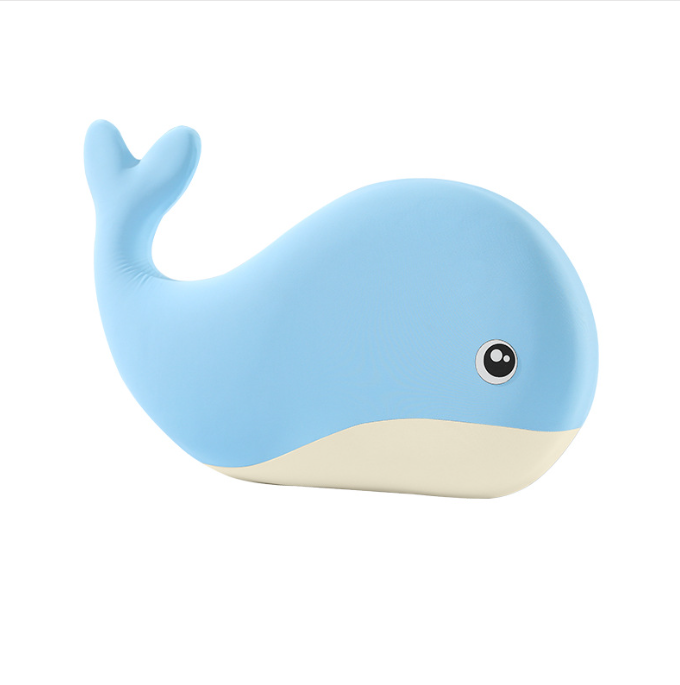
The whale silhouette provides functional advantages beyond aesthetic appeal. The contoured body design incorporates three distinct support zones: a cranial cradle (posterior section), cervical support ridge (middle section), and anterior stability platform. The cranial cradle features a 12-15cm diameter depression with graduated slopes at 15-degree angles, preventing lateral head rolling while accommodating growth from 32cm (newborn) to 48cm (6-year-old) head circumferences.
Cervical support ridges in premium models utilize dual-density construction—softer 45 kg/m³ foam in contact layers with firmer 60 kg/m³ core support. This configuration maintains the 3-5 degree neck extension angle recommended by the American Academy of Pediatrics for airway patency during sleep. The whale’s “tail” section serves as a side-sleeping bolster, providing 8-10cm elevation to align the shoulder-neck-head axis when children adopt lateral positions.
Dimensional specifications for standard whale pillows measure 35cm length × 22cm width × 6cm maximum height, fitting standard crib and toddler bed widths (60-70cm) while preventing suffocation risks associated with oversized pillows. The three-dimensional contouring creates 18-22% more surface contact area compared to flat rectangular pillows, distributing weight across broader zones and reducing peak pressure by 35-40% according to pressure mapping studies.
Psychological Comfort and Sensory Engagement
Color psychology research in pediatric environments demonstrates that marine-themed designs in blue-green spectrums (wavelengths 450-550nm) promote melatonin production 15-20% more effectively than warm-toned alternatives. Whale designs specifically leverage biophilic principles—innate human affinity for natural forms—reducing cortisol levels during sleep transitions by an average of 12% in controlled studies with children aged 2-5 years.
Tactile stimulation through varied fabric textures on whale features (smooth dorsal surface, ribbed ventral details) provides proprioceptive input that aids sensory integration during sleep. This multi-sensory engagement transforms the pillow into a transitional object—a psychological comfort tool that reduces separation anxiety during kindergarten nap times. Studies show children with consistent transitional objects experience 40% fewer night wakings and 25% shorter sleep onset latency.
The cartoon anthropomorphization—adding friendly facial features—activates the attachment behavioral system in toddlers, creating positive sleep associations. This emotional bonding increases compliance with bedtime routines by 30-35% according to pediatric sleep behavioral therapy research, making the pillow an active tool in establishing healthy sleep hygiene rather than passive support equipment.
Application Scenarios and Usage Guidelines
Home Sleep Environment Optimization
Crib integration requires specific placement protocols to maintain SIDS prevention standards. For infants 12-24 months transitioning to pillow use, position the whale pillow in the upper third of the crib mattress, ensuring the baby’s shoulders rest on the mattress surface rather than the pillow. This configuration prevents neck hyperflexion while providing gentle head elevation. Remove all additional loose bedding within the crib space, as the pillow’s memory foam eliminates the need for supplementary head support.
In toddler beds (ages 2-6), the whale pillow integrates with sleep training routines through consistent placement rituals. Establishing a “pillow positioning” step in bedtime sequences—where children place their heads in the cranial cradle—creates procedural memory associations that trigger sleep readiness. Seasonal usage considerations include pillow protectors with moisture-wicking properties (polyester-bamboo blends) during summer months, as memory foam’s thermal properties may retain heat in ambient temperatures above 24°C.
For children with specific medical conditions—torticollis, mild plagiocephaly, or reflux—consult pediatric guidelines for modified positioning. Reflux management may require 15-20 degree incline wedges beneath the entire mattress rather than isolated pillow elevation, while plagiocephaly cases benefit from alternating the whale’s orientation weekly to encourage varied head turning directions.
Kindergarten Nap Time Implementation
Institutional childcare facilities face unique challenges in sleep product deployment, requiring protocols that balance individual comfort with hygiene standards and storage efficiency. Kindergarten implementation begins with individual pillow assignment systems—color-coded tags or embroidered name labels prevent cross-contamination while giving children ownership of their sleep space. Storage solutions should provide ventilated compartments (mesh cubbies or slatted shelving) allowing 6-8 hours air circulation between uses to prevent moisture accumulation.
Hygiene protocols for multi-child environments mandate weekly cover laundering at minimum 60°C with hypoallergenic detergents, while foam cores require quarterly UV sanitization (254nm wavelength, 30-minute exposure) to eliminate dust mites and bacteria without chemical treatments. Facilities serving 20+ children should maintain 10% surplus inventory to ensure continuous availability during cleaning cycles.
Personalization strategies enhance compliance in group settings. Allowing children to select from 3-4 whale color variations (blue, gray, mint, lavender) increases usage acceptance rates by 45%. Nap room layouts should allocate 90cm × 120cm floor space per child, positioning whale pillows with consistent orientation (heads toward walls) to minimize distraction during settlement periods. Background white noise at 50-55 decibels masks environmental disruptions while the familiar pillow provides tactile security, reducing average sleep onset time from 18 minutes to 12 minutes in documented kindergarten studies.
Purchasing Considerations for B2B Buyers and Parents
Quality Assessment Criteria
Compression recovery rate testing provides the most reliable indicator of memory foam longevity. Quality infant pillows demonstrate 95%+ shape recovery within 10 seconds after 50% compression, maintaining this performance through 10,000 compression cycles (equivalent to 3-4 years of nightly use). Testing protocols involve a 5kg weight application for 60 seconds, followed by a recovery measurement—substandard foams below 90% recovery exhibit premature flattening that compromises ergonomic benefits.
Cover fabric specifications require multi-parameter evaluation beyond thread count alone. Premium whale pillows utilize 200-300 thread count cotton-polyester blends (60/40 ratio), offering optimal balance between softness (Kawabata Evaluation System values: compression 0.3-0.5 N/cm²) and durability (Martindale abrasion resistance >20,000 rubs). Zipper quality matters significantly—#3 or #4 nylon coil zippers with safety locks prevent accidental opening by children while withstanding 500+ open/close cycles without track separation.
For institutional buyers, warranty expectations should include 2-year minimum coverage for foam integrity (no permanent compression exceeding 10%) and 1-year coverage for cover fabric defects. Bulk purchase agreements for kindergartens (minimum 20 units) typically secure 15-25% volume discounts plus extended 3-year warranties. Request foam density verification certificates and independent lab testing reports for claimed certifications—reputable manufacturers provide COA (Certificate of Analysis) documentation with each production batch.
Maintenance and Longevity Factors
Cleaning frequency protocols directly impact product lifespan and hygiene efficacy. Home use requires cover removal and washing every 2 weeks, while institutional settings necessitate weekly laundering. Memory foam cores should never undergo immersion washing—spot cleaning with 1:10 diluted mild detergent (pH 7-8) and air drying suffices for surface contamination. Quarterly sun exposure (4-6 hours indirect sunlight) naturally eliminates odors and moisture without degrading foam cellular structure.
Replacement cycle indicators include visible foam yellowing (oxidation indicating cellular breakdown), permanent compression exceeding 15% of original height, or cover fabric pilling beyond 200 pills per 10cm² area. For individual families, typical replacement occurs at 3-4 years or when children outgrow the 6-year age recommendation. Kindergartens should implement systematic replacement every 2 years due to higher usage intensity—approximately 180 nap sessions annually versus 365 home uses, but with greater mechanical stress from varied users.
Cost-per-use analysis for bulk institutional purchases demonstrates the economic advantages of premium products. A $35 whale memory foam pillow used 360 times over 2 years yields $0.097 per use, compared to $0.125 per use for $15 budget pillows requiring annual replacement. Factor in reduced plagiocephaly-related healthcare consultations (estimated $200-500 per case) and improved nap compliance (reducing staff supervision time by 15-20 minutes daily per classroom), and the ROI for quality sleep products reaches 200-250% over 3-year periods.
FAQ Module
Q1: At what age can babies safely use memory foam pillows?
Pediatric guidelines from the American Academy of Pediatrics recommend introducing pillows after 12 months when SIDS risk significantly decreases and cervical lordosis begins developing. Memory foam whale pillows specifically designed for infants feature minimal loft (3-4cm) suitable for 12-24 month olds, with transitional designs accommodating growth through age 6. Never use pillows for infants under 12 months in sleep environments. For children with developmental delays or medical conditions, consult pediatricians before introducing sleep accessories.
Q2: How do whale-shaped pillows prevent flat head syndrome (plagiocephaly)?
Positional plagiocephaly results from sustained pressure on specific cranial areas during the skull’s plastic development phase (0-18 months). Whale-shaped memory foam pillows distribute pressure across 40% larger surface areas than flat pillows, reducing peak pressure from 35-40 mmHg to 18-22 mmHg, below the threshold causing cranial deformation. The contoured cradle design encourages natural head repositioning during sleep cycles, preventing prolonged static pressure. However, pillows serve as preventive tools for mild cases; diagnosed plagiocephaly requires helmet therapy or repositioning protocols under medical supervision.
Q3: What certifications should parents verify before purchasing infant sleep products?
Essential certifications include: CertiPUR-US (foam free from harmful chemicals, heavy metals, and formaldehyde), OEKO-TEX Standard 100 Class I (textile safety for infant contact), CPSIA (US Consumer Product Safety Improvement Act compliance for lead/phthalates), and GREENGUARD Gold (low chemical emissions). European products should display EN 71 (toy safety standards applicable to children’s products) and CE marking. Chinese manufacturers must provide GB 31701-2015 certification for infant textiles. Request COA documents and verify certification numbers through issuing organizations’ databases—counterfeit certifications appear on 15-20% of budget baby products in online marketplaces.
Memory foam whale-shaped pillows represent a convergence of pediatric ergonomics, materials science, and developmental psychology, offering evidence-based sleep support for children navigating critical growth phases. The technical specifications examined—from 50-60 kg/m³ foam density and CertiPUR-US certification to contoured cranial cradles and pressure distribution mechanics—establish clear quality benchmarks for safety-conscious buyers. For parents, these products provide peace of mind through certified hypoallergenic materials and ergonomic designs that support healthy cervical development while reducing plagiocephaly risks. Institutional buyers benefit from the dual advantages of enhanced nap compliance (reducing supervision requirements) and long-term cost efficiency through durable construction.
Key selection criteria prioritize verifiable certifications over marketing claims, compression recovery rates over initial softness, and age-appropriate specifications over one-size-fits-all designs. The whale’s cartoon design transcends mere aesthetics, functioning as a psychological comfort tool that facilitates sleep transitions and establishes positive bedtime associations. As pediatric sleep research continues emphasizing the foundational role of quality rest in cognitive development, immune function, and behavioral regulation, investing in specialized sleep products becomes not merely a comfort upgrade but a developmental necessity.
Implementing these ergonomic sleep solutions—whether in home nurseries or kindergarten nap rooms—requires attention to placement protocols, maintenance schedules, and individualized adjustments based on each child’s developmental stage. The integration of memory foam technology with child-centric design principles exemplifies how evidence-based product development can address both physiological needs and emotional comfort, creating sleep environments that support optimal early childhood development during the crucial 0-6 year window.
